



Velvet Throne Chair
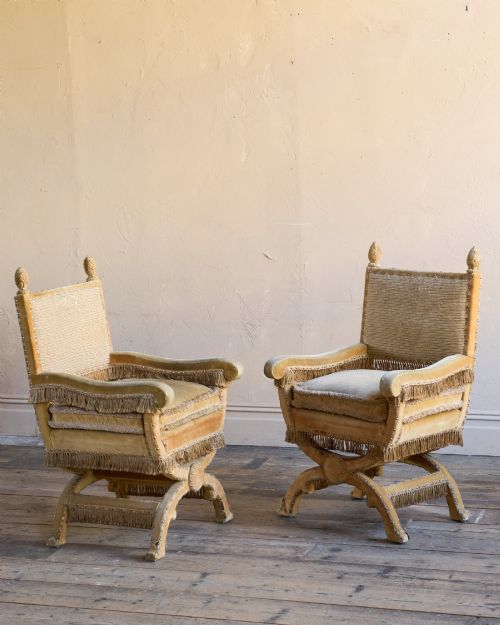
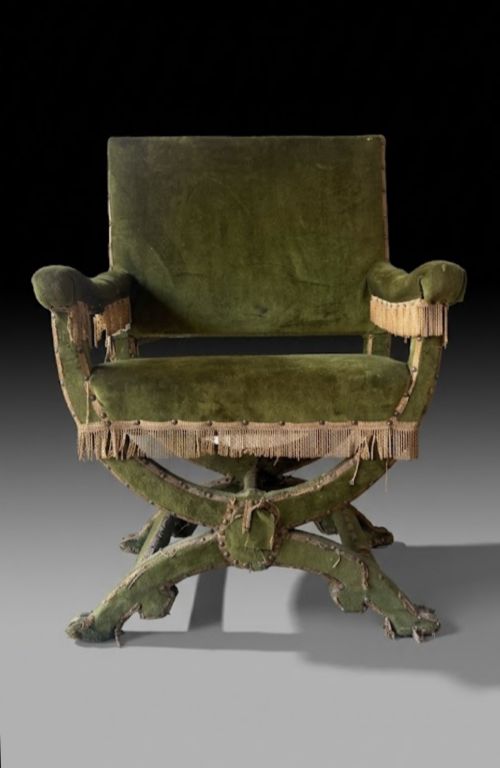
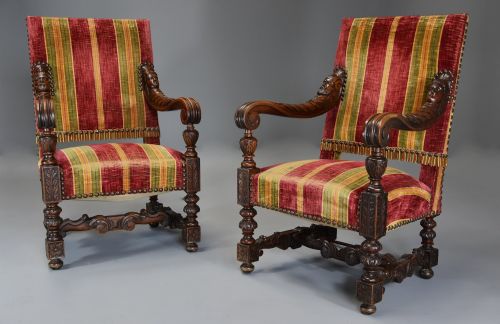
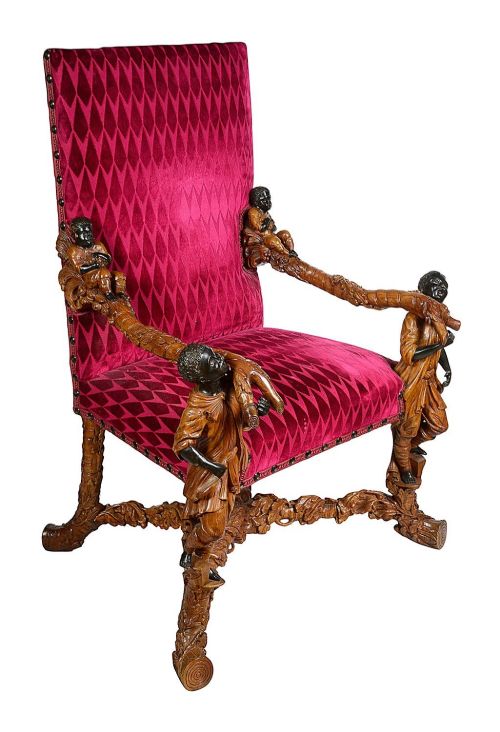
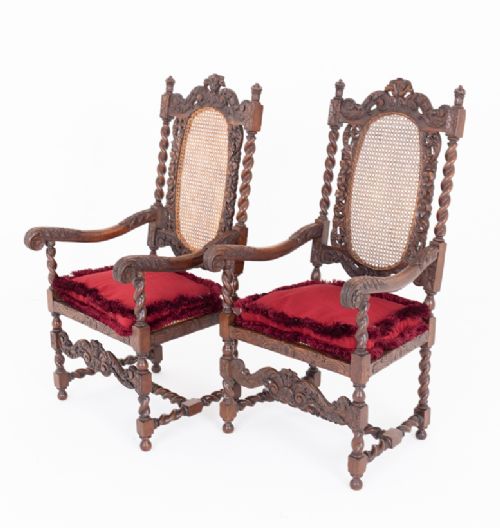
A velvet throne chair commands attention in a room, combining heavy timber carving with tactile textile upholstery.
Velvet Throne Chair
When buyers search for a velvet throne chair, they look for substantial seating featuring high backs, arms, and soft textile coverings. These pieces serve as focal points in large rooms, drawing the eye with their commanding scale and presence.
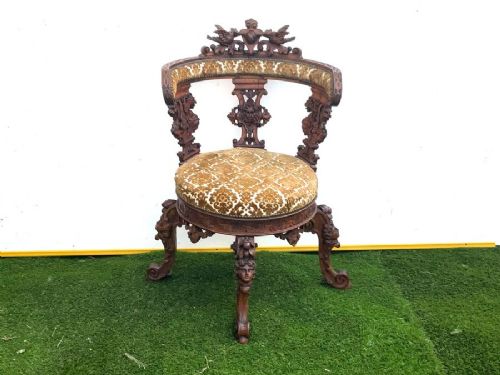
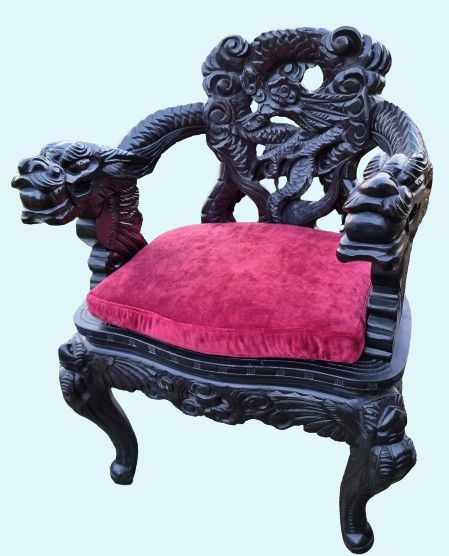
The selections span multiple eras, most frequently appearing in nineteenth-century interpretations of earlier historical revivals. Examples range from Victorian oak and walnut frames to earlier seventeenth-century styles and exotic Anglo-Indian hardwoods.
Forms include high-backed audience chairs, low-slung occasional seating, and paired armchairs designed for grand halls. Buyers encounter both French Baroque flourishes and stern Jacobean timber frames among the available selection.
Materials and construction
Makers utilised dense timbers such as oak, walnut, laburnum, and exotic hardwoods to support the heavy loads and elaborate carving typical of these seats. Joinery relies on traditional methods to keep massive frames stable over centuries of use.
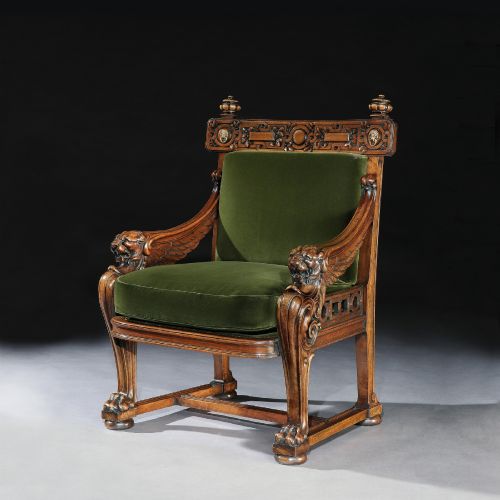
Upholstery involves rich fabrics, most notably velvet, often finished with decorative fabric fringes or brass detailing along the edges. Carved wooden elements display intricate hand-chiselled motifs, from lion monopodia to floral scrolls.
Velvet Throne Chair Retail Price Guide 2026
Typical asking prices for velvet throne chair among the pieces listed under this phrase on Sellingantiques today, from the lower quarter to the upper quarter. They describe what is for sale here now, not the wider market.
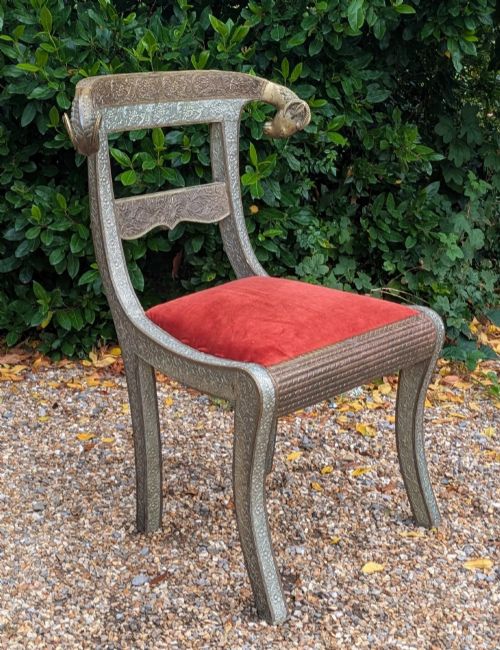
Several seats double as diplomatic furniture, including an Indian wedding chair adorned with solid silver rams' heads.
Judging quality and craftsmanship
The depth and crispness of the timber carving separate superior examples from routine production. Sharp relief work and balanced proportions indicate a maker who understood classical or revivalist design principles.
The integrity of the frame and the retention of original upholstery textiles influence the character of the piece. Untouched as-found fabrics or period-appropriate replacements hold more interest than unsympathetic modern recovering.
Thomas Hope
The Velvet Throne Chair Glossary
- Monopodia
- A carved furniture support taking the form of a single lion leg and paw. This motif draws directly on classical antiquity and appears on nineteenth-century revival seating.
- Wainscot chair
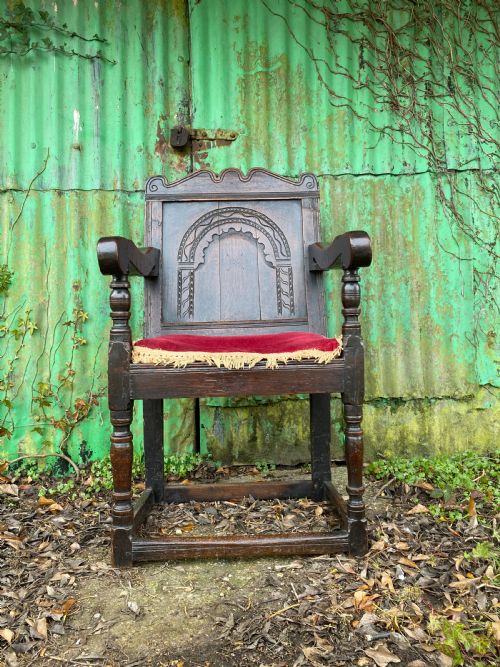
- An early wooden armchair constructed with panelled backboards rather than open framing. These sturdy seats date to the seventeenth century and reflect heavy domestic utility.
- Fauteuil
- An open-armed French armchair with upholstered back and arm pads over an exposed wood frame. The style originated in court circles and emphasises elegance over heavy bulk.
- Baroque Revival
- A nineteenth-century design movement copying the exuberant, theatrical forms of the seventeenth-century Baroque period. Pieces in this style feature dramatic curves and rich ornamentation.
Velvet Throne Chair: Frequently Asked Questions
What is a velvet throne chair?
A velvet throne chair is a large, imposing armchair upholstered in soft fabric and designed to project authority or status. These pieces typically feature high backs, substantial armrests, and decorative carved timber frames.
They function as statement seating in libraries, reception rooms, or master bedrooms. The category includes period antiques alongside nineteenth-century revival interpretations.
Where were these chairs used?
Historically, high-backed throne chairs stood in formal reception rooms, halls, and audience chambers where hosts received guests. They marked the seat of the head of the household or an important visitor.
Today, buyers place them in living spaces as focal seating rather than everyday lounging chairs. Their architectural scale works best in rooms with high ceilings.
How do I care for antique velvet?
Antique velvet upholstery requires gentle maintenance to preserve the pile and texture of the fabric. Regular light brushing removes dust before it settles into the fibres.
Keep these chairs out of direct sunlight to prevent fading of the textile colours. Professional textile cleaners should handle any deep cleaning or stain removal.
How to tell the periods apart?
Distinguishing periods relies on examining timber species, joinery methods, and the specific decorative vocabulary of the carving. Seventeenth-century examples display dark oak, pegged joints, and austere rectilinear lines.
Nineteenth-century revival pieces often use walnut or exotic hardwoods with softer, more rounded carving profiles. Examining the underside and construction reveals the age of the timber frame.