



Veined Marble Urn
These veined marble urn pieces bring classical gravity to a room, offering sculptural form and rich stone figures.
Veined Marble Urn
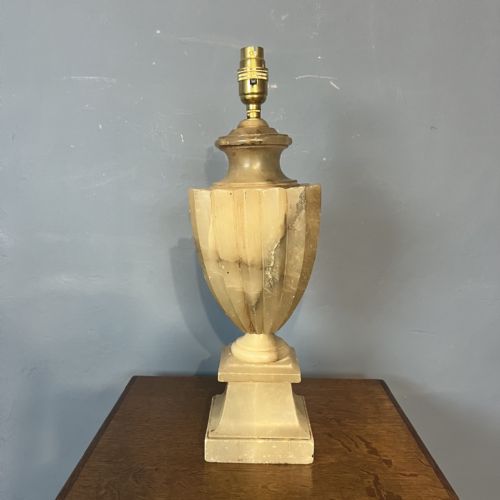
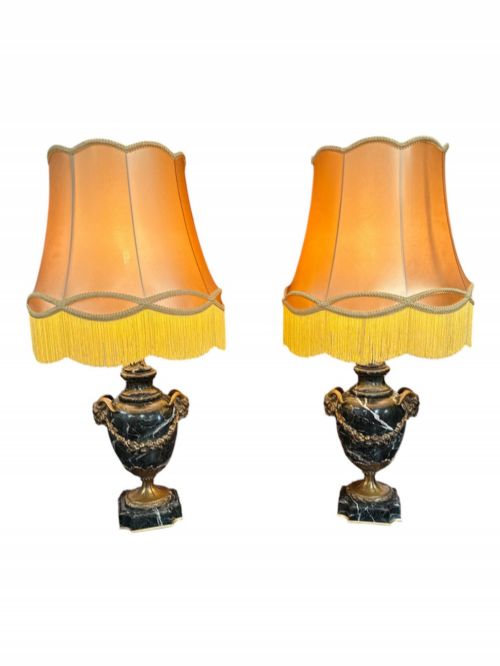
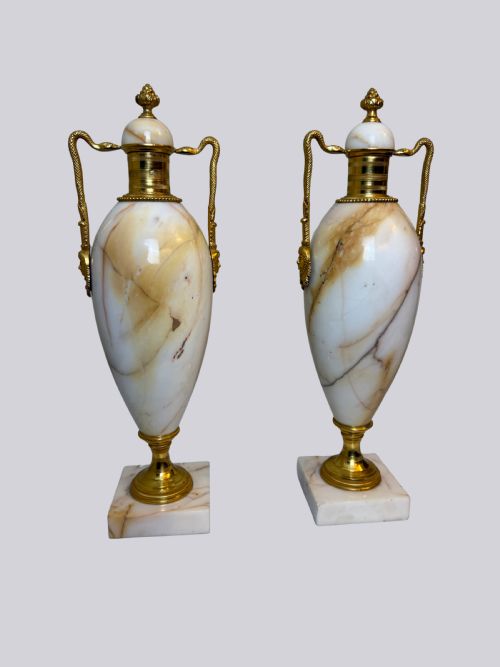
When you search for a veined marble urn, you are looking at carved stone vessels and lamp conversions drawn from 19th Century, Victorian, Edwardian, and 1920 periods. These objects take neoclassical, classical revival, Louis XVI revival, French empire, and grand tour styles, often standing as decorative vases, table lamps, and mantel clocks.
The versions you are most likely to meet on this page include pairs of French marble urn lamps and Italian marble table lamps mounted with gilt bronze or ormolu. Alongside traditional decorative urns and cassolettes, alabaster and white onyx pieces appear frequently in the listings.
How they were made
Maker workshops turned and carved solid marble, alabaster, onyx, and quartz into balanced vessel bodies. These stone elements were then paired with cast gilt bronze, brass, and ormolu mounts, securing handles, bases, and rims with threaded rods or pins.
Many of these decorative urns and vases were later adapted into table lamps, integrating electrical fittings alongside original stone and metal components while retaining their classical silhouette.
The listings on this site combine marble, alabaster, onyx, and quartz with gilt bronze and ormolu mounts.
What varies in quality
Quality rests in the depth and movement of the stone's natural veining, alongside the crispness of the cast gilt bronze or ormolu mounts. Finer examples show sharp chisel work in the brass elements and harmonious matching within pairs of stones.
The weight of the marble body and the precision of the turning distinguish standard decorative vessels from pieces with a stronger neoclassical presence.
The Veined Marble Urn Glossary
- Ormolu
- Gilded bronze mounts applied to furniture, clocks, and stone vessels. This technique was widely used in French neoclassical and empire pieces.
- Cassolette
- A dual-purpose decorative vase featuring a reversible lid that functions as a burner or a solid urn top. These are frequently found in grand tour collections.
- Alabaster
- A fine-grained translucent stone used for neoclassical lamps and vases. It allows light to pass through its surface.
- Neoclassical
- A style drawing on classical Greek and Roman art forms, dominant across nineteenth-century decorative urns and mantel garnitures.
Veined Marble Urn: Frequently Asked Questions
What periods do these pieces come from?
The listings span the nineteenth century, the Victorian era, the Edwardian period, and the early twentieth century around 1910 and 1920.
Most examples reflect neoclassical, French empire, and grand tour aesthetics influenced by continental design traditions.
Were these always lamps?
Many pieces began life as decorative urns, vases, or cassolettes before being converted into table lamps during later periods.
Original stone vessels and later lamp adaptations sit side by side in the current selection.
What materials make up these objects?
The bodies combine natural stones such as marble, alabaster, white onyx, and quartz with metal mounts in gilt bronze, brass, and ormolu.
Fabric elements occasionally appear on associated lamp components.
How do I style a marble urn?
These pieces suit mantelpieces, side tables, and pedestals where their classical forms and veined stone patterns can anchor a room.
Paired urn lamps also function well on sideboard consoles and large desks.