


Vase Still Life
When you explore vase still life works, you encounter centuries of artists capturing arrangements of cut blossoms and vessels on canvas and paper.
Vase Still Life
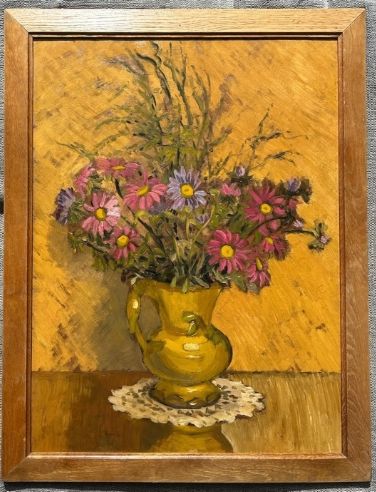
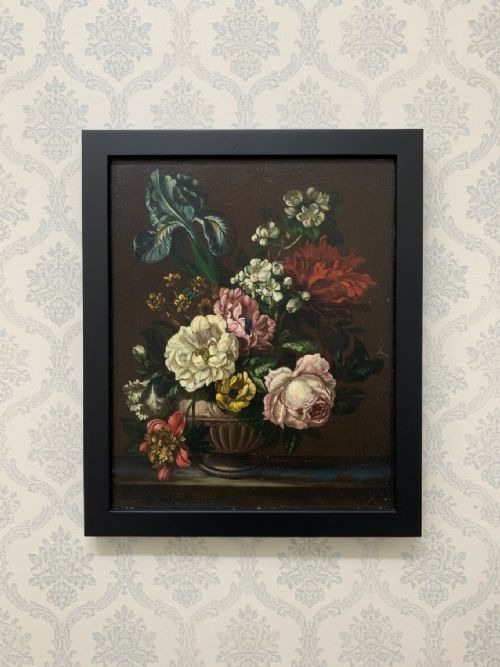
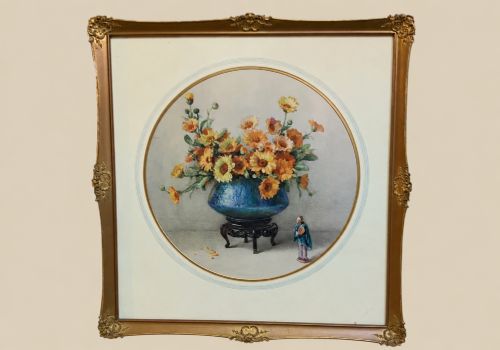
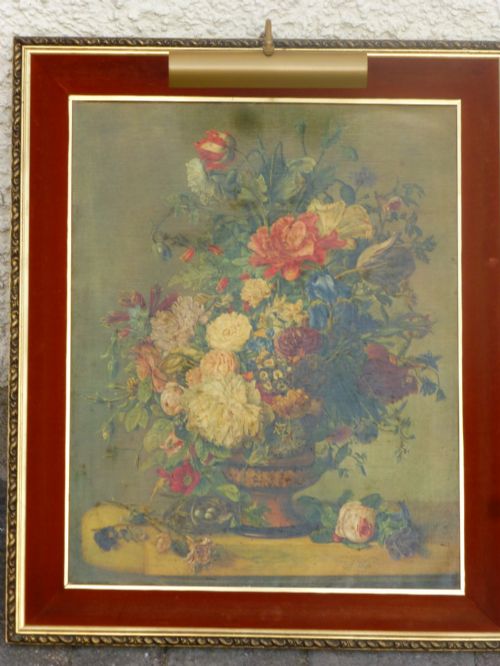
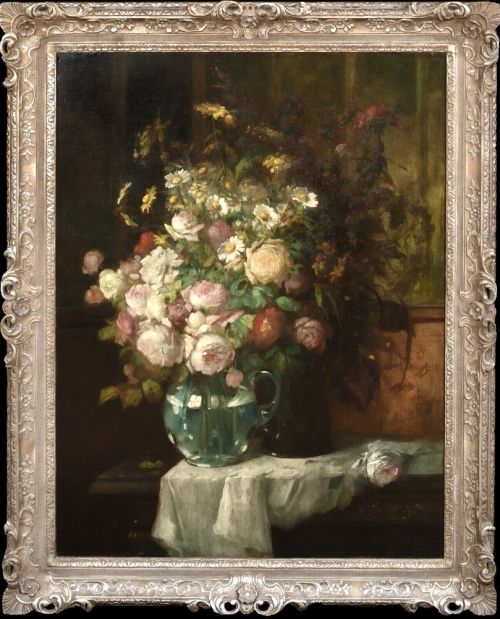
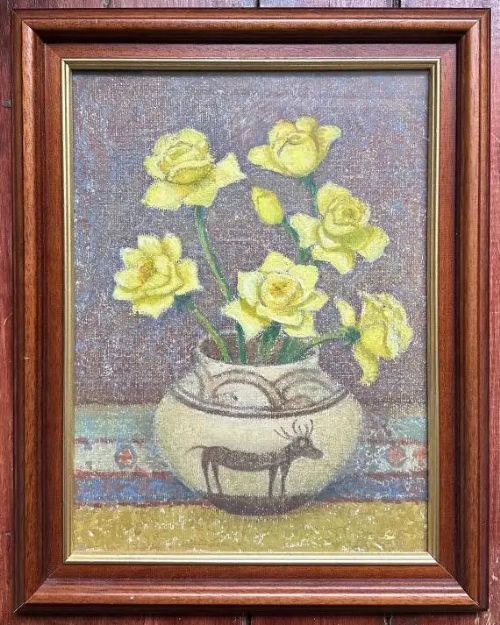
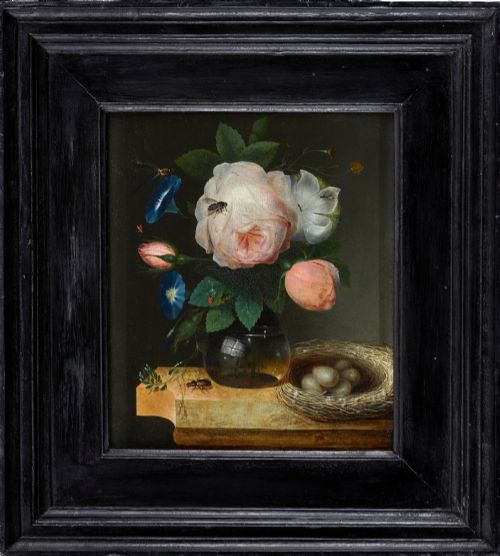
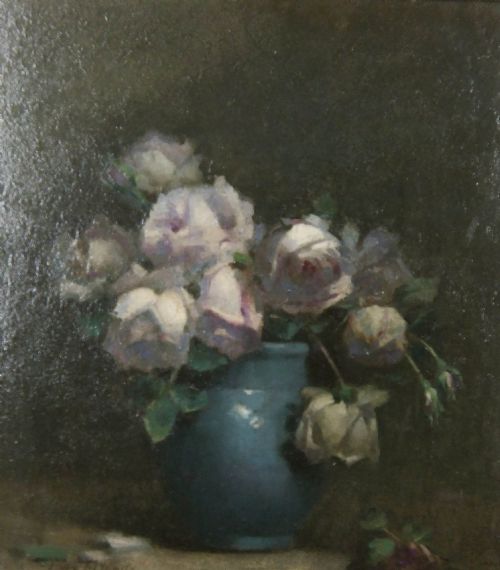
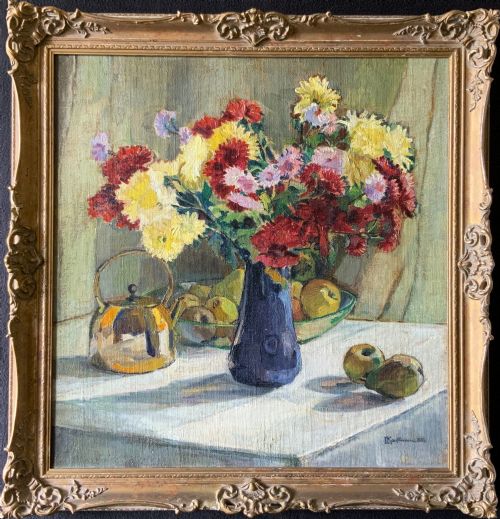
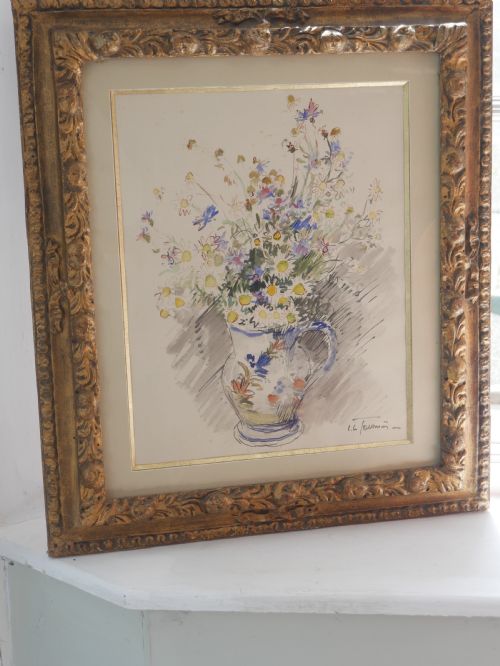
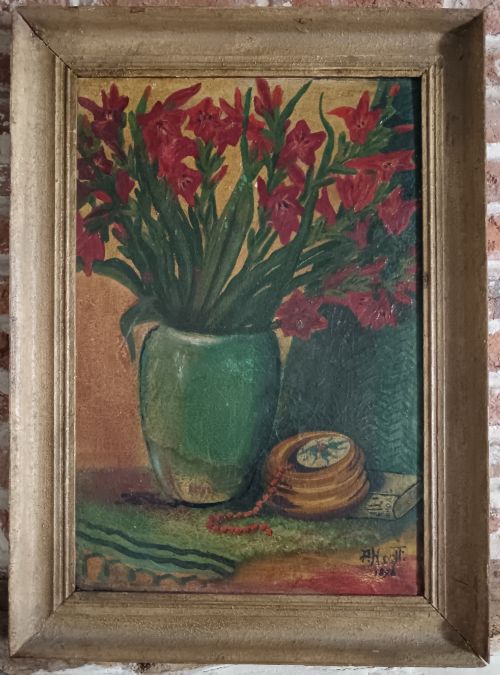
A vase still life captures floral arrangements, foliage, and decorative vessels rendered in paint, watercolour, or pastel. These depictions range from classical Dutch compositions to bright mid-century interpretations.
The selections on this page span from the eighteenth century through to the mid-twentieth century, featuring British and European traditions. Works vary from delicate watercolours on paper to substantial oil paintings on canvas and panel.
Collectors encounter both intimate floral studies by regional painters and larger decorative canvases by established academic figures. Each piece records a distinct domestic arrangement preserved through pigment and paper.
How They Were Made
Painters utilised oil paint on canvas, board, or wood panel, building up rich impasto textures or smooth glazes to render petals, leaves, and reflective glass vessels. Canvas attached to board or primed wooden panels offered stable supports for complex compositions.
Watercolour and gouache on paper required precise brushwork and fluid control to capture the translucency of spring blooms, chrysanthemums, and roses. Pastel was also employed on paper to achieve soft colour transitions in floral studies.
Framing played an integral role, with many period works housed in ornate gilt frames or simple oak mouldings that completed the presentation of the artwork.
Several botanical studies feature uninvited tiny insects, with a painted snail or dragonfly resting quietly among the flower petals.
What Varies In Quality
Quality rests upon the artist's command of light, shadow, and spatial depth within the composition. Masterful brushwork distinguishes works that capture the natural weight of stems and the realistic transparency of glass or ceramic vessels from stiff, formulaic reproductions.
The condition of the pigment and support determines the integrity of the piece. Untouched original surfaces on canvas or panel without extensive retouching retain the maker's intended touch and luminosity.
Provenance and documentation elevate certain works, particularly when signed by known exhibition artists or associated with recognised regional schools of painting.
Kenneth Cozens·Konstantin Stoitzner·Emma Fordyce MacRae·Gaspar Peeter Verbruggen·William Thomas Wood·Owen Bowen·Henrietta Creswell·William Edward Fox·Florence Hess·William Duffield·Lester Sutcliffe·J.Milton·Terence Loudon·William Hough·Robin MacKertich·Freda Marston·Rowland Henry Hill·Stuart Armfield·Phyllis I Hibbert·Jabez Bligh·Henry Schouten·Jennifer Toombs·Giuseppe Pesci·Charles-Gilles Dutillieu·Karl Hayd
The Vase Still Life Glossary
- Impasto
- Paint applied thickly to a canvas or panel, standing out in relief from the surface so that the brush or palette knife marks remain visible.
- Oleograph
- A mechanical colour print on canvas that emulates the appearance of an oil painting, sometimes finished with varnish to simulate brush texture.
- Gouache
- An opaque water-based medium that uses a white pigment binder to create solid areas of matte colour.
- Panel
- A flat piece of wood used as a rigid support for oil or tempera paintings before canvas became the dominant medium.
Vase Still Life: Frequently Asked Questions
What periods do these paintings come from?
The selections span from eighteenth-century baroque compositions through nineteenth-century Victorian studies to mid-century modern pieces. Artists across these eras interpreted floral arrangements through changing artistic movements.
Examples include Dutch school works alongside British Impressionist and Post-Impressionist canvases dating across the nineteenth and twentieth centuries.
What materials were used by the artists?
Painters and illustrators worked with oil paint on canvas, wood panels, and boards. Watercolour and gouache on paper were equally common for botanical studies.
Supports often included canvas attached to board, heavy artist paper, and oak panels, frequently housed within period gilt or wooden frames.
How do I care for an antique painting?
Display works away from direct sunlight and sources of extreme heat or humidity to protect pigments and paper supports. Maintaining stable indoor conditions prevents warping in wooden panels and fading in watercolours.
Consult a professional conservator before attempting any cleaning or surface restoration on older oil paintings or delicate works on paper.
How can I tell watercolours apart from oil paintings?
Watercolours are painted on paper and typically displayed behind glass to protect the delicate medium from moisture and dust. They exhibit a translucent quality where the white of the paper illuminates the pigments.
Oil paintings utilise thicker paints on canvas or board, presenting a textured surface that reflects light differently and does not strictly require glass.