




Vanity Fair Caricature Print
A vanity fair caricature print captures the leading political, legal, and social figures of the late nineteenth and early twentieth centuries with sharp visual wit.
Vanity Fair Caricature Print
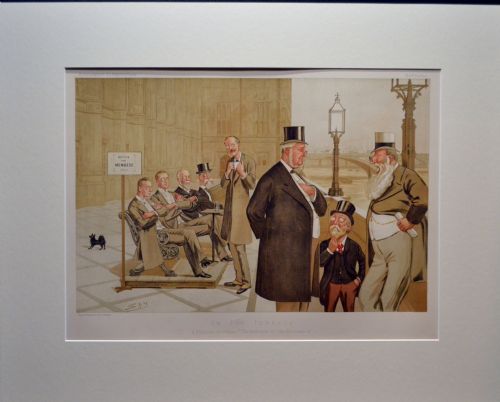
A vanity fair caricature print is a satirical portrait published in the British periodical Vanity Fair between the Victorian era and the 1920s. These works typically depict public personalities, politicians, royalty, and sportsmen, often labelled with descriptive titles like Men of the Day or Spy.
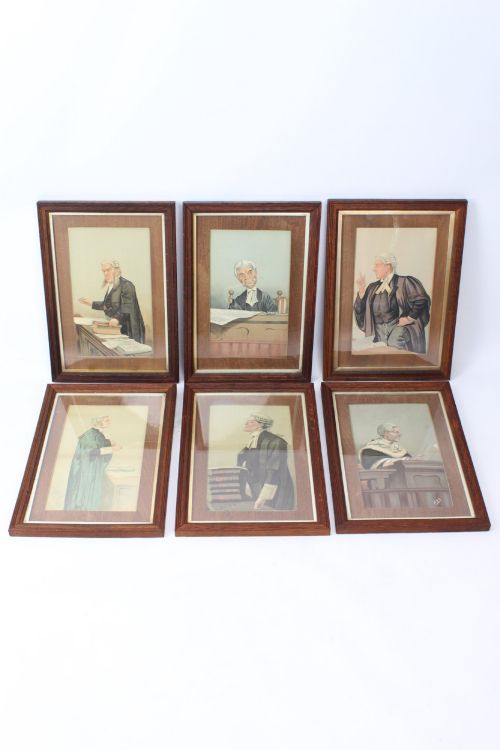
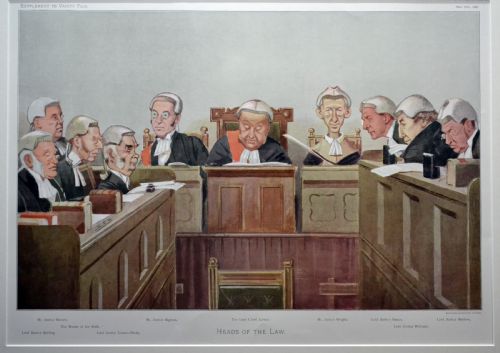
Buyers encounter single sheets, double-page spreads, and sets grouped by themes such as the law, racing, hunting, and empire. Many examples arrive framed in wood and glass with mount board, ready for display on walls.
The period of production spans late Victorian, Edwardian, and post-war years, capturing changing fashions and prominent figures across decades. These prints offer a direct window into historical British society through accessible graphic art.
How they were made
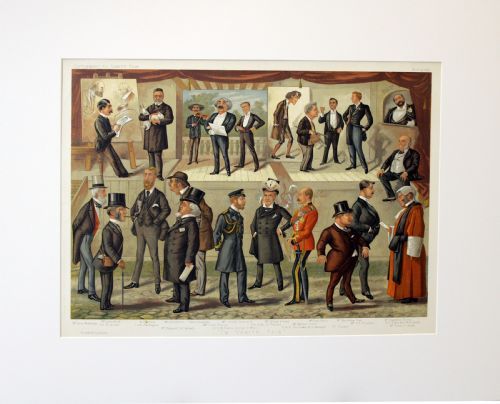
These items were produced on paper using ink and chromolithography to achieve rich, multi-coloured plates. Double-page formats required careful folding and unfolding within the original magazine binding before separate distribution.
Contemporary presentation often involves card mount board and wood framing, sometimes protected behind glass to preserve the delicate paper surface.
Vanity Fair Caricature Print Retail Price Guide 2026
Typical asking prices for vanity fair caricature print among the pieces listed under this phrase on Sellingantiques today, from the lower quarter to the upper quarter. They describe what is for sale here now, not the wider market.
Victorian politicians had to sit very still while Spy sketched their noses.
What varies in quality
The vibrancy of the ink and the preservation of the paper determine the visual impact of each sheet. Double-page plates and full sets maintain greater context than trimmed single pages.
Framing materials and historical preservation influence the longevity and appearance of the artwork on the wall.
The Vanity Fair Caricature Print Glossary
- Chromolithography
- A planographic printing process that uses multiple lithographic stones to apply successive colours to paper. This technique creates the vivid hues seen in period periodical plates.
- Double page
- A larger format plate spanning two magazine pages, often featuring group subjects or more elaborate caricature scenes. These plates typically require unfolding.
- Spy
- The pseudonym of artist Leslie Ward, who drew the majority of the most famous portraits for the magazine. His signature or pseudonym often appears on the printed sheet.
- Men of the Day
- A recurring biographical feature series within the publication focusing on prominent contemporary gentlemen. These prints are frequently collected as sets.
Vanity Fair Caricature Print: Frequently Asked Questions
What is a vanity fair caricature print?
A vanity fair caricature print is an original satirical portrait originally published in the British weekly magazine Vanity Fair. These plates depict notable personalities from politics, law, society, and sports.
Created by artists working under pseudonyms like Spy, the portraits combine gentle mockery with accurate likenesses. They remain popular collectibles for framing and historical display.
How do I date a vanity fair print?
Dating these prints relies on the subject depicted, the publication date printed on the sheet, and the known operational years of the magazine. Many plates include specific day and year captions.
Periods represented in these works range from the Victorian era through the Edwardian years up to the 1920s. Examining the paper type and framing style also offers clues to the age of the item.
Are these prints original period items?
The items listed here are genuine nineteenth and early twentieth-century printings pulled directly from the original magazine runs or contemporary volumes. They are not modern reproductions.
Collectors can identify authentic examples by the paper quality, the presence of accompanying text on the reverse where applicable, and the characteristic printing technique.
How should I hang framed prints?
Framed prints require placement away from direct sunlight to prevent the coloured inks and paper from fading over time. Stable indoor humidity protects both the wood frames and the paper underneath the glass.
Grouping sets by thematic categories, such as law or hunting, creates a cohesive display on a wall. Ensure secure fixings are used for heavier wooden frames.