



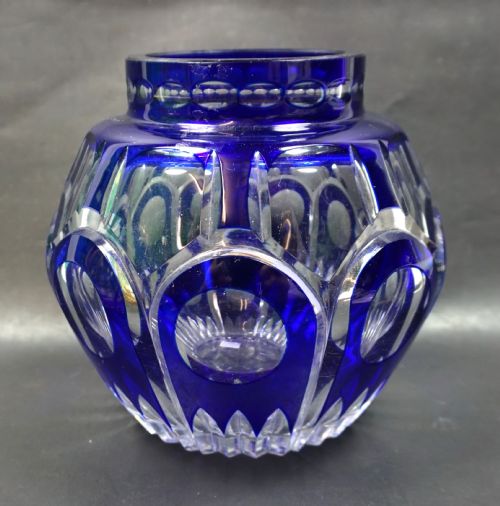


Val Saint Lambert
Val Saint Lambert pieces are heavy, colourful Belgian art glass items from the nineteen-thirties that bring rich tones and striking silhouettes to a room.
Val Saint Lambert
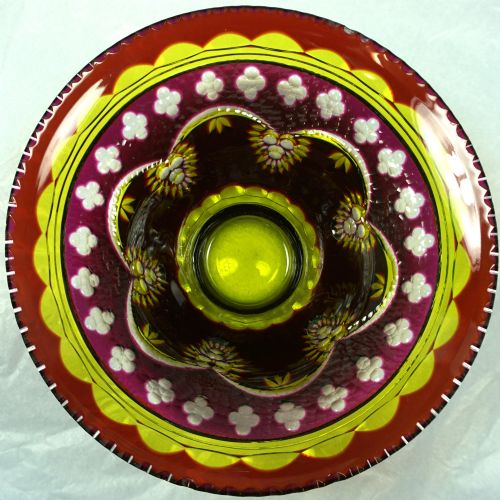
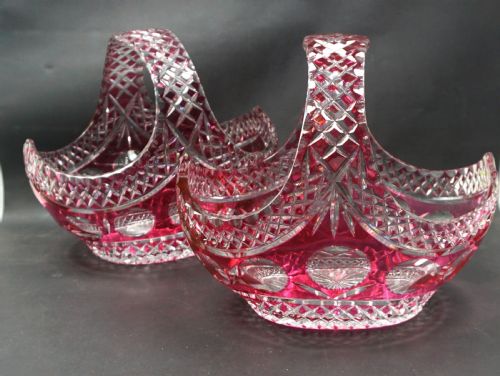
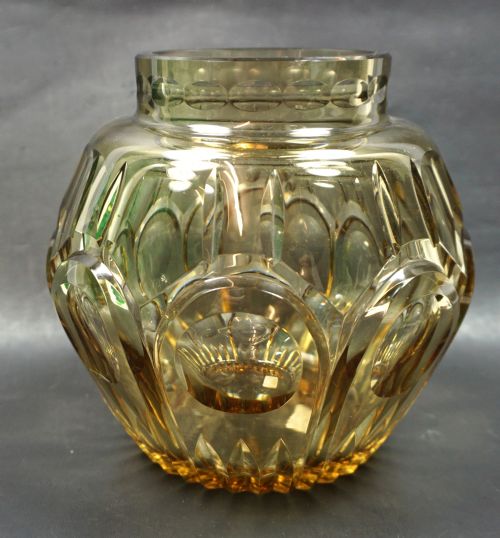
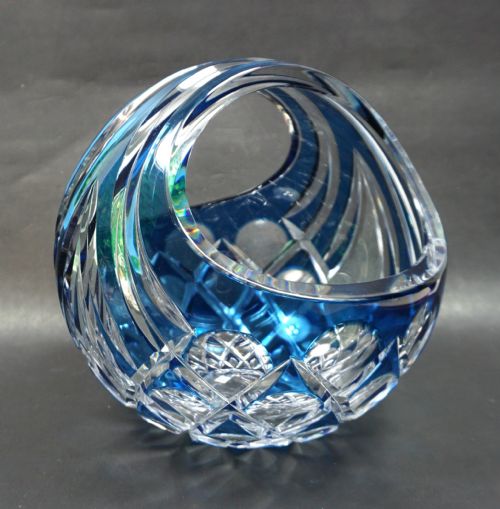
Val Saint Lambert items span decorative bowls, baskets, vases, and drinks sets originating from Belgium during the nineteen-thirties. The selection centres heavily on Art Deco vessels rendered in vibrant hues such as blue, green, red, purple, and topaz.
Buyers will frequently encounter cased and overlay glass forms where a deeply coloured layer sits over clear crystal. These pieces often feature faceted cutting or smooth, sculptural profiles characteristic of the period.
How they were made
These works rely on lead crystal and heavy glass formed through traditional blowing and moulding techniques. Artisans applied layers of coloured glass over a clear crystal base to create rich cased and overlay effects.
Makers achieved complex patterns by cutting deep facets through the outer coloured layer to reveal the clear crystal beneath. This subtraction method defined the sharp geometry seen in the Art Deco style.
Val Saint Lambert Retail Price Guide 2026
Typical asking prices for val saint lambert among the pieces listed under this phrase on Sellingantiques today, from the lower quarter to the upper quarter. They describe what is for sale here now, not the wider market.
Listings feature lead crystal and cased glass forms exclusively from the nineteen-thirties.
What varies in quality
The distinction between standard production and top tier works often rests on the depth of the colour overlay and the precision of the glass cutting. Sharply defined facets and heavy lead crystal weight signal superior execution.
Attribution to named designers like Joseph Simon or Charles Graffart elevates certain examples above unsigned factory pieces. Surviving factory marks or distinct pattern names such as Montmartre also distinguish specific productions.
Joseph Simon·Charles Graffart
The Val Saint Lambert Glossary
- Cased Glass
- Glass formed by fusing one or more coloured glass layers over a different base colour or clear crystal. This technique builds depth and allows for striking cut-away designs.
- Overlay Glass
- A method where a solid layer of coloured glass covers a clear crystal body, ready to be carved or cut. It creates a high contrast between the outer hue and the inner core.
- Lead Crystal
- Glass containing metallic lead oxide that increases weight, brilliance, and clarity. It provides the dense substance required for deep cutting.
- Art Deco
- The dominant design style of the nineteen-thirties characterised by geometric shapes, streamlined forms, and bold colours. It influences the profile of nearly every piece here.
Val Saint Lambert: Frequently Asked Questions
What periods do these pieces date from?
The items here date primarily from the nineteen-thirties during the height of the Art Deco movement.
Production aligns with the classic eras of Belgian glass design.
How do I identify cased glass?
Cased glass shows distinct layers when viewed closely at the rim or where the surface is cut away.
An outer layer of colour sits directly over a clear or contrasting inner core.
Were these items used for display or dining?
The selection includes both decorative objects like vases and functional service items such as liquor sets.
Many pieces served practical roles in entertaining during the interwar period.
How do I spot a designer piece?
Certain works bear attribution to notable studio figures who shaped the factory output during the period.
Specific models also carry distinct factory marks on the crystal base.