

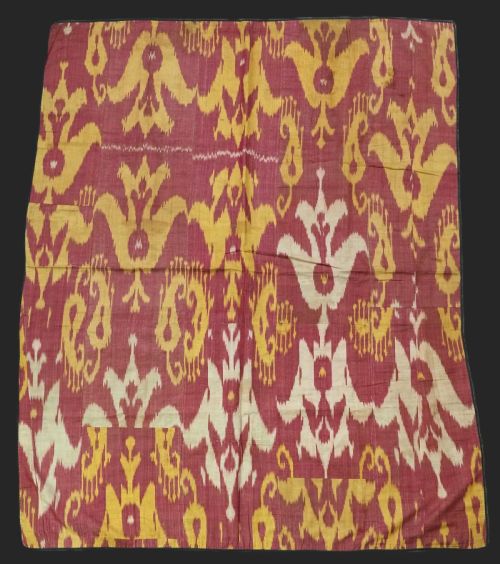
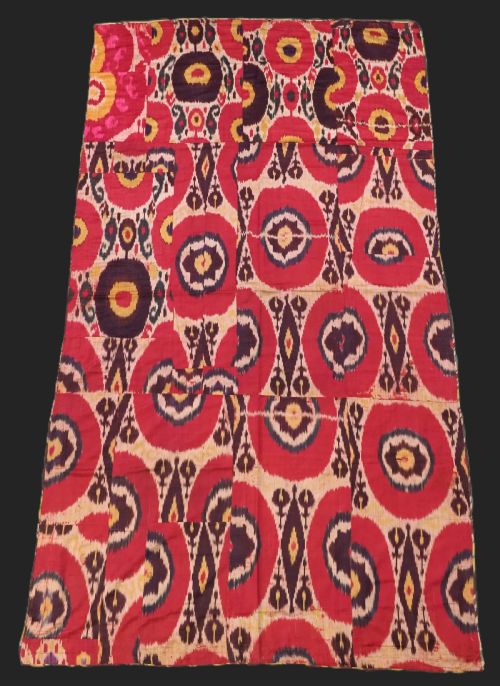
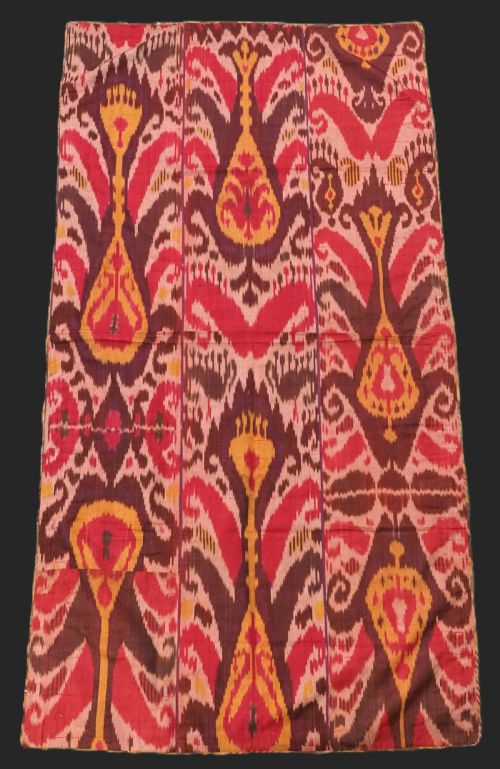


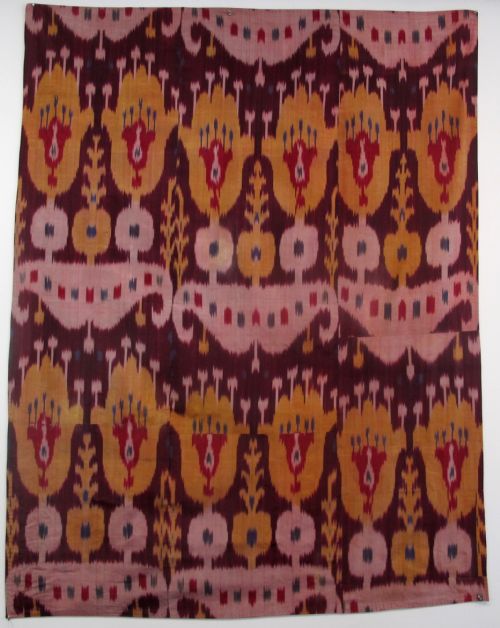


Uzbek Silk Ikat
Uzbek silk ikat textiles are vibrant Central Asian works of art that bring rich colour and history into a room.
Uzbek Silk Ikat
Uzbek silk ikat pieces encompass fabric panels and traditional garments originating from Central Asia, created during the late nineteenth and early twentieth centuries. These textiles include large decorative wall hangings alongside wearable items such as gentleman's coats.
The most common formats met on this page are fabric panels and robes from regions like Bukhara and Samarkand. Buyers frequently encounter coats known as khalats or chapan, alongside smaller accessories like double-sided purses.
How They Were Made
These items are constructed using silk, semi-silk adras, and cotton fabrics, sometimes finished with glass beads. Skilled artisans bound and dyed the warp threads before weaving to produce the characteristic blurred patterns unique to this tradition.
Certain winter garments incorporate quilting and padding for practical use, adding structural weight to the fabric. Panels and coats alike rely on traditional Central Asian textile techniques passed down through generations.
Uzbek Silk Ikat Retail Price Guide 2026
Typical asking prices for uzbek silk ikat among the pieces listed under this phrase on Sellingantiques today, from the lower quarter to the upper quarter. They describe what is for sale here now, not the wider market.
Listings feature items dated across the late nineteenth century, specifically from eighteen eighty, eighteen ninety, and nineteen hundred.
What Varies in Quality
Quality rests upon the complexity of the dyed pattern and the richness of the textile construction. Finer pieces demonstrate precise control over the blurred edges of the design during the weaving process.
The choice of materials also divides the range, distinguishing pure silk compositions from semi-silk adras alternatives. Garments show further variation in the complexity of their quilting, padding, and regional tailoring.
The Uzbek Silk Ikat Glossary
- Ikat
- A dyeing technique where threads are pattern-dyed before weaving. This method creates the characteristic hazy outlines seen on these Central Asian textiles.
- Adras
- A traditional fabric woven with a silk warp and a cotton weft. This semi-silk material combines the lustre of silk with the durability of cotton.
- Khalat
- A traditional long, loose gentleman's coat worn across Central Asia. These garments are often fashioned from vibrant ikat fabrics.
- Chapan
- A padded and quilted outer robe worn during colder months. These heavy coats provided essential warmth in the winter climate.
- Warp
- The vertical threads held tensioned on a loom before weaving begins. In ikat production, these are the specific threads that receive the tie-dye treatment.
Uzbek Silk Ikat: Frequently Asked Questions
How were uzbek silk ikat coats used?
These garments functioned as status items and everyday outerwear for men across Central Asia. Wealthy merchants and leaders wore them layered over tunics to display social standing.
Heavier versions included padded linings for winter protection, whilst lighter robes served during warmer months.
What is an adras fabric panel?
An adras panel is a textile woven with a combination of silk and cotton threads. This blend offered a practical alternative to pure silk while maintaining a glossy finish.
Craftsmen utilised these panels for interior decoration and garment making across the region.
How do I date an antique ikat?
Dating relies on examining the materials, regional styles, and construction methods used in the piece. Surviving examples on this page date from the late nineteenth century up to around nineteen hundred.
Changes in dye vibrancy and textile wear help experts place items within this period.
Can I hang an ikat panel on the wall?
These textiles make striking wall hangings that add texture and colour to an interior space. Proper hanging methods distribute the weight evenly to prevent stress on the delicate silk fibres.
Avoiding direct sunlight protects the natural dyes from fading over time.