

Uzbek Silk Hanging
An uzbek silk hanging brings rich Central Asian textile artistry into a room through vibrant embroidery and ikat weaving.
Uzbek Silk Hanging
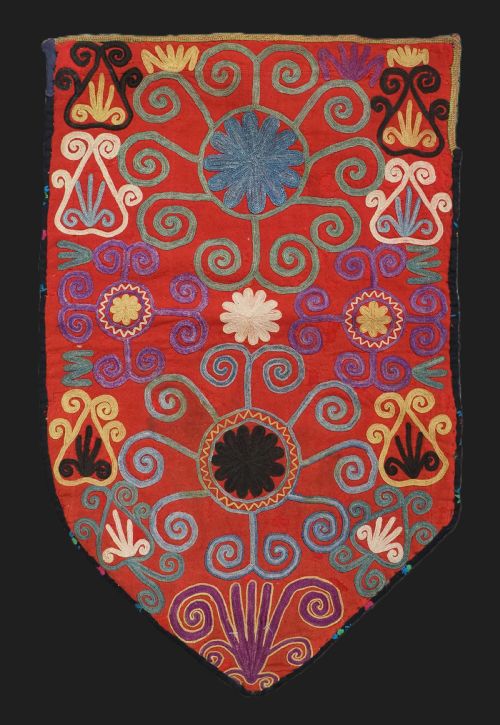
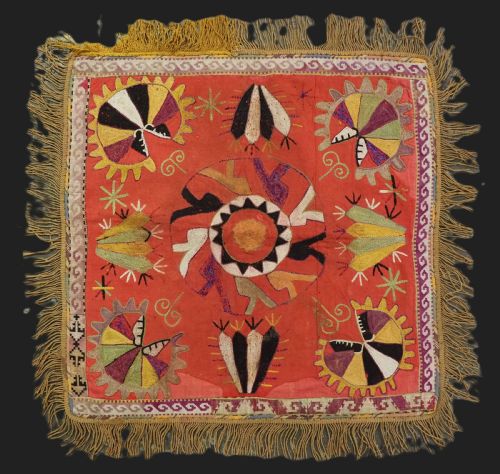
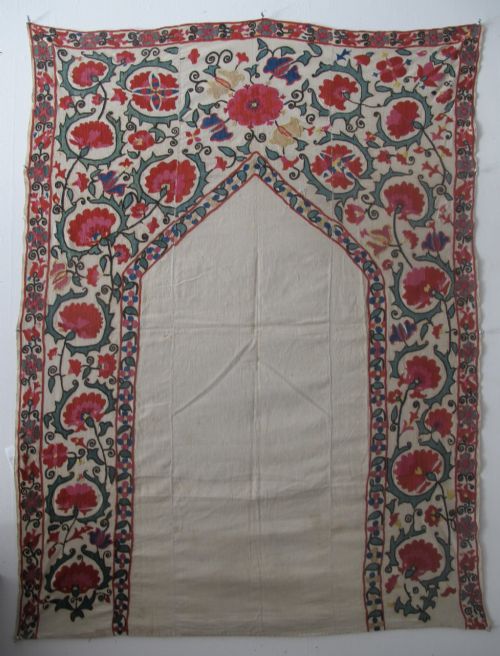
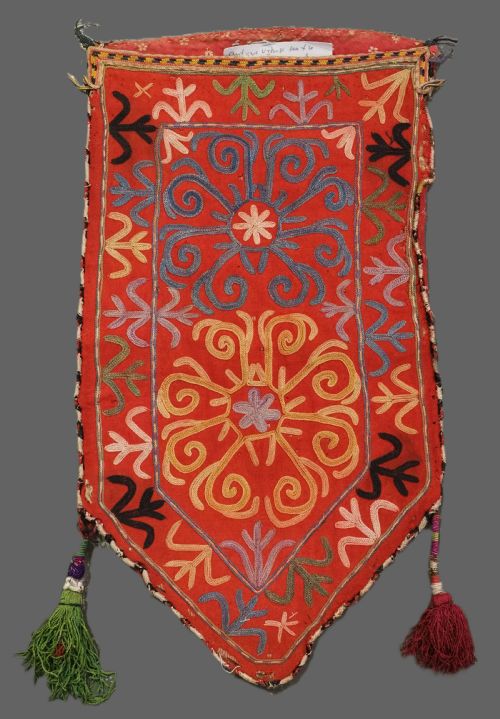
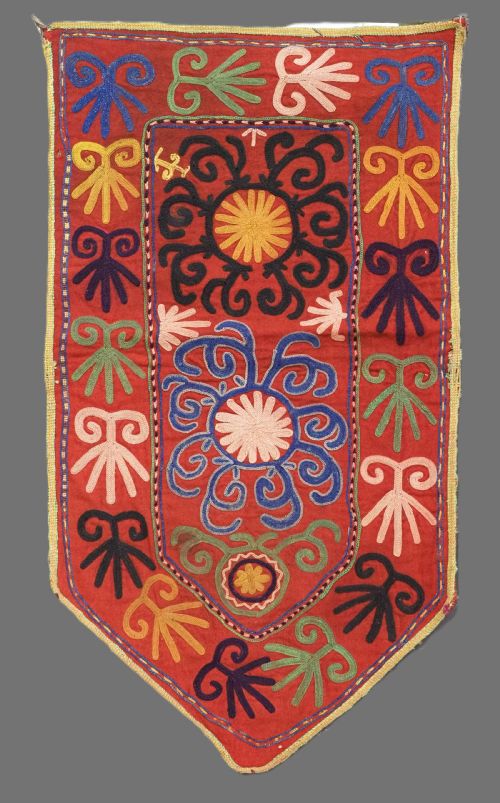
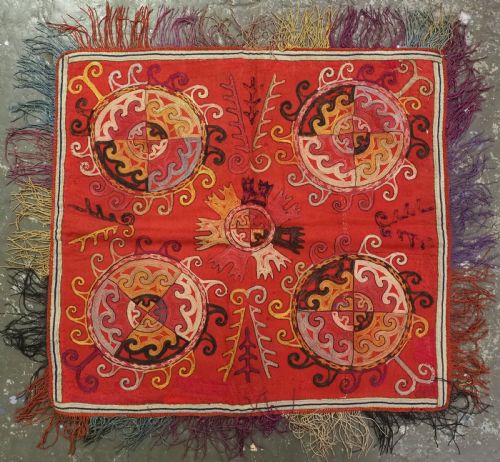
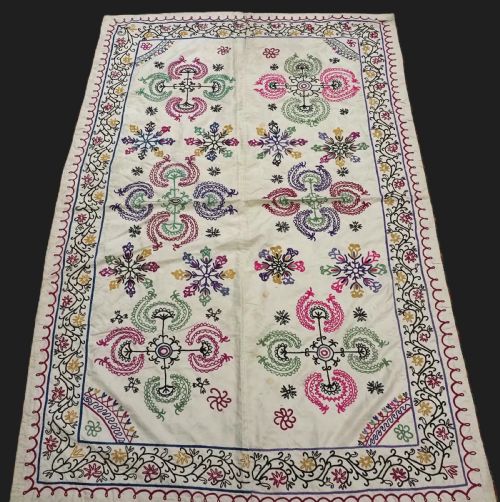
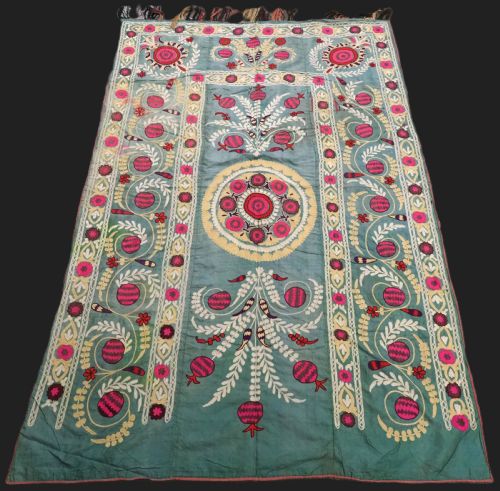
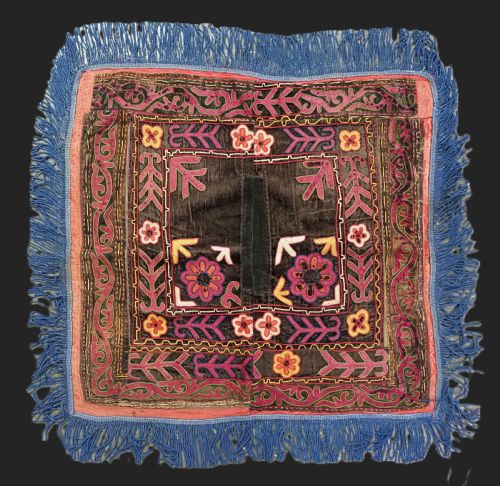
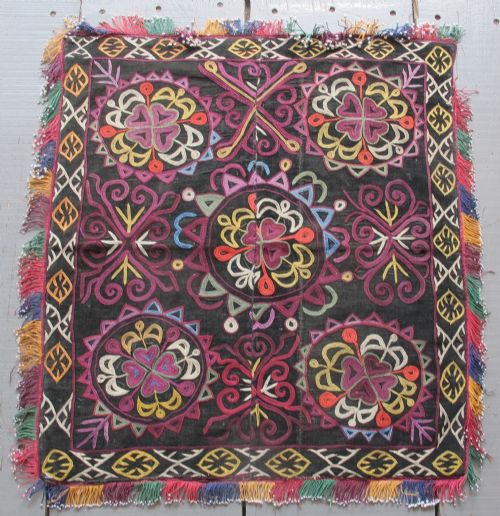
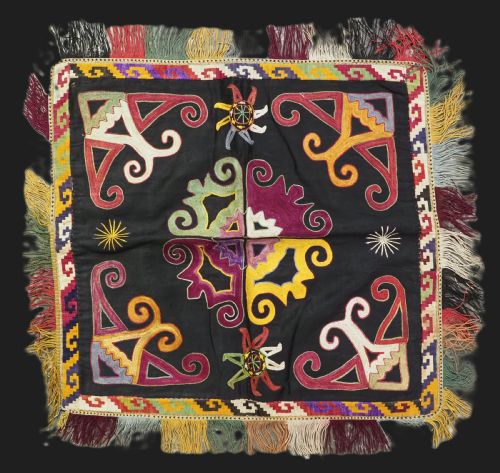
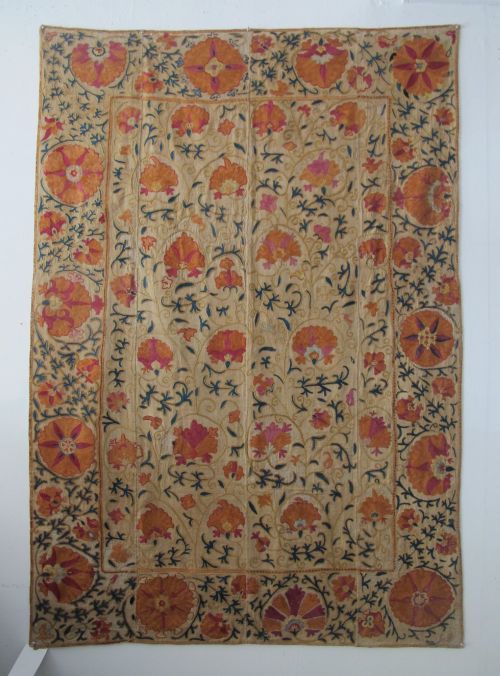
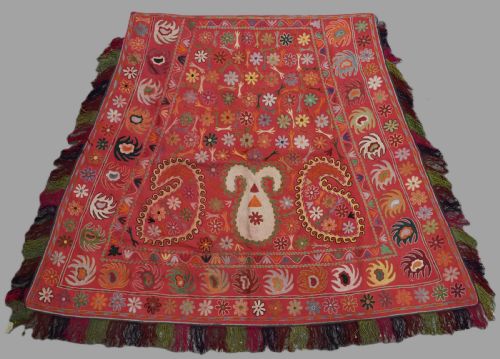
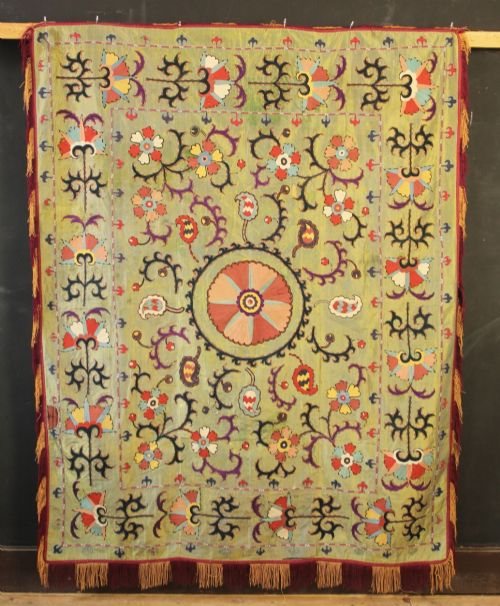
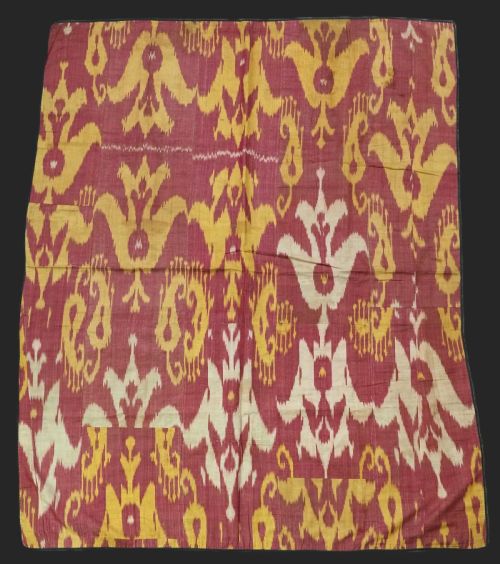
An uzbek silk hanging encompasses traditional embroidered suzanis, dowry pieces like ilgichs, and patterned ikat panels originating from Central Asia. These textiles span periods from the nineteenth century into the early twentieth century, reflecting distinct regional styles and tribal traditions.
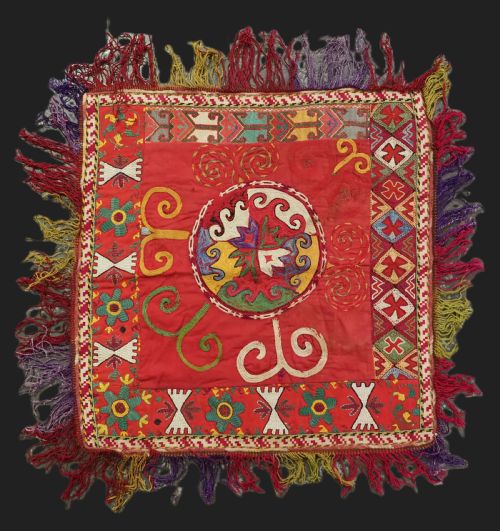
Buyers encounter various forms, including large wall hangings, small mirror covers, bed covers, and ceremonial horse covers created by Lakai and Tajik makers. These pieces serve as decorative panels that display historic needlework and dyed textile designs.
How they were made
Artisans worked with silk thread, silk-and-cotton adras, cotton, and wool grounds, occasionally incorporating glass beads and velvet for texture. Embroiderers stitched intricate motifs onto coloured fabric foundations, while weavers produced patterned ikat panels using resist-dyeing techniques.
Base fabrics varied from wool and cotton to red or yellow grounds, supporting dense silk embroidery executed in traditional tribal and regional formats.
Uzbek Silk Hanging Retail Price Guide 2026
Typical asking prices for uzbek silk hanging among the pieces listed under this phrase on Sellingantiques today, from the lower quarter to the upper quarter. They describe what is for sale here now, not the wider market.
Listings feature textiles spanning the nineteenth and early twentieth centuries, incorporating silk, cotton, wool, velvet, and glass beads.
What varies in quality
Quality depends upon the fineness of the silk thread work, the complexity of the design, and the integrity of the foundation fabric. Early pieces with well-preserved natural colours and intricate needlework demonstrate superior craftsmanship.
The density of the embroidery and the clarity of the ikat patterning distinguish standard utilitarian textiles from finer ceremonial examples.
The Uzbek Silk Hanging Glossary
- Suzani
- An embroidered tribal wall hanging or textile panel from Central Asia, traditionally worked in silk on a cotton or wool ground. These large cloths often feature medallion or architectural designs.
- Ikat
- A dyeing and weaving technique where yarn is resist-dyed prior to being woven into patterned fabric panels. This process creates distinctive blurred edges along the colour boundaries.
- Adras
- A traditional semi-silk fabric woven with a silk warp and a cotton weft. It forms a common ground for Central Asian textile panels and coats.
- Ilgich
- A dowry embroidery piece or small wall hanging associated with the Lakai tribe. These works often feature energetic geometric or zoomorphic motifs.
- Uut Kap
- A large storage bag face or hanging produced by Central Asian tribal groups, frequently embroidered in silk.
Uzbek Silk Hanging: Frequently Asked Questions
How were suzanis used originally?
Suzanis functioned primarily as decorative wall hangings, dowry items, bed covers, or ceremonial furnishings within traditional Central Asian households.
Families displayed these textiles on special occasions or kept them as part of a bride's dowry.
What is an ikat panel?
An ikat panel consists of woven fabric created from yarns dyed with specific patterns before weaving begins.
This method produces the characteristic hazy patterns seen across nineteenth-century Central Asian textiles.
How do I care for an antique silk hanging?
Protect antique silk textiles from direct sunlight to prevent the fading of natural dyes over time. Mount them gently without placing undue strain on the delicate silk threads or older foundation fabrics.
How are different tribal styles identified?
Tribal styles like those of the Lakai group show distinct embroidery motifs, such as bold geometric shapes on wool grounds. Regional centres like Bukhara or Samarkand developed characteristic colour palettes and composition structures.