


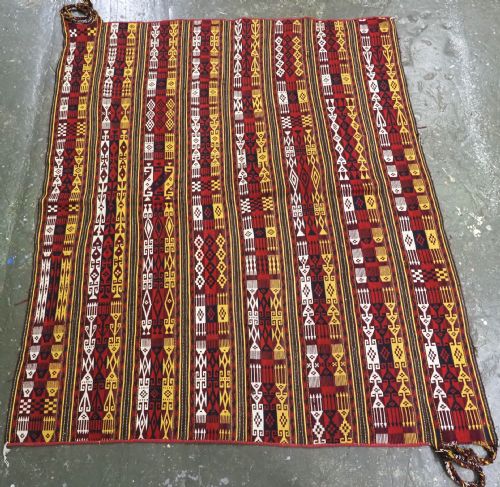

Uzbek Flatweave Rug
An uzbek flatweave rug brings bold Central Asian tribal geometry and rich textile heritage straight to your floor.
Uzbek Flatweave Rug
An uzbek flatweave rug spans kilim rugs, runner rugs, and textile panels originating from Central Asian tribal traditions. Buyers encounter regional forms such as gajeri kilims, torba ilgich hangings, and tartari safid weaves.
Most examples date from the late nineteenth and early twentieth centuries, specifically across the periods of 1890, 1900, 1910, and 1920. Pieces range from smaller items fashioned from tent bands to larger multi-strip wall hangings and floor coverings.
The aesthetic is distinctly Central Asian tribal, characterised by striking banded arrangements and bold graphic repeats. These textiles function equally well as area rugs on the floor or as decorative wall panels.
How they were made
Weavers constructed these textiles primarily from wool and cotton, occasionally incorporating camel hair for distinct natural grounds. Natural dyes provided the palette, producing soft faded reds and rich contrasting tones across multiple woven strips.
Many items incorporate supplementary embroidery or specialised weft work techniques on flatwoven foundations. Individual panels were frequently joined together, ranging from four-strip covers up to extensive thirteen-strip room-sized carpets.
Uzbek Flatweave Rug Retail Price Guide 2026
Typical asking prices for uzbek flatweave rug among the pieces listed under this phrase on Sellingantiques today, from the lower quarter to the upper quarter. They describe what is for sale here now, not the wider market.
One remarkably patient weaver joined thirteen separate strips together to create a single expansive kilim.
What varies in quality
Quality rests upon the precision of the weaving and the complexity of the banded or graphic design. Pieces composed of numerous narrow strips require meticulous alignment and structural skill from the maker.
The choice of materials also elevates a piece, particularly those utilising genuine camel hair grounds or harmonious natural dyes. Original context, such as surviving as complete saddlebag faces or intact tent bands, adds further distinction.
The Uzbek Flatweave Rug Glossary
- Kilim
- A flatwoven textile produced without pile. These pieces form the structural basis of most rugs and panels found in this category.
- Gajeri
- A specific type of Uzbek flatweave often characterised by bold banded patterns. These rugs reflect traditional nomadic aesthetics from Central Asia.
- Torba
- A small storage bag or hanging piece made by tribal groups. Examples like the torba ilgich showcase intricate regional weaving techniques.
- Safid
- A descriptor used for certain Tartari kilims denoting specific design traditions. These pieces often feature striking visual contrasts.
- Suzani
- An embroidered textile style integrated into flatweave structures. Artisans combined needlework with flatweaving to create complex repeat designs.
Uzbek Flatweave Rug: Frequently Asked Questions
How do I clean an antique flatweave?
Surface dust should be gently removed using low-suction vacuuming without a rotating brush head.
Professional textile conservators should handle any deep washing to protect the natural dyes and historical wool fibres.
Can I place these rugs on high traffic floors?
These historical flatweaves function best in low-traffic areas or spaces where furniture weight is minimal.
Placing a quality rug underlay beneath the textile prevents slipping and reduces fibre wear over time.
What is the difference between a kilim and a panel?
Kilims are woven primarily as floor coverings or utilitarian items like saddlebag faces. Panels often originate from larger tent dividers or wall hangings made in multiple strips.
How do I hang a textile on the wall?
Conservation-grade mounting involves stitching a fabric sleeve to the reverse and sliding a padded wooden batten through.
This method distributes the weight evenly across the entire textile without puncturing the historic wool or cotton.
How are production dates estimated?
Experts assess the wool spin, dye palette, and structural characteristics to place pieces within broad operational decades.
Comparative analysis with documented tribal artefacts from regions like Shakrisabz helps refine these chronological estimates.