
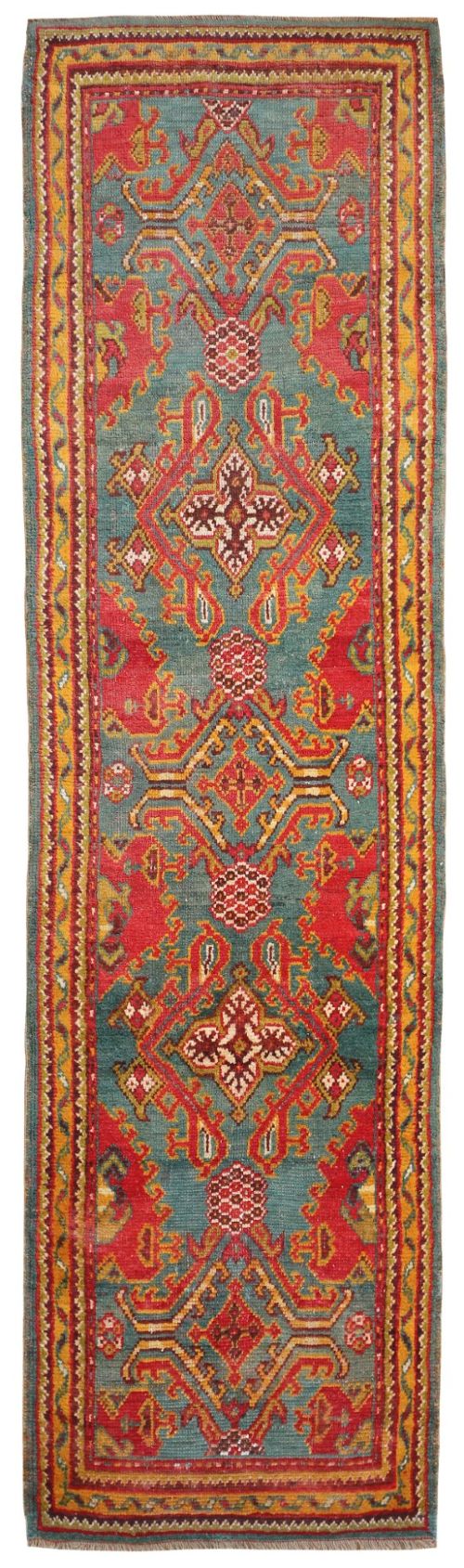



Ushak Hand Knotted Carpet
An ushak hand knotted carpet brings soft palettes and grand floral motifs to a room, offering genuine historical depth for your floor.
Ushak Hand Knotted Carpet
An ushak hand knotted carpet is a distinct form of floor covering originating from Western Anatolia, prized for large-scale floral patterns and subdued colour palettes. These pieces span the nineteenth and early twentieth centuries, encompassing periods from the Victorian era up to the nineteen-twenties.
The selections available here range from small area rugs and runner rugs to massive decorative carpets. You will frequently encounter generous square or rectangular formats designed to anchor principal reception rooms.
Makers and weavers in this tradition drew upon Ottoman and Turkish design vocabularies, blending traditional Anatolian geometry with sweeping curvilinear medallions. These rugs often feature ivory or faded grounds that integrate easily into historic and modern interiors alike.
How they were made
Weavers constructed each ushak hand knotted carpet by hand, utilising natural wool and cotton foundations. Many examples incorporate softer angora wool, which imparts a distinctive lustrous handle to the pile.
Artisans knotted these materials meticulously onto cotton warps and wefts, building durable structures designed to withstand generations of foot traffic. The dyestuffs employed yielded characteristic faded terracotta, soft madder, and ivory tones that mellow gracefully over decades.
Old department store shipping labels occasionally survive on the reverse, revealing long-forgotten journeys from Turkish workshops to British homes.
What varies in quality
Quality in an ushak hand knotted carpet rests upon the fineness of the knotting and the handled resilience of the wool. Tighter structures and superior grade angora wool distinguish the more refined examples from coarser utilitarian pieces.
A harmonious balance of faded vegetable dyes and the crisp execution of the central medallion separate master-woven specimens from standard workshop production. The integrity of the original borders and the symmetry of the overall composition further elevate the standing of a piece.
Maples
The Ushak Hand Knotted Carpet Glossary
- Medallion
- A large central ornamental design motif placed symmetrically in the field of the carpet. This focal element frequently displays intricate floral or geometric drafting.
- Angora wool
- A soft, high-grade wool harvested from specialised regional sheep or goats. It provides an exceptionally lustrous surface texture to select nineteenth century rugs.
- Runner
- A long, narrow carpet format specifically proportioned for corridors, hallways, and staircases. These pieces accommodate linear spaces while displaying characteristic border patterns.
- Ground
- The main background field colour surrounding the central medallion and secondary motifs. Ivory and muted terracotta serve as typical background shades in these rugs.
Ushak Hand Knotted Carpet: Frequently Asked Questions
Will these carpets fit modern rooms?
Their naturally subdued colourways and large-scale patterns allow these textiles to complement contemporary minimalist interiors as well as traditional spaces. The soft ivory and faded tones bridge diverse design schemes effectively.
Oversize formats require careful measurement of your floor space before purchase. Runners suit hallways, while square proportions anchor seating areas gracefully.
What is an angora ushak?
An angora ushak utilises a softer, silkier grade of wool that yields a distinctly lustrous pile. This material choice enhances the visual depth of the faded vegetable dyes.
These particular pieces often feel more pliable and plush underfoot. They represent a specialised subset of nineteenth-century Anatolian weaving.
How do I date an antique carpet?
Dating relies upon stylistic markers, structural analysis of the knotting, and the specific palette of the natural dyes. Victorian era examples often align with late nineteenth-century British import preferences.
Comparing the weave density and border motifs against documented pieces helps narrow the decade of production. Documentation from historic retailers can occasionally assist with provenance.