

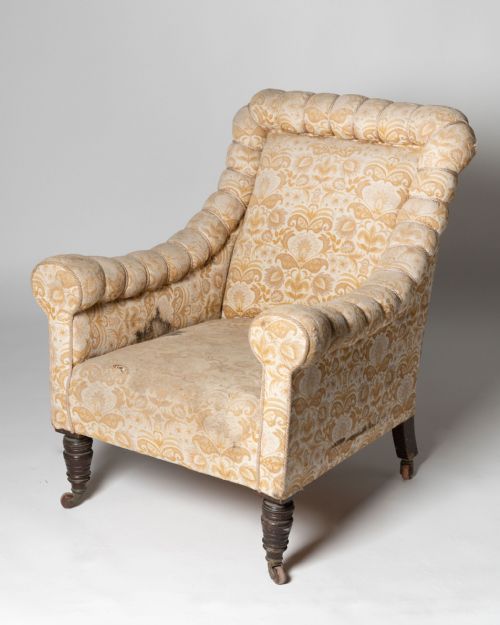
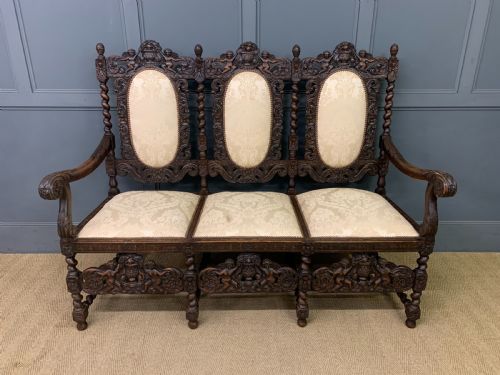
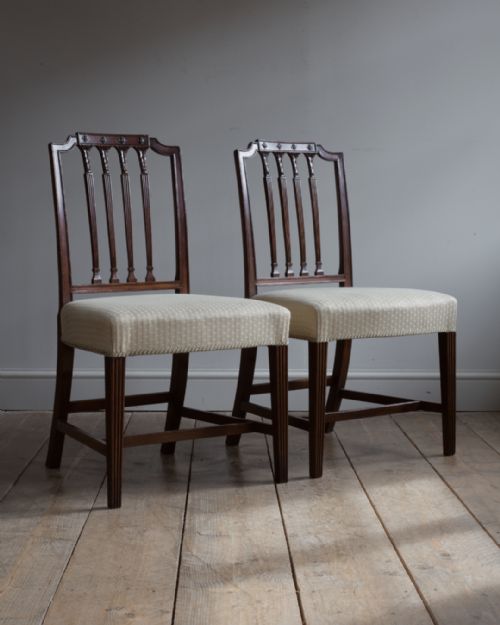
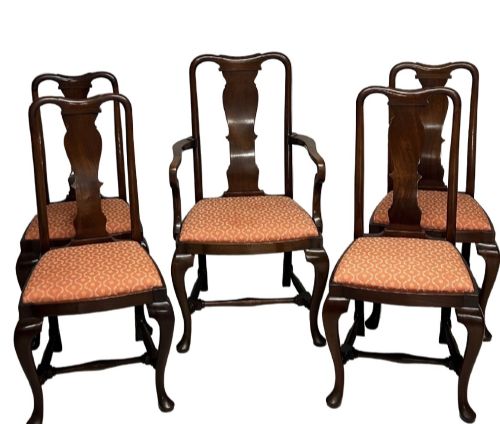
Upholstered Wood Chair
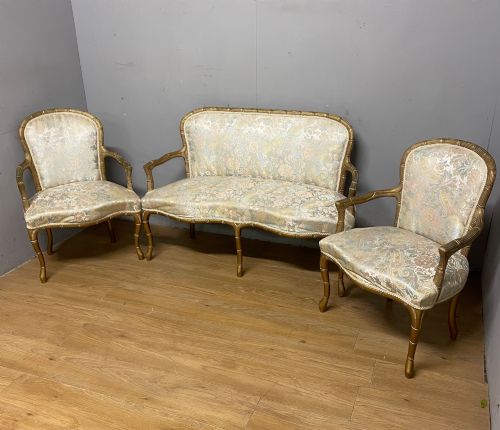
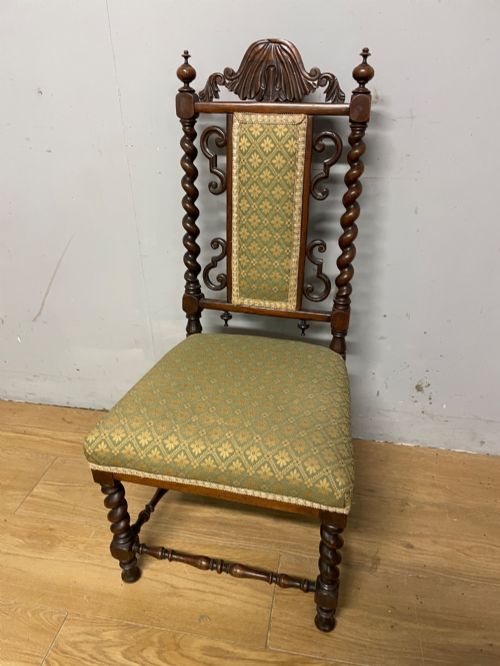
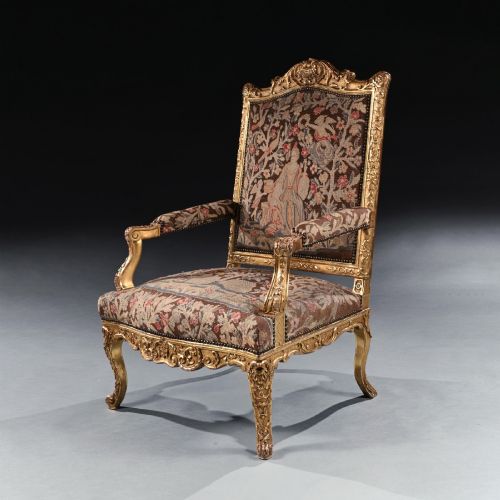
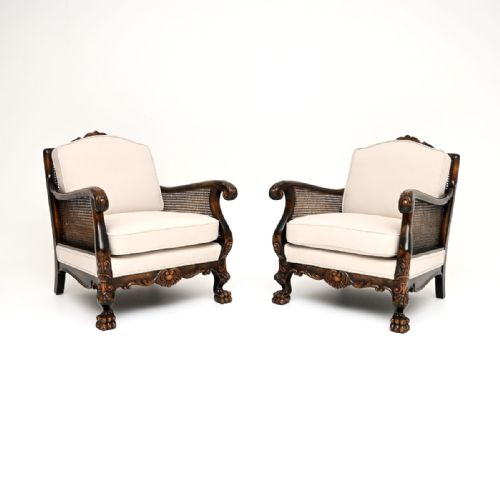
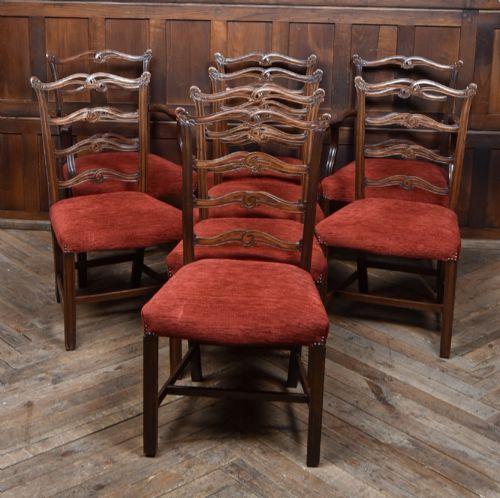
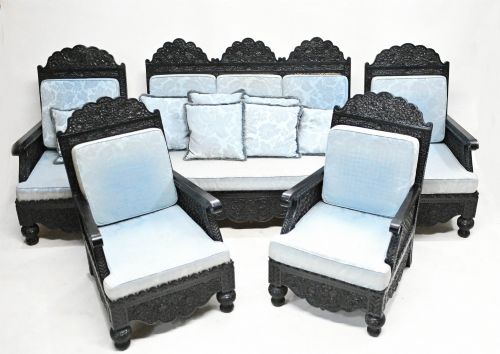
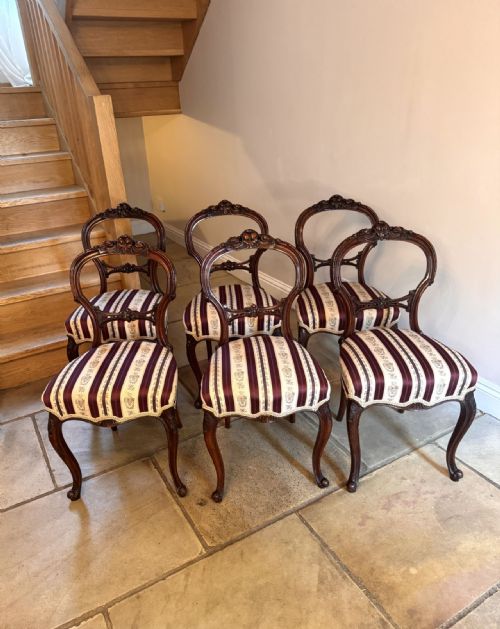
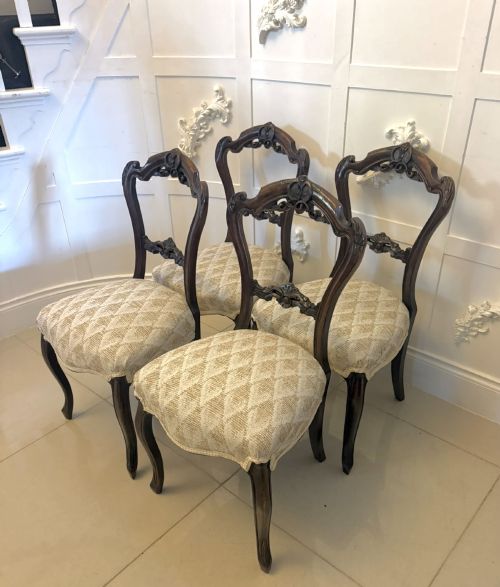
These upholstered wood chair examples span Georgian dining seats to Art Deco salon forms, offering solid timber frames combined with period textiles.
Upholstered Wood Chair
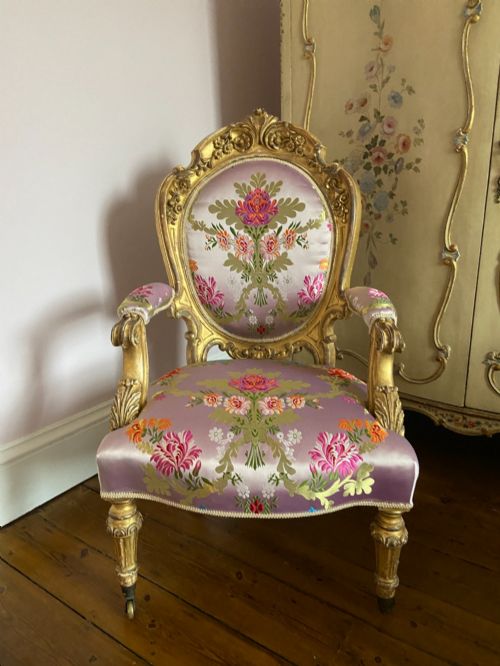
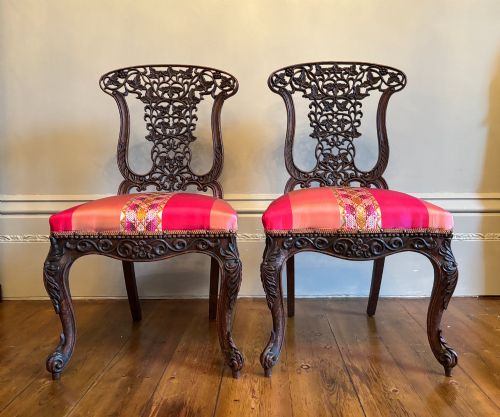
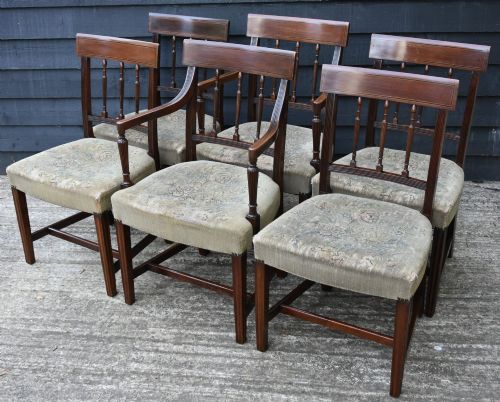
An upholstered wood chair brings together a timber structural frame and a soft padded seat, back, or armrests. When searching for an upholstered wood chair, buyers encounter single armchairs, matching dining sets, and compact occasional seating. The selection ranges from robust 18th century George III designs to refined Edwardian and Art Deco seating.
Dining chairs and carvers dominate the larger sets, often appearing in groups of six, eight, or ten pieces. Single salon chairs, tub chairs, and slipper chairs provide lower-slung or more intimate alternatives for drawing rooms and bedrooms. Frameworks alter from carved mahogany and rosewood to lighter maple and oak.
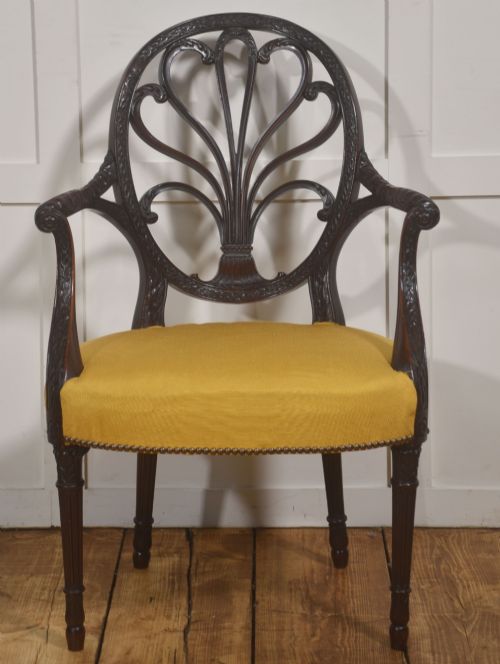
Origin points stretch across English country workshops, formal Regency urban makers, and French ateliers. Period influences such as Hepplewhite, Louis XVI, and Jacobean shape the carved details and proportions of the timber frames. Buyers select these pieces to anchor a room around traditional woodworking and period upholstery.
How they were made
Makers built these frames using dense hardwoods like mahogany, walnut, oak, and rosewood, joined with traditional mortise and tenon construction. Carvers shaped the timber by hand, applying reeded legs, shield backs, or elaborate scrollwork directly onto the solid wood. Maple and ash appeared in regional English country pieces and faux bird's-eye finishes.
Upholstery relied on natural textiles including velvet, silk, damask, and wool, often secured over webbing and stuffing layers. Brass tacks frequently edge the fabric borders on French salon chairs and Georgian armchairs. Gilt finishes and painted surfaces decorate specific French and Continental framework styles.
Upholstered Wood Chair Retail Price Guide 2026
Typical asking prices for upholstered wood chair among the pieces listed under this phrase on Sellingantiques today, from the lower quarter to the upper quarter. They describe what is for sale here now, not the wider market.
Listings feature woods spanning mahogany, walnut, oak, and rosewood across 18th-century Georgian and 19th-century Victorian periods.
What varies in quality
The integrity of the timber frame dictates the primary tier of craftsmanship. Deep, crisp hand-carving on mahogany or walnut separates standard production from exceptional workshop output. Matched sets displaying consistent wood grain across eight or twelve dining chairs require superior log selection.
The sophistication of the joinery and the survival of original decorative elements influence overall execution. Refined proportions in shield backs, rope backs, and patent reclining mechanisms show advanced engineering. Fabric selection also plays a part, with Aubusson tapestries and heavy silks marking higher status than plain textiles.
Maple and Co·Giles Grendey·Daws Patent·Colefax and Fowler
The Upholstered Wood Chair Glossary
- Carver
- An armchair designed with open sides to accommodate formal clothing, frequently matching a set of side chairs for dining tables.
- Shield back
- A chair back shaped like a heraldic shield, popularized by 18th-century makers such as Hepplewhite and Sheraton.
- Tub chair
- A curved, semi-circular armchair where the back and arms form a single continuous rounded enclosure.
- Slipper chair
- A low-framed bedroom chair with short legs, originally designed to assist ladies with putting on footwear.
- Reeded leg
- A column carved with parallel convex mouldings that resemble bundled reeds, common on Regency and Victorian furniture.
Upholstered Wood Chair: Frequently Asked Questions
How do I date an upholstered wood chair?
Dating relies on identifying the prevailing timber species, tool marks, and stylistic motifs present on the frame. Mahogany and walnut dominate specific Georgian and Victorian decades, while structural joinery evolved from pinned mortise joints to machine-cut elements.
Comparing the carved ornament to documented period patterns helps narrow the decade of manufacture. Upholstery materials often reflect later restorations rather than the original construction date.
Are dining chair sets sturdy enough for daily use?
Most antique dining chairs constructed from solid mahogany, walnut, or oak remain robust for everyday seating. Traditional frame joinery distributes weight evenly across the timber legs and seat rails.
Periodic checks of the underlying glue blocks and stretcher joints maintain their long-term stability. Lighter occasional or salon chairs suit gentler daily use compared to heavy dining carvers.
What is the difference between a side chair and a carver?
Side chairs feature compact frames without arms, designed to tuck neatly beside a dining table when not in use. Carver chairs include integrated armrests, traditionally placed at the heads of the table.
Sets typically combine two carvers with several matching side chairs. Both share identical leg designs and back geometry to maintain visual uniformity.
How should I care for antique wood and fabric?
Protect timber frames from direct sunlight and rapid humidity shifts to prevent wood splitting or shrinkage. Regular dusting with a soft cloth preserves the polished finish of mahogany and rosewood surfaces.
Upholstery requires gentle vacuuming with a brush attachment to remove surface particles. Professional textile cleaning protects delicate velvet, silk, or tapestry covers from premature wear.