



Upholstered Storage Bench
An upholstered storage bench combines a seat with a hidden compartment, offering practical seating and tidy concealment for household items.
Upholstered Storage Bench
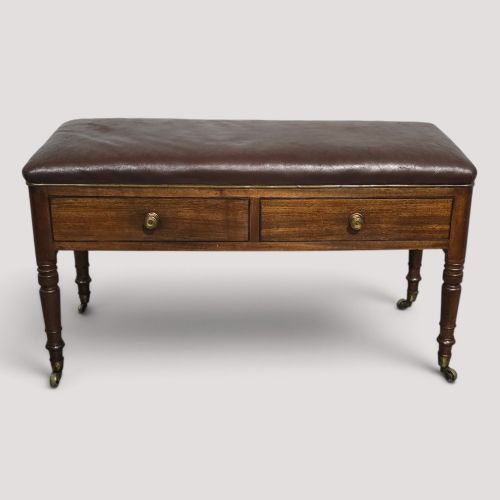
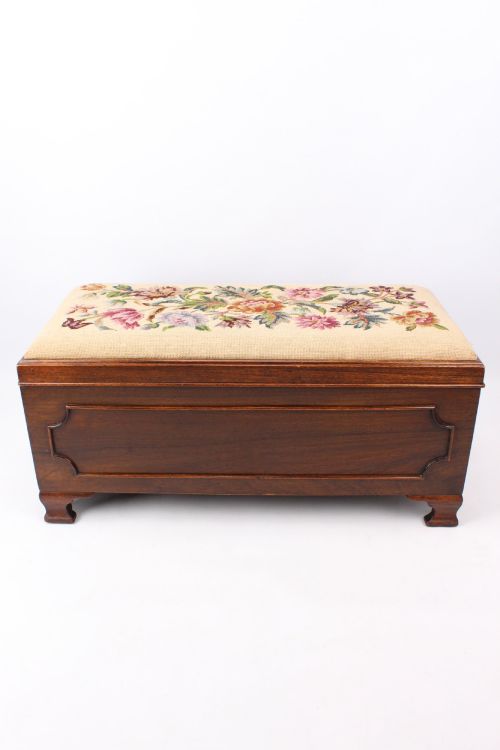
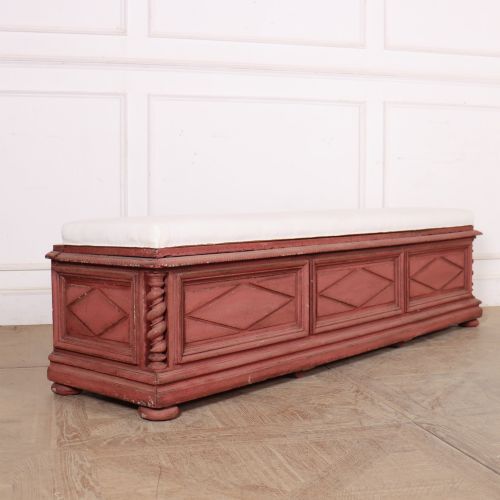
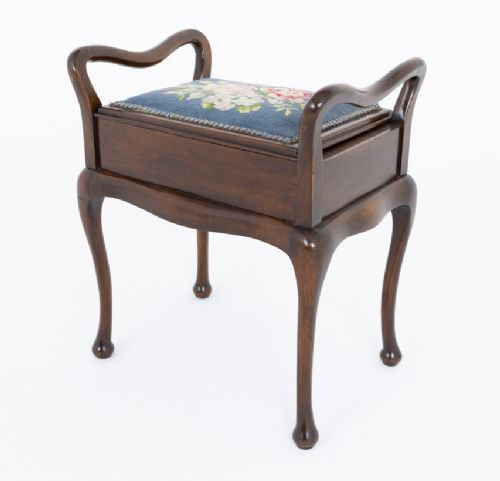
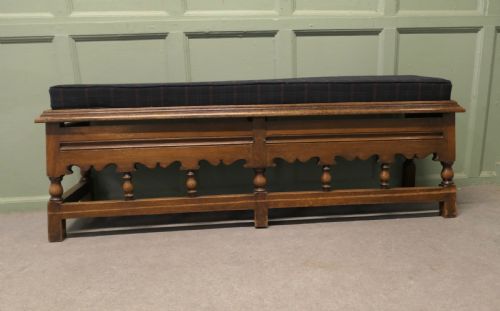
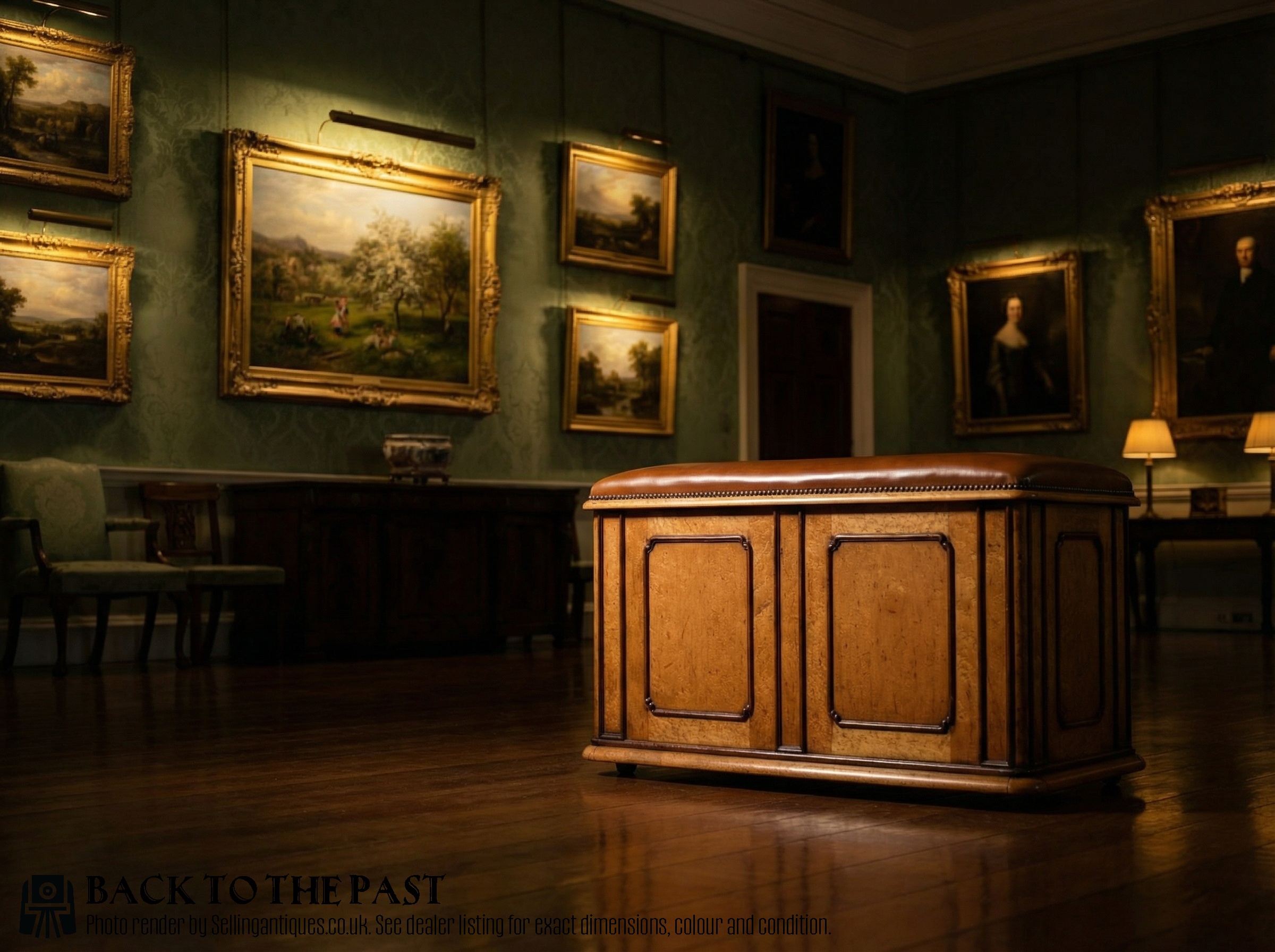
When you search for an upholstered storage bench, you encounter a practical fusion of seating and concealed compartment furniture spanning multiple periods and styles. These pieces function primarily as piano stools, ottomans, blanket boxes, and hall benches across the selection.
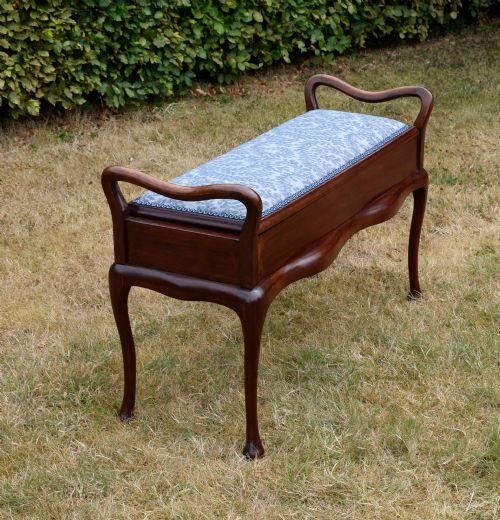
The versions most likely to meet you on this page date from the Victorian and Edwardian eras, alongside Art Deco and nineteenth-century examples. They range from mahogany duet piano stools with hinged seats to large country house ottomans and birch blanket boxes.
Makers such as Hallett & Sons occasionally appear alongside various anonymous workshops, reflecting both grand country house commissions and everyday domestic utility. The forms bridge formal reception rooms, music rooms, and boot stores with equal measure.
Materials and construction
Timbers form the structural carcass of these pieces, with mahogany, walnut, oak, birch, pine, and rosewood appearing frequently across the listings. Joinery and box construction support the weight of the hinged, lift-up, or fall-front seats.
Upholstery provides the top surface, utilising fabrics, leather, deep buttoning, velvet, needlework, and tweed alongside brass hardware such as hinges and castors. Inlaid details and painted finishes add decorative merit to mahogany and walnut frames.
Listings span the nineteenth century through the 1930s, incorporating Victorian, Edwardian, Regency, and Art Deco styles across mahogany, walnut, oak, and leather.
Distinguishing quality in storage seating
The calibre of timber selection and cabinetwork determines the structural integrity of the base frame, separating robust hardwoods like mahogany and rosewood from softer pine and lesser timbers. Finely executed inlay, crisp carving, and substantial box construction distinguish superior workshops from standard output.
Upholstery execution and the retention of original mechanisms, such as smooth-operating hinges for lift-up or fall-front seats, mark the higher tiers of these pieces. The choice of covering material, from deep-buttoned leather to intricate needlework and quality fabric, dictates the refinement of the finished seat.
Hallett & Sons
The Upholstered Storage Bench Glossary
- Ottoman
- A low, upholstered seat or footstool often featuring a hinged lid and internal storage space. It serves multiple domestic functions from a living room centrepiece to a bedroom blanket box.
- Duet piano stool
- A wider seating bench designed for two musicians, typically incorporating a lift-up or hinged seat to store sheet music. Edwardian and Victorian versions frequently utilise mahogany.
- Fall-front
- A hinged vertical panel that drops down to provide access to the interior storage space of a stool or cabinet. This mechanism appears on specific Victorian walnut piano stools.
- Blanket box
- A large chest designed originally for storing bedding and textiles, occasionally adapted with upholstery for seating. Birch and pine frequently form the carcasses of these storage pieces.
Upholstered Storage Bench: Frequently Asked Questions
What are these storage benches used for?
These pieces serve as dual-purpose furniture providing both a comfortable place to sit and a concealed cavity for keeping household items out of sight. Historically, specific forms accommodated sheet music by pianos or held blankets and boots in hallways.
Today, they integrate easily into modern rooms to manage clutter while adding period character to an interior scheme.
How do I date a Victorian storage bench?
Dating relies on examining the primary timber, construction methods, and the style of any decorative carving or upholstery techniques present. Victorian examples often feature solid mahogany or walnut carcasses with traditional joinery.
Additionally, hardware such as brass hinges and the type of internal lining can offer clues regarding the manufacturing decade.
Where should I place an ottoman bench?
An ottoman bench suits the foot of a bed for storing extra textiles, functions as a window seat in a reception room, or sits in a hallway for boot storage. Their compact footprint allows them to occupy transitional spaces where both surface utility and floor storage matter.
Matching the wood tone and fabric style to your existing decor ensures the piece anchors the room harmoniously.
What is the difference between a piano stool and an ottoman?
Piano stools are specifically proportioned for seating at a keyboard and frequently feature music storage beneath a hinged or duet-sized seat. Ottomans generally offer a larger interior cavity intended for blankets, cushions, or general household storage.
While both involve upholstered seating over a box base, their historical contexts and dimensional proportions set them apart.