
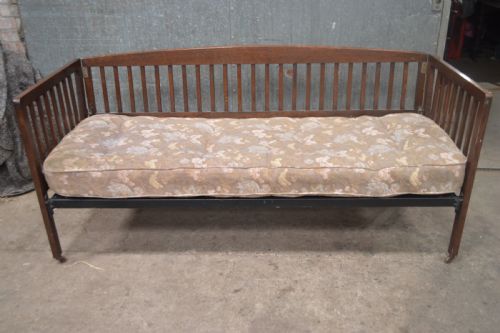
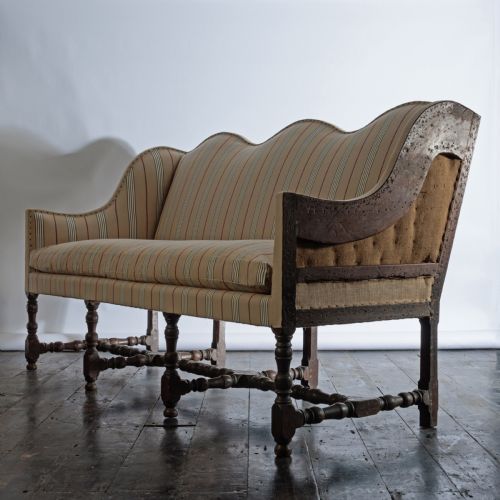
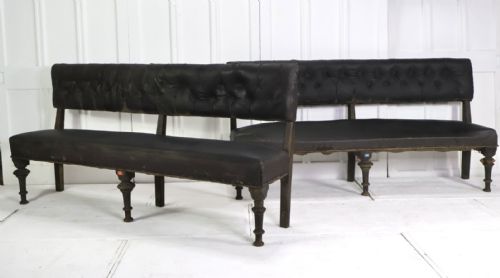

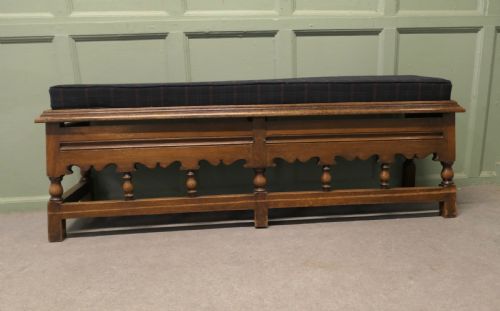
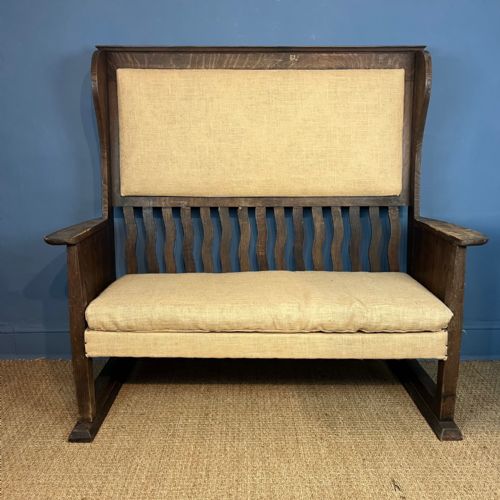


Upholstered Oak Settle
An upholstered oak settle offers high-backed, solid seating that anchors a hallway or living space with traditional character.
Upholstered Oak Settle
When you search for an upholstered oak settle, you are looking at sturdy wooden seating designed with a high back and cushioned pad, panel, or squab. These pieces range from substantial 17th-century forms to lighter Arts and Crafts iterations and later country house hall benches.
You are most likely to meet Victorian and late 19th-century examples on this page, alongside Arts and Crafts versions and earlier styles. Makers frequently adapted these benches for halls, boot stores, and window seats, incorporating storage boxes or fold-down mechanisms.
The styles span Reformed Gothic mannerisms, Irish country house designs, and Georgian panelled construction. Each variation displays the heavy timber frame characteristic of oak, paired with diverse fabric, leather, or cotton upholstery.
How they were made
Carpenters built these settles primarily using solid oak timbers, occasionally combining burr elm or walnut for decorative contrast. Panels were typically tongue-and-groove or hand-carved, utilising traditional mortise and tenon joinery to ensure rigidity.
Upholstery methods evolved across the periods, incorporating stuffing secured with cotton, velvet, leather, or printed fabrics. Brass studs and iron hardware frequently fastened the textiles and reinforced structural stress points.
Listings span periods from the 17th century through the Victorian era to 1930, utilising oak, fabric, leather, brass, and velvet.
What varies in quality
The standard of carving and timber selection separates finer settles from utilitarian workshop pieces. Heavy relief carving, well-figured oak grain, and integrated box storage indicate more ambitious commission work.
Integrity of the wooden frame and originality of the upholstery components dictate overall merit. Settles retaining structural stability without excessive timber shrinkage or crude secondary repairs hold greater presence.
The Upholstered Oak Settle Glossary
- Settle
- A wooden bench with high back, solid arms, and often an enclosed base. It traditionally protected residents from drafts in large halls.
- Box Settle
- A bench featuring a hinged seat opening to a storage compartment below. This design doubled as a chest for blankets or boots.
- Arts and Crafts
- A design movement emphasising handcraftsmanship and simple vernacular forms. It influenced many oak settles produced around nineteen hundred.
- Reformed Gothic
- A 19th-century style simplifying medieval architectural motifs for domestic furniture. It favoured geometric lines and exposed construction.
- Squab
- A loose upholstered cushion placed upon a wooden bench or seat. It provided removable comfort for hard wooden bases.
Upholstered Oak Settle: Frequently Asked Questions
Where should I place an upholstered oak settle?
These benches suit entrance halls, boot rooms, and spacious landings where their high backs create a defined seating nook. They also function well against living room walls.
Ensure the room has sufficient clearance for the high back and deep seat frame without blocking doorways.
How do I clean oak settle woodwork?
Dust the timber regularly with a dry cloth and apply a traditional beeswax polish sparingly to maintain the finish. Avoid silicone-based sprays.
Keep the wood away from direct heat sources and strong sunlight to prevent the oak from drying and splitting.
Can I reupholster a vintage oak settle?
Many settles use modern or replacement upholstery that you can easily update to suit your interior scheme. Traditional tacks and webbing allow straightforward re-webbing.
Retain original textile fragments or leather where historical value matters, especially on pieces from the 17th or 18th century.
How do I identify an Arts and Crafts settle?
Look for simplified construction, exposed tenon joints, and minimal carved decoration focusing on natural grain patterns. Glasgow School and Edwardian versions often display these traits.
They typically date from the late 19th or early 20th century and feel lighter than Victorian Gothic revivals.