

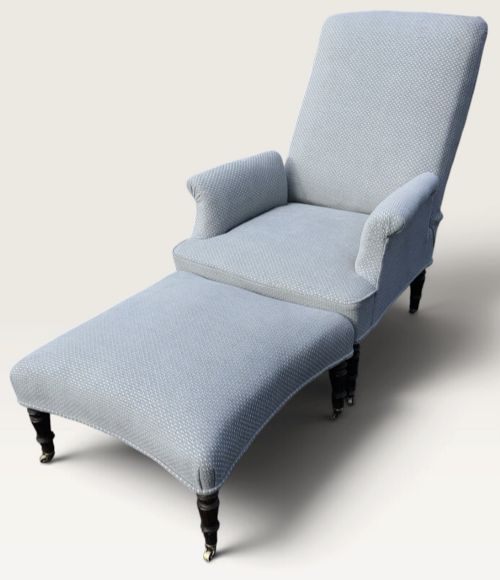
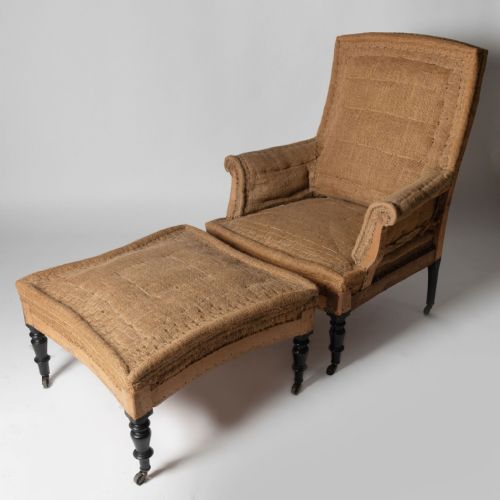

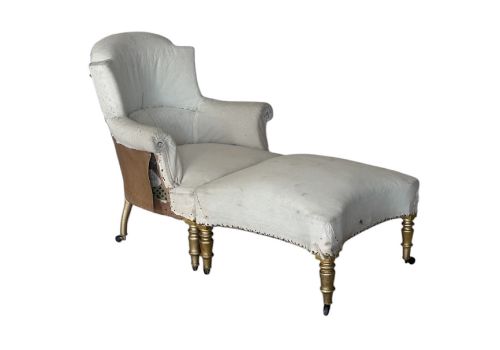
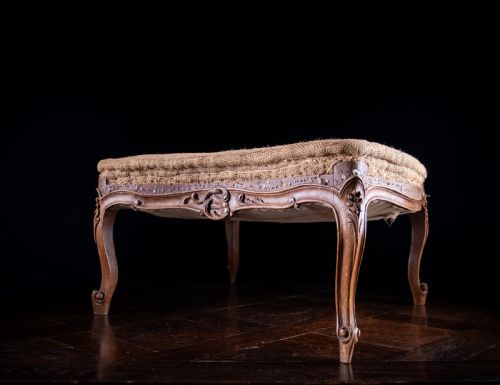


Upholstered Lounge Stool
An upholstered lounge stool brings low, padded seating to a room, offering a comfortable place to rest the feet or sit by the fire.
Upholstered Lounge Stool
When searching for an upholstered lounge stool, a buyer encounters a variety of low seating options designed for relaxation, often accompanying larger armchairs or chaises in period settings. These pieces range from substantial footstools and ottomans to matched pairs intended to sit alongside nineteenth-century armchairs and duchess brisées.
Most items combine a wooden or giltwood frame with traditional fabric upholstery, sometimes finished with buttoning or hessian linings. Buyers will find both English fireside pieces in mahogany or walnut and French decorative forms carved from beech or rosewood.
How they were made
Maker workshops constructed the frames of these stools from hardwoods such as mahogany, walnut, rosewood, and beech, often employing carved giltwood for French revival pieces. Joinery techniques varied from simple pegging to elaborate hand-carving found on nineteenth-century frames.
Upholstery involved traditional stuffing materials applied over webbing or springs, secured with hessian and finished with decorative fabrics. Stamped signatures on specific giltwood pieces indicate production by established Parisian workshops.
Upholstered Lounge Stool Retail Price Guide 2026
Typical asking prices for upholstered lounge stool among the pieces listed under this phrase on Sellingantiques today, from the lower quarter to the upper quarter. They describe what is for sale here now, not the wider market.
The listings on this page span the Victorian period through to the nineteen twenties, incorporating French styles alongside English fireside forms.
What varies in quality
Quality in these stools rests primarily on the depth and precision of the frame carving and the choice of primary timber, where dense walnut and mahogany sit above softer woods. The integration of the frame with its original gilding or polish also marks the distinction between standard production and finer workshop output.
The execution of the upholstery and the survival of matching seating sets influence the character of each piece. Items that retain their original pairings with armchairs or feature maker stamps demonstrate greater workshop pedigree.
LOIDRAULT FRERES PARIS
The Upholstered Lounge Stool Glossary
- Giltwood
- Wood that has been coated with gold leaf or gilt powder. This finish appears frequently on nineteenth-century French revival frames.
- Hessian
- A coarse woven fabric typically made from jute or hemp fibres. It serves as a traditional under-upholstery layer to support stuffing.
- Louis XV Style
- A decorative aesthetic characterised by asymmetrical curves, rocaille motifs, and cabriole legs. This style re-emerged strongly during the nineteenth century.
- Prie Dieu
- A devotional chair featuring a low seat and a tall, narrow top rail designed for kneeling prayer. Examples often date from the Victorian period.
- Duchess Brisee
- A two or three-piece chaise longue arrangement comprising an armchair and matching stool or footstool. It allows the user to recline fully with leg support.
Upholstered Lounge Stool: Frequently Asked Questions
What is an upholstered lounge stool?
An upholstered lounge stool is a low piece of seating furniture designed to support the feet or serve as a supplementary seat. These items often feature padded tops covered in fabric and rest on wooden or giltwood frames.
They appear frequently alongside nineteenth-century armchairs and chaises longues as part of matched suites or fireside groupings.
How were these stools used historically?
Historically, these stools provided comfort in drawing rooms and bedrooms, often paired with armchairs for resting the legs during long periods of sitting. Some larger variants functioned as independent seats near fireplaces or dressing tables.
French variations often accompanied reclining armchairs or duchess brisee suites for ultimate relaxation.
How do I care for antique upholstery?
Caring for antique upholstery involves gentle vacuuming with a soft brush attachment to remove dust without damaging fragile textiles. Keeping pieces away from direct sunlight prevents the fading of nineteenth-century fabrics and giltwood finishes.
Professional textile conservators should handle any deep cleaning or structural repairs to the internal stuffing and webbing.
How do I date a nineteenth-century stool?
Dating these pieces relies on examining the timber types, joinery methods, and stylistic cues such as carved revival motifs. Victorian pieces often employ walnut or mahogany with traditional buttoning, while French nineteenth-century examples utilise beech and giltwood.
Maker stamps or stamps on the frame can also provide precise chronological markers for specific workshops.