




Upholstered Hearth Bench
An upholstered hearth bench offers a sturdy seat by the fire, combining heavy brass, iron, or timber frames with soft textile or leather tops.
Upholstered Hearth Bench
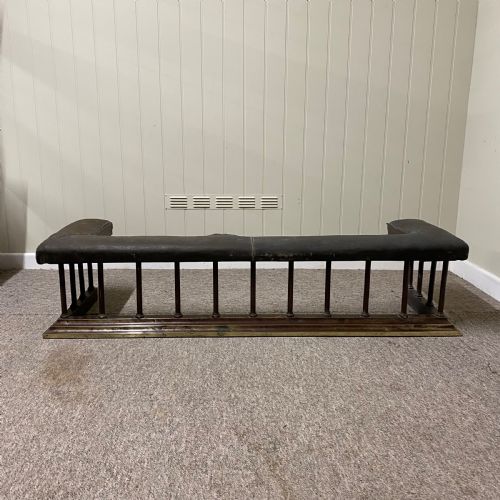
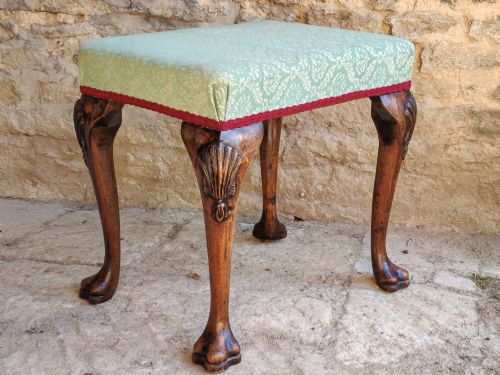
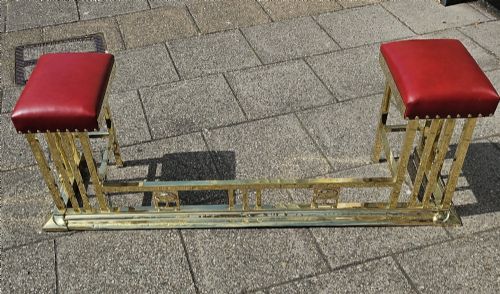
An upholstered hearth bench serves as a fireside seat, encompassing low stools and club fenders that sit directly around a fireplace. These pieces range from substantial 18th century walnut designs to Victorian and Edwardian brass and iron club fenders.
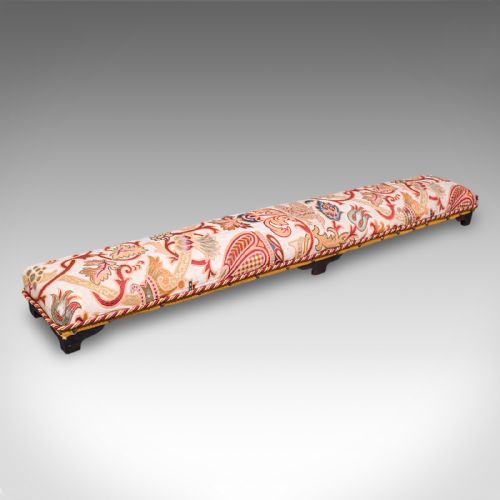
Buyers meet a variety of forms on this page, including long carriage stools with crewelwork or tweed upholstery alongside heavy leather club fenders. The selection spans periods from the Georgian era through to Art Deco, reflecting diverse interior styles like Queen Anne and Jacobean Revival.
The primary function remains seating by the fire, often elevated on cabriole legs or supported by robust metal bases. Walnut, mahogany, oak, and rosewood frequently form the wooden structures, paired with textile, wool tweed, or leather seats.
How they were made
Frames rely on traditional woodworking joints applied to dense timbers like walnut, mahogany, oak, and rosewood, alongside forged or cast metal frameworks in brass, iron, steel, and chrome. Carved details on wooden legs show hand-working, while metal club fenders utilise heavy tubular brass and structured iron supports.
Upholstery techniques involve durable coverings such as leather, wool tweed, textile, and crewelwork secured over firm padding. The combination of solid timber or heavy metal with tight upholstery creates the durability required for daily fireside use.
Upholstered Hearth Bench Retail Price Guide 2026
Typical asking prices for upholstered hearth bench among the pieces listed under this phrase on Sellingantiques today, from the lower quarter to the upper quarter. They describe what is for sale here now, not the wider market.
Listings span from the 18th century through to 1930, encompassing Victorian, Georgian, and Art Deco periods.
What varies in quality
The substance of the frame sets pieces apart, distinguishing heavily cast brass or solid carved walnut from lighter constructions. Weight and material density in the metalwork and timber dictate the longevity and physical presence of the bench.
The refinement of the carving on wooden legs, such as cabriole styles, and the quality of the chosen upholstery materials, including heavy leather or intricate crewelwork, mark the distinction between standard items and more exceptional examples.
The Upholstered Hearth Bench Glossary
- Cabriole leg
- A furniture leg that curves out and then in, resembling an animal's leg. It frequently appears on 18th and 19th century stools.
- Crewelwork
- Embroidery executed with wool yarn on a heavy base fabric. It appears on fireside foot rests and antique carriage stools.
- Carriage stool
- A low portable seat utilised in transport or domestic settings. These pieces often feature traditional upholstery like tweed or crewelwork.
Upholstered Hearth Bench: Frequently Asked Questions
What is a club fender?
A club fender is a low metal structure fitted with upholstered seats that surrounds the hearth of a fireplace.
Originally designed to provide comfortable seating close to the fire, these pieces utilise brass, iron, steel, or chrome frames combined with leather or textile tops.
How do I date a wooden stool?
Dating a wooden stool involves examining the timber species, such as walnut, mahogany, or oak, alongside the construction methods and carved details.
Stylistic markers like cabriole legs or revival influences help place the piece within periods ranging from the 18th century through the Victorian era.
What materials were used for upholstery?
Upholstery on these hearth pieces includes leather, wool tweed, crewelwork, and various textiles.
These durable materials were selected to withstand regular fireside use while complementing the wooden or metal frames.
Where were hearth benches placed?
Hearth benches and stools were positioned directly around the fireplace in domestic rooms and country houses.
They provided practical, low seating designed to utilise the warmth radiating from the hearth.