
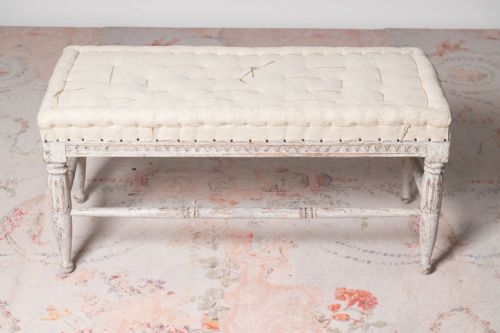


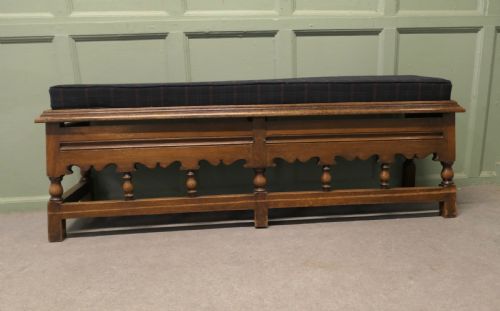


Upholstered Hallway Bench
An upholstered hallway bench brings seat and textile together at the threshold, offering a firm place to sit while pulling on boots.
Upholstered Hallway Bench
An upholstered hallway bench combines a wooden frame with a cushioned top designed for an entryway or narrow passage. These pieces appear across various periods, notably in Edwardian, Victorian, and earlier 19th-century interpretations.
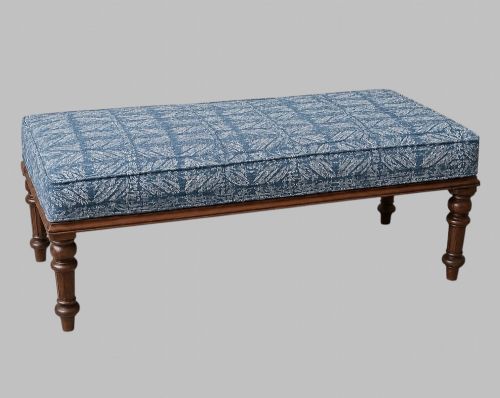
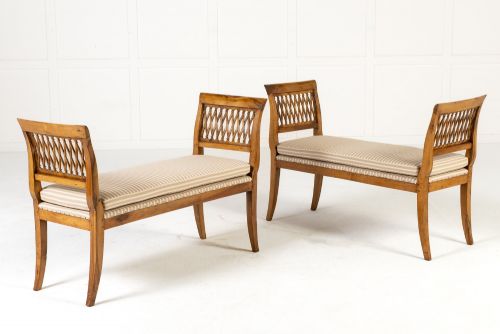
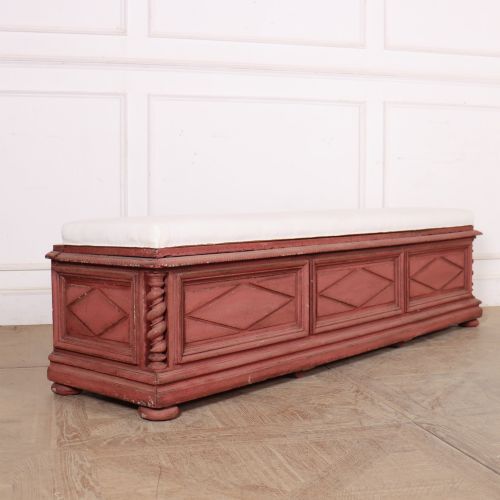
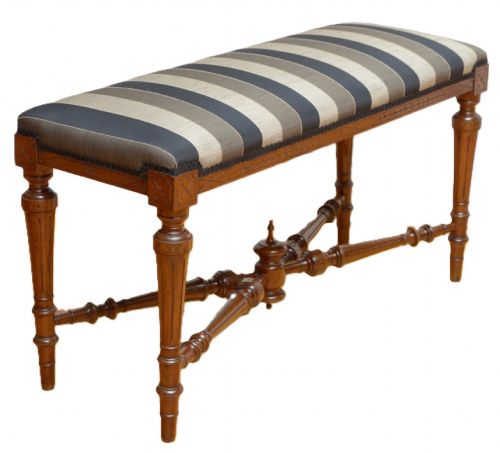
The form stretches from compact window seats and duet stools to longer settles and narrow settees. Buyers meeting these pieces on this page encounter timber frames paired with patterned textiles, plain linens, or rich velvets.
Origins span English cabinetmaking, French seating traditions, and Scandinavian painted styles, providing diverse architectural silhouettes for modern interiors.
Materials and construction methods
Frames rely on dense hardwoods such as mahogany, walnut, and oak, selected for structural integrity and carved detail. Carpenters shaped these timbers with fluted legs, inlaid panels, or painted finishes depending on the regional style.
Upholstery applies traditional textiles including linen, wool tweed, velvet, and patterned cotton directly over padding. Skilled recovering preserves the underlying wooden chassis while updating the surface texture.
Several benches double as boot stores, proving that Victorians also struggled with a pile of muddy footwear by the front door.
Judging build and finish
Quality rests in the integrity of the timber frame and the precision of its joinery. Pieces retaining crisp carved details or original painted surfaces demonstrate superior original craftsmanship.
The standard of upholstery work dictates longevity and comfort. Tightly sprung foundations and neat hand-stitched borders elevate a piece above simpler recovered examples.
The Upholstered Hallway Bench Glossary
- Settle
- A wooden bench with high backs and solid arms, often featuring panelled construction to block draughts in corridors. These sturdy seats provide heavy structural presence.
- Window seat
- A long, narrow stool designed to fit within a window recess, sharing a similar footprint to hallway benches. They frequently feature upholstered tops supported by turned or fluted legs.
- Duet stool
- An extended seating form built for two people to sit side by side, common in piano rooms and entranceways. Their proportions suit narrower floor plans.
- Inlay
- A decorative technique inserting contrasting strips of wood or shell into the primary timber surface. This method defines Edwardian cabinetwork.
Upholstered Hallway Bench: Frequently Asked Questions
Where should I place an upholstered hallway bench?
These benches fit naturally in entrance halls, narrow corridors, or at the foot of a bedroom bed. Their narrow profiles allow them to line walls without obstructing foot traffic.
Positioning one near an entry provides a convenient spot for removing shoes while adding warmth through exposed timber and textile surfaces.
How do I clean antique upholstery?
Maintenance depends entirely on the specific fabric used, whether it is wool, linen, or velvet. Regular light vacuuming with a soft brush attachment removes surface dust safely.
Professional textile cleaning is recommended for deeper stains to protect fragile historic fibres and underlying padding.
Are these benches sturdy enough for daily seating?
Most period frames are constructed from solid hardwoods like oak, mahogany, or walnut, designed for generational use. Their robust joinery easily handles everyday sitting.
Checking the stability of the legs and frame ensures the piece remains reliable for daily household traffic.
How do I identify an Edwardian hallway bench?
Edwardian examples often feature lighter mahogany frames, sometimes decorated with subtle string inlay or understated carving. Their proportions tend to feel bright and restrained.
They frequently employ Edwardian textiles or later patterned covers that complement the polished wood frames.