
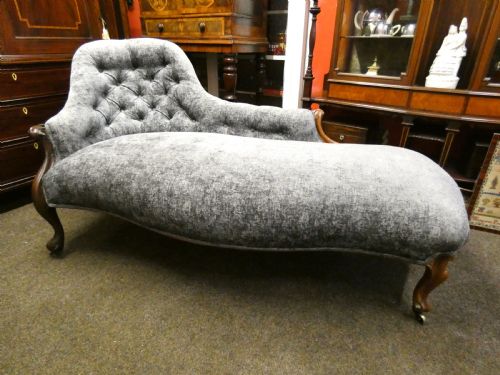
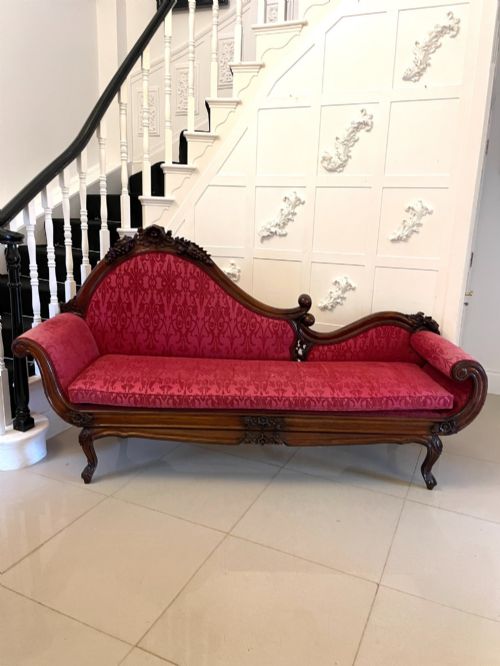
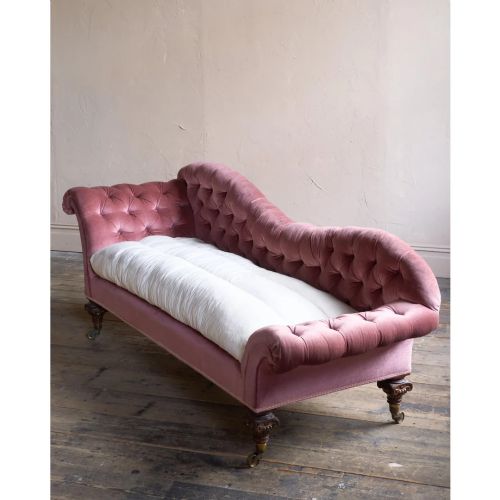
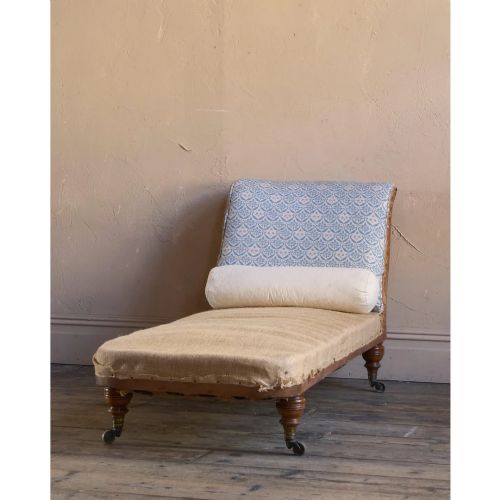
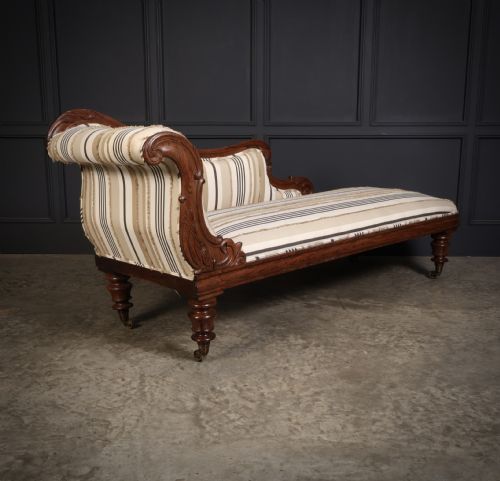


Upholstered Fainting Chair
An upholstered fainting chair offers an elongated seat designed for resting in semi-reclined comfort, pairing graceful timber frames with tactile textile covers.
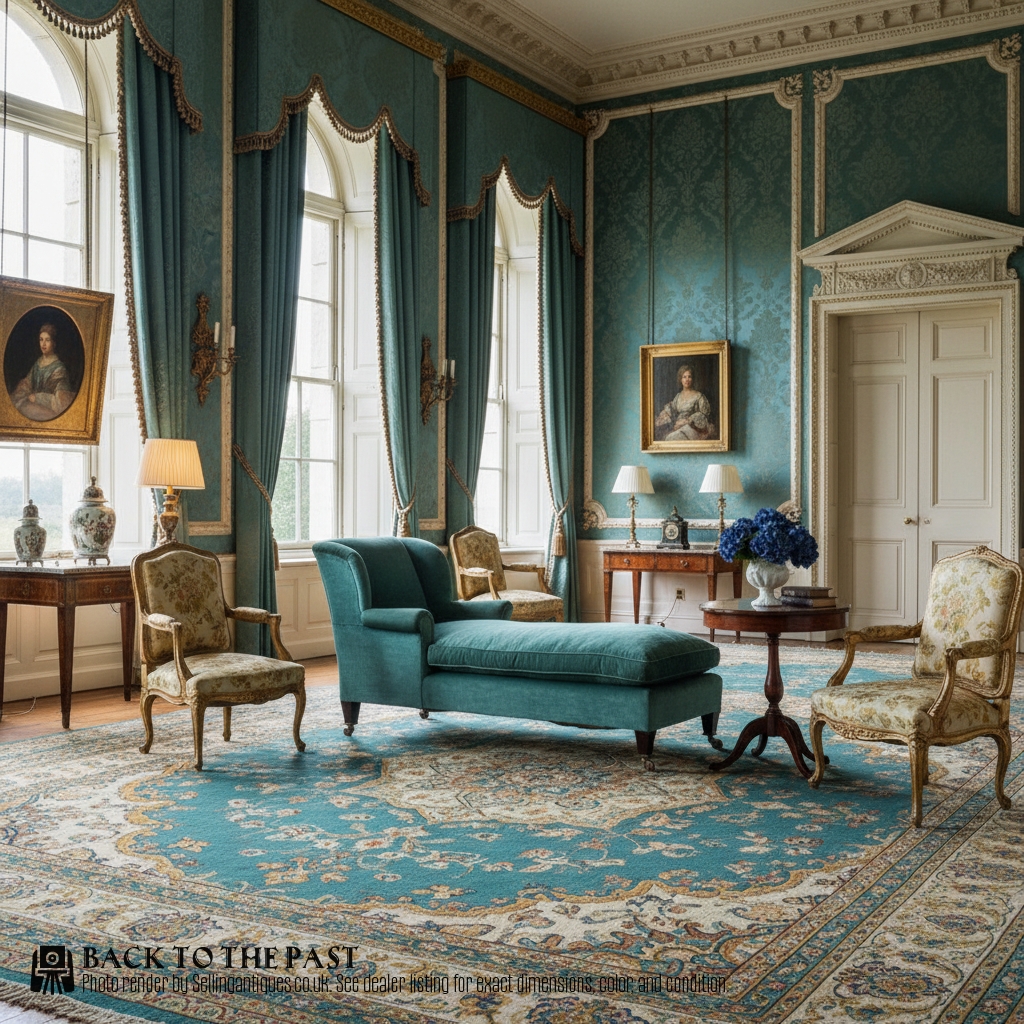
Upholstered Fainting Chair
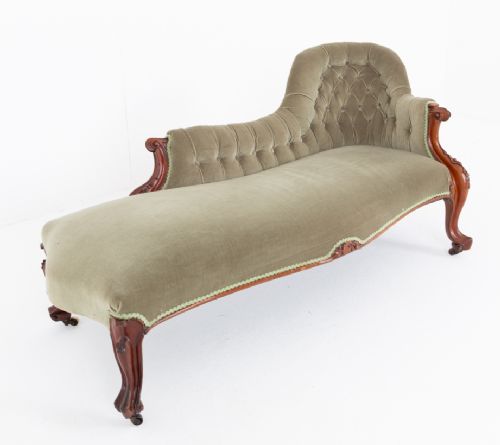
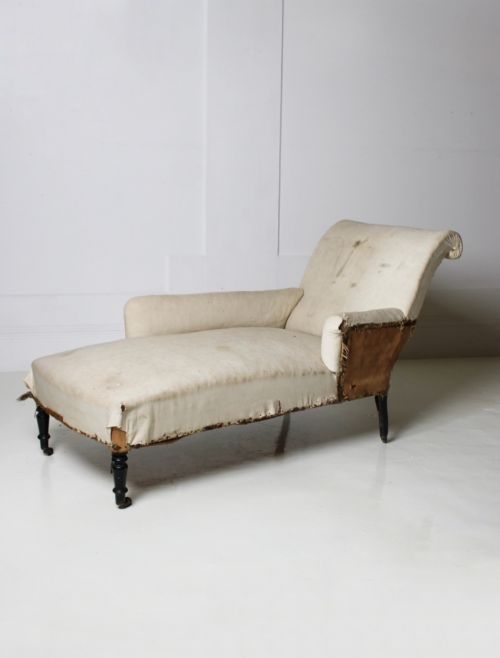
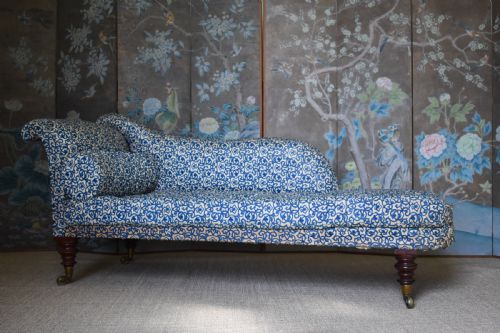
An upholstered fainting chair, typically catalogued across these listings under forms such as chaise longues, daybeds, and long armchairs, provides a supportive platform for horizontal or angled repose. These seating forms span periods from the Regency era through to the early twentieth century, with Victorian examples appearing most frequently.
Makers and workshops of the nineteenth century fashioned these daybeds in varied regional and metropolitan tastes, encompassing styles from William IV and Louis XVI Revival to Arts & Crafts and Napoleon III. Collectors encounter distinct structural variations, including scroll ends, single raised armrests, and concealed storage compartments.
Materials and construction
Craftsmen built the supporting framework of an upholstered fainting chair using dense hardwoods such as mahogany, rosewood, walnut, and general timber. These wooden chassis frequently display turned or carved elements, ranging from simple Ionic column legs to intricate piecrust mouldings and gilded decoration.
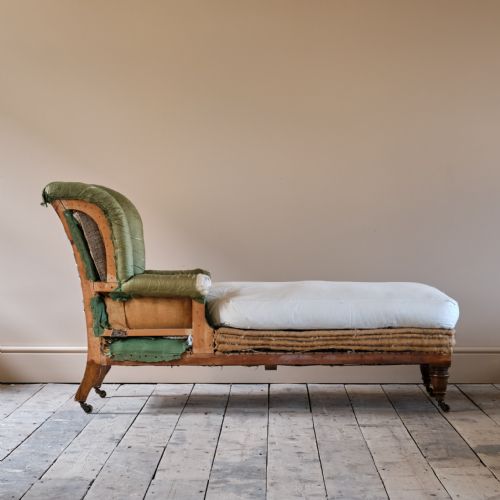
The upper comfort layer relies upon traditional upholstery methods enclosed in textiles including velvet, damask, calico, and fabric. Brass castors and decorative studding often finish the lower framework and scroll arms.
Some historic daybeds incorporate secret compartments for stashing smelling salts out of sight.
Evaluating quality and execution
The distinction between standard production and exceptional workshop output rests in the sculptural ambition of the timber frame and the precision of the joinery. Pieces bearing attribution to notable nineteenth-century cabinet makers demonstrate superior carving depth and balanced proportions along the asymmetrical backrest.
Upholstery execution further defines the tier of a piece, where tight buttoning, resilient stuffing, and the selection of quality velvet or damask reflect the original investment in domestic comfort. The integration of functional mechanisms, such as reclining adjustments or concealed storage compartments, adds mechanical complexity to superior examples.
Howard and Sons·Holland & Sons·Jas Shoolbred·Miles & Edwards·William Birch
The Upholstered Fainting Chair Glossary
- Chaise longue
- An elongated seating form combining the characteristics of a chair and a sofa, allowing the occupant to recline with legs supported.
- Daybed
- A multipurpose piece of furniture functioning as a seat by day and a bed or lounging platform by rest.
- Damask
- A reversible figured fabric, historically woven in silk, wool, or linen, utilised for formal upholstery.
- Piecrust moulding
- A decorative, raised edge carved into wood, reminiscent of pastry crust shaping.
- Ionic column
- A classical architectural column style featuring scroll-shaped capital ornaments, adapted here as furniture support legs.
Upholstered Fainting Chair: Frequently Asked Questions
What is an upholstered fainting chair?
An upholstered fainting chair is an elongated seat designed for resting in a semi-reclined position without lying completely flat. These pieces combine a timber wooden frame with cushioned textile upholstery and an asymmetrical backrest.
They developed primarily during the nineteenth century to accommodate restrictive historical garments that required wearers to recline. Today, they function as decorative daybeds or chaise longues in living spaces.
How do I date a Victorian fainting chair?
Dating relies on observing stylistic markers, timber choices, and structural forms associated with specific nineteenth-century decades. Regency and William IV pieces often display rosewood and classical columns, while mid-Victorian examples favour carved mahogany and walnut.
Maker stamps, traditional upholstery webbing, and attribution to documented firms like Howard and Sons or Holland & Sons help narrow the period of origin. Later Edwardian examples introduce lighter gilt decoration and transitional Arts & Crafts influences.
Where should I place a daybed?
These elongated seats suit larger drawing rooms, master bedrooms, or quiet reading corners where sufficient floor space allows unobstructed viewing from all angles. Because many designs feature an asymmetrical backrest or a single raised scroll end, placement against a wall or floating in a room alters the visual balance.
Positioning them away from direct sunlight protects delicate velvet, damask, or calico textile coverings from fading over time.
How do I maintain antique upholstery?
Maintaining antique fabric upholstery involves gentle surface cleaning with a soft brush to remove dust from crevices and buttoned tufting. Avoiding harsh chemical cleaners preserves the integrity of historic velvet, calico, or damask covers.
Examine the underlying timber frame periodically to ensure stability in joints, and keep the furniture away from excessive moisture or extreme temperature fluctuations.