


Velvet Fainting Couch
A velvet fainting couch offers a reclining seat with a single raised end, prized for both comfort and period elegance.
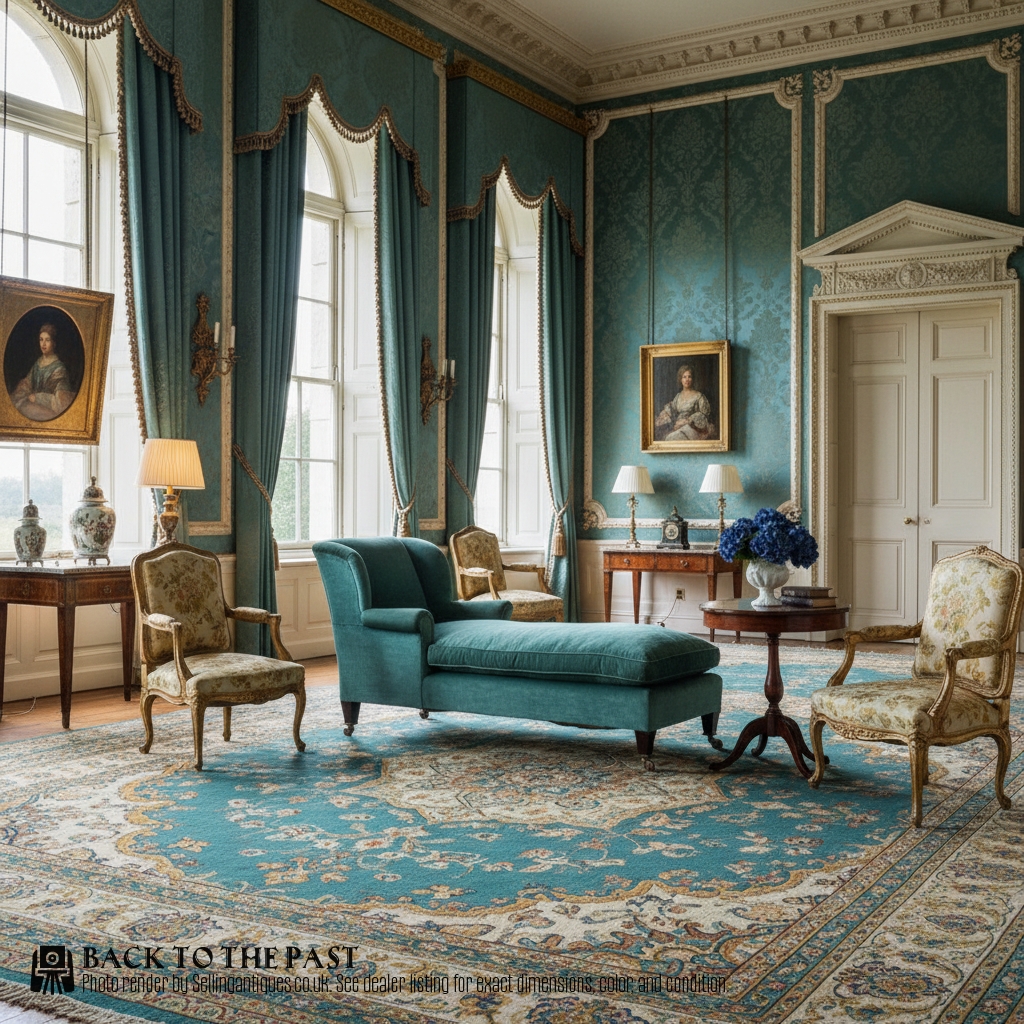
Velvet Fainting Couch
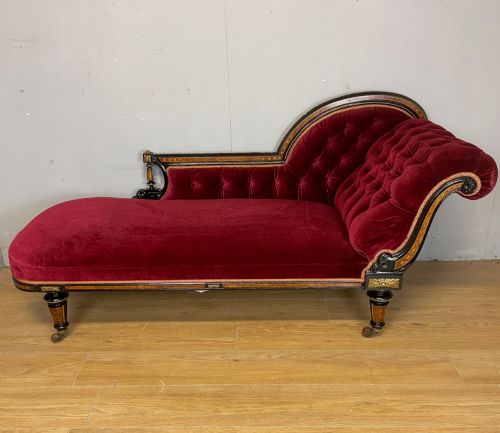
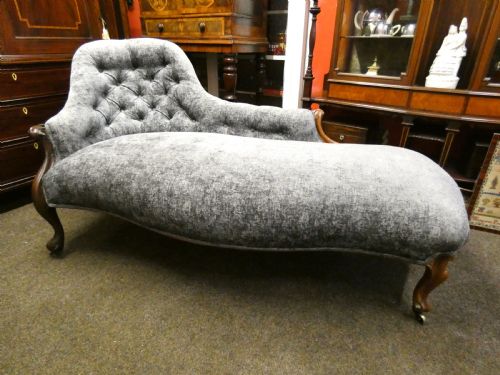
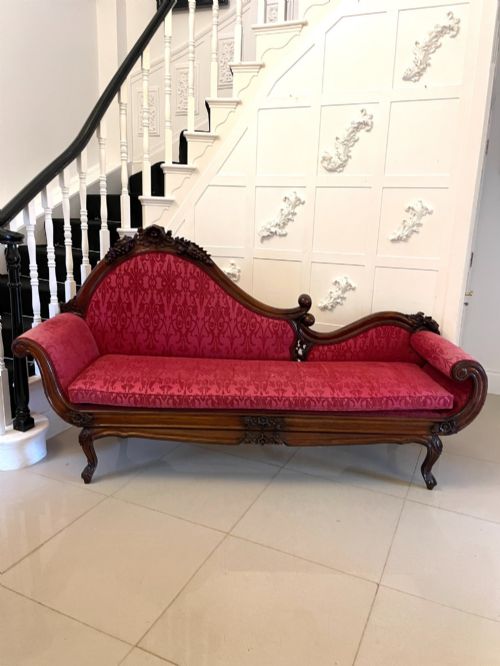
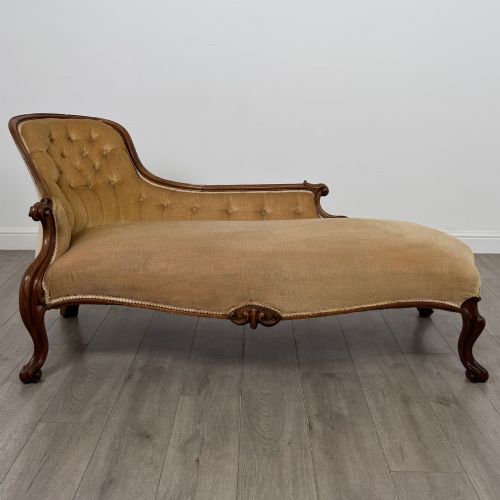
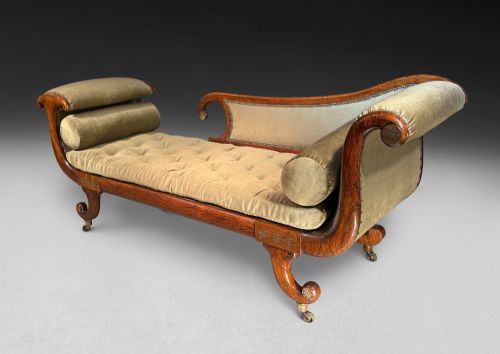
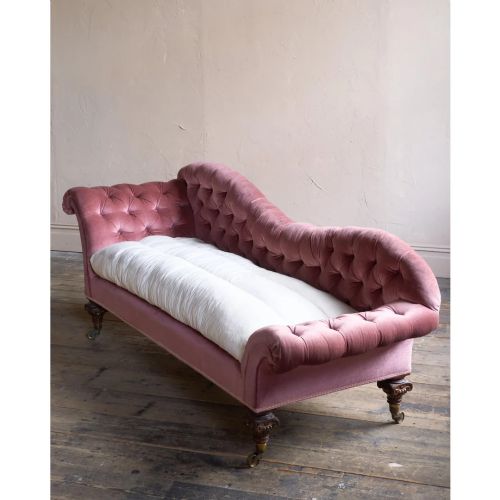
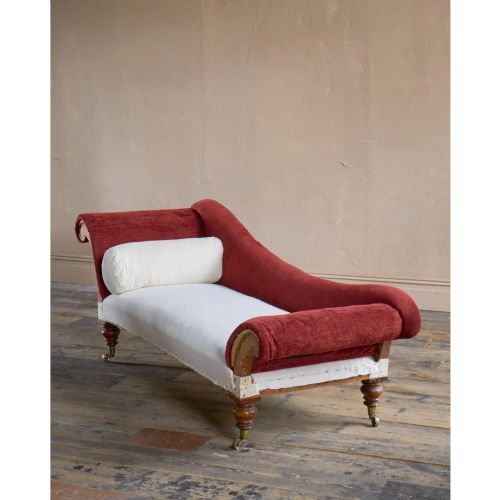
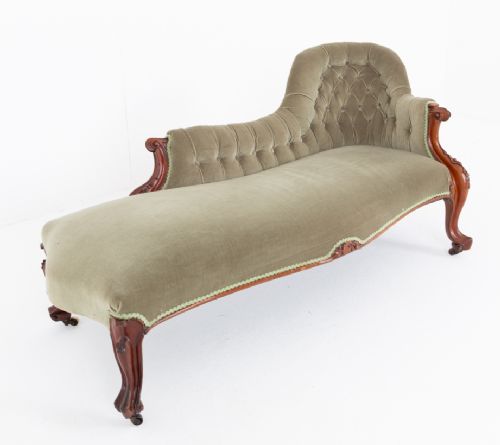
A velvet fainting couch combines the function of a daybed and a sofa, designed for semi-recumbent posture. These pieces frequently appear as nineteenth-century Victorian or Regency designs, spanning forms such as chaise longues and daybeds.
Buyers encounter carved mahogany frames, rosewood structures, and ebonised wood examples. Many pieces feature distinctive scroll ends, buttoned upholstery, and column legs suited to nineteenth-century interiors.
Materials and construction methods
Frames rely on sturdy timbers including mahogany, walnut, and rosewood, occasionally enriched with brass inlay or ormolu decoration. Wood is shaped and carved into curved backs and ornate structural supports.
Upholstery uses fabric velvet over buttoned padding, secured to timber frames. Supporting elements incorporate turned wooden legs, brass castors, and architectural details like Ionic column legs.
Listings feature nineteenth-century pieces spanning the Regency and Victorian periods, constructed from mahogany, rosewood, walnut, and ebonised wood.
Judgments of quality and execution
Quality rests upon the crispness of timber carving and the sophistication of the frame silhouette. Pieces with detailed brass inlay, figured mahogany, or walnut panels stand apart from simpler structures.
Construction integrity dictates long-term durability, where tight joinery and substantial timber scantlings distinguish finer workshop output. The harmony of the scrolled end and the proportion of the frame define the visual success of the piece.
Holland and Sons·William Birch·Howard and Sons
The Velvet Fainting Couch Glossary
- Chaise Longue
- A long seat for reclining, literally translating from French as long chair. This form provides a raised backrest at one end for half-sitting.
- Day Bed
- A versatile piece of furniture serving as both a seat and a bed for daytime resting. These objects often share proportions with standard chaise longues.
- Ormolu
- Gilded bronze ornamentation applied to furniture frames. This decorative technique adds metallic contrast to dark timbers.
- Ebonised
- Wood treated to imitate ebony through staining or painting. This dark finish appears on select nineteenth-century frames.
Velvet Fainting Couch: Frequently Asked Questions
What is a velvet fainting couch?
A velvet fainting couch is a nineteenth-century reclining seat designed with one raised end for resting in a semi-recumbent position. These pieces are upholstered in velvet and built from timber frames.
They combine the utility of a sofa with the extended length of a daybed. Victorians used them for relaxation in formal rooms.
How do I date a chaise longue?
Dating relies on stylistic markers such as Regency brass inlay, Victorian rosewood carving, or ebonised nineteenth-century finishes. Frame shapes and leg profiles shift across the decades.
Consulting timber types and structural characteristics helps narrow the period. Regency examples lean toward classical lines, while Victorian pieces often feature heavy buttoned velvet.
Where should I place a daybed?
A daybed works well in studies, bedrooms, or large living spaces where it can float against a wall or serve as a room divider. The single raised end creates a focal point in the interior.
Ensure there is adequate floor clearance around the piece to appreciate the carved timber frame and velvet upholstery.
How do I care for antique velvet?
Antique velvet requires gentle brushing with the grain to maintain the pile and prevent flattening. Keep the fabric away from direct sunlight to preserve the colour.
Professional upholstery cleaning is recommended for deep maintenance. Avoid placing heavy objects on the velvet surface to protect the padding.