
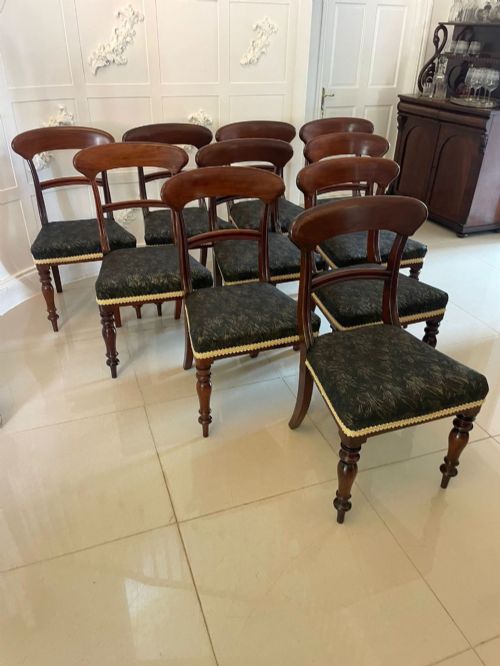
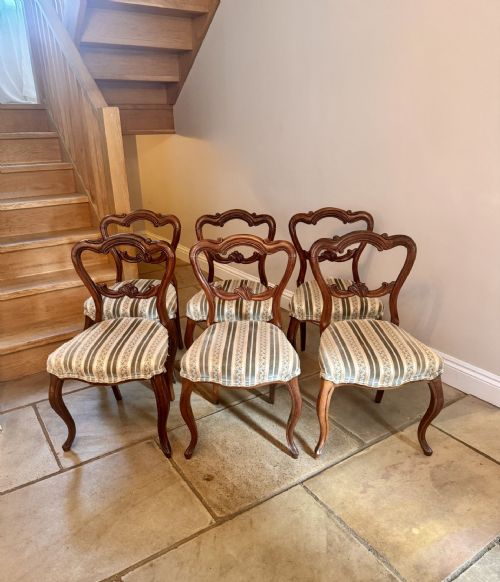
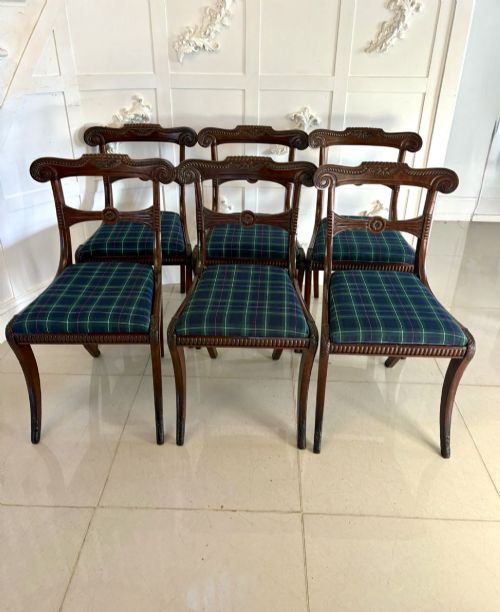
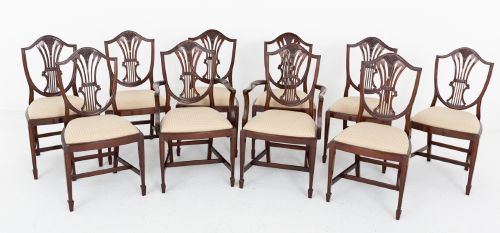
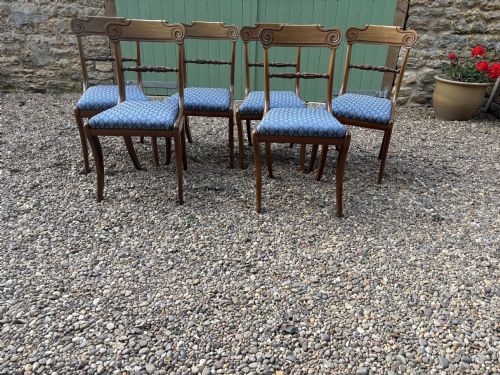
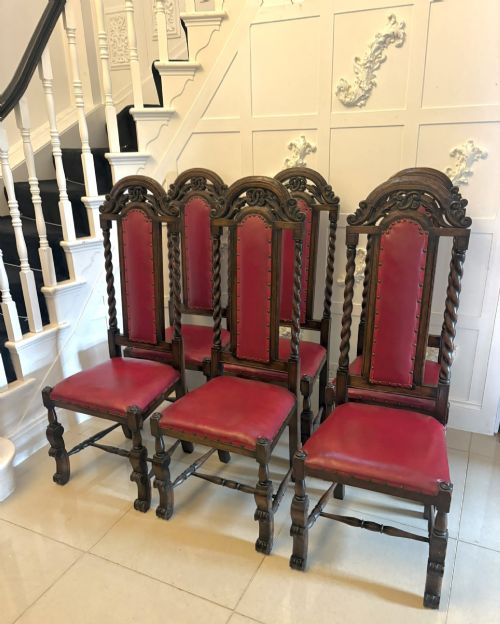
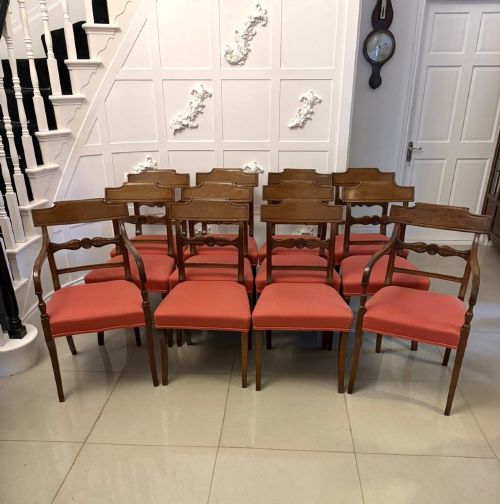
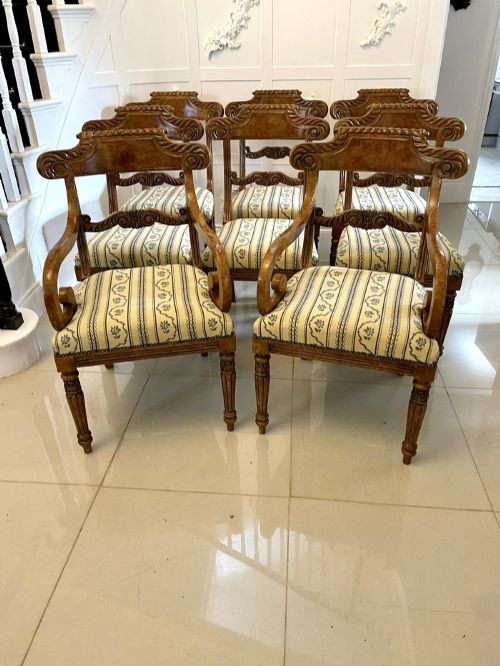
Upholstered Dining Seat Set
An upholstered dining seat set brings together periods from Regency to Edwardian, offering coordinated seating for the table in mahogany, rosewood, walnut, and oak.
Upholstered Dining Seat Set
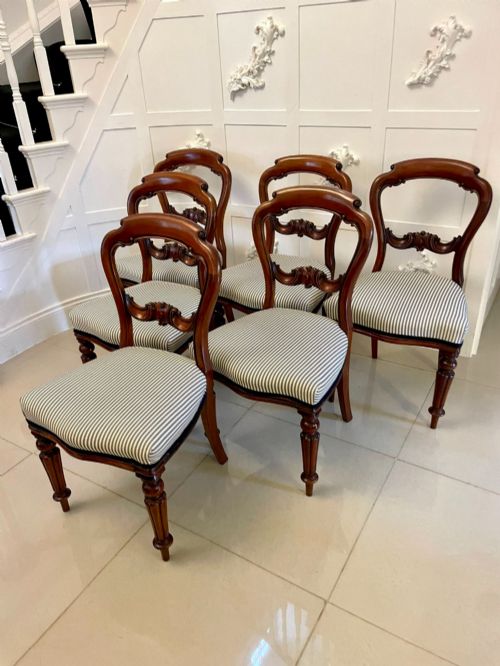
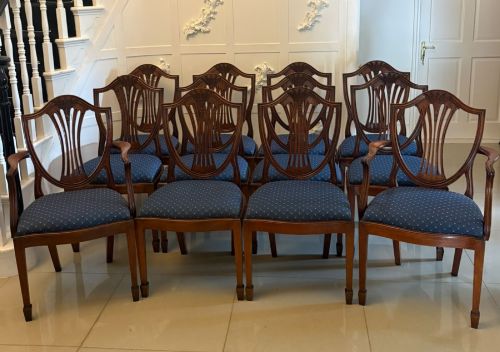
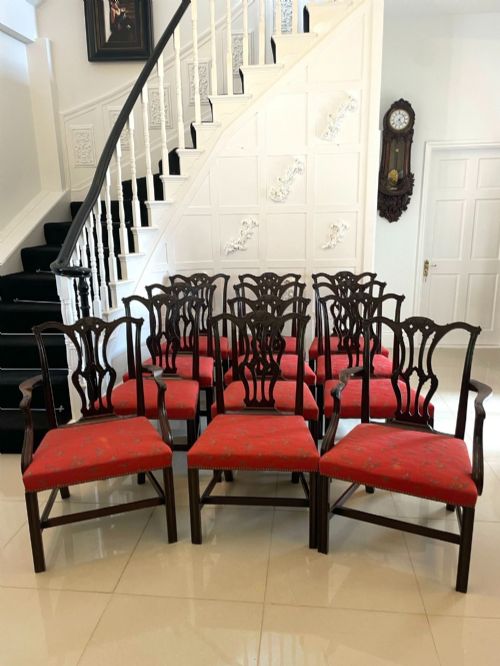
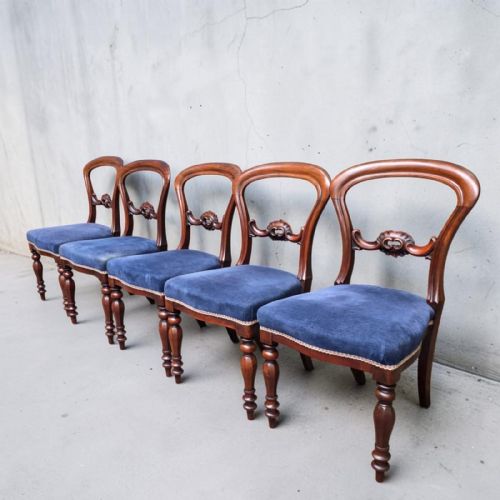
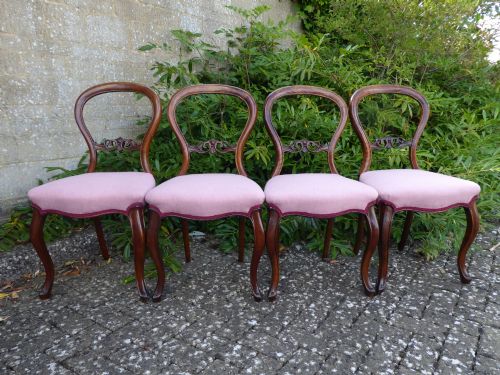
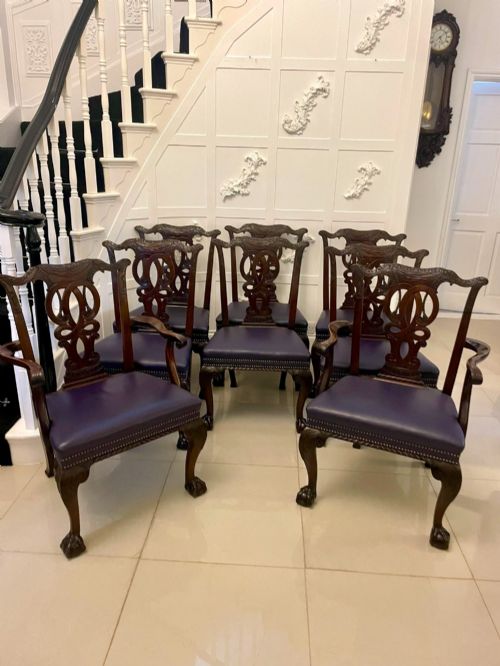
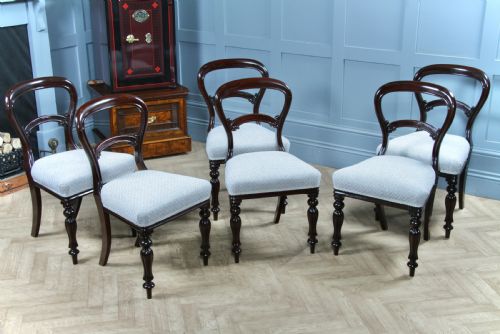
An upholstered dining seat set consists of matching chairs designed to furnish a dining table, appearing most frequently as Victorian mahogany balloon back chairs or Regency rosewood designs. These collections range from modest groups of four up to extensive sets containing twenty chairs, frequently incorporating carver armchairs alongside standard dining chairs.
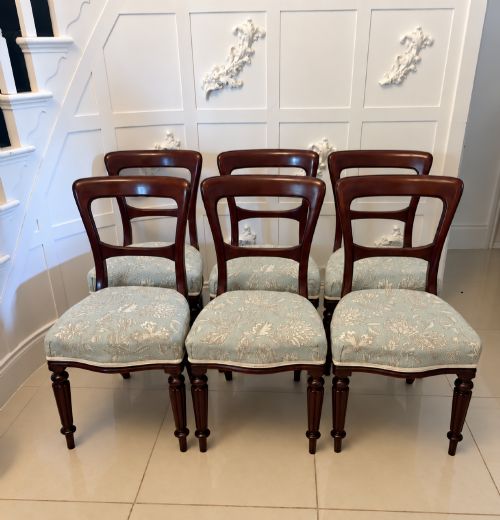
The materials span mahogany, rosewood, walnut, oak, elm, and faux birds eye maple, paired with diverse textiles. Forms include shield backs, pierced splats, bar backs, and cane panels, reflecting styles from Georgian and Hepplewhite to Jacobean Revival and Edwardian.
How they were made
Carpenters shaped dense timbers like mahogany, rosewood, and oak through traditional joinery, often incorporating carved details such as barley twists, pierced splats, and shield backs. Frame construction utilised sturdy joints to support daily use around the dining table.
Upholstery fabrics, leather, and velvet were secured over padding to the seats and backs, sometimes complemented by brass inlay and gilded accents. Many sets show later re-upholstering while retaining their original wooden frames.
One twenty-piece set of elm Queen Anne style chairs proves that dining logistics were once taken extremely seriously.
What varies in quality
Quality rests in the crispness of the timber carving, the selection of figured wood veneers, and the structural integrity of the frame joints. Exhibition and outstanding pieces demonstrate superior joinery and finer decorative detailing, such as intricate brass inlay or well-executed balloon backs.
The uniformity across a larger group of chairs separates a cohesive set from assembled matches. Consistency in the wood grain, leg turning, and overall proportions determines the standing of the group.
The Upholstered Dining Seat Set Glossary
- Balloon back
- A rounded, scroll-shaped wooden chair back popular during the Victorian period. This form provides ergonomic support while presenting an elegant curved silhouette.
- Bar back
- A horizontal wooden slat crossing the upper section of a chair back, seen on William IV designs. This element connects the upright stiles to give structural rigidity.
Upholstered Dining Seat Set: Frequently Asked Questions
How do I choose the right set size?
Consider the length of your dining table and the frequency of hosting larger gatherings. Sets frequently range from four to twelve chairs, with larger collections often including carver armchairs for the ends.
Ensure you verify whether the count includes carvers, as larger sets of ten or twelve commonly divide into standard dining chairs and armchairs.
Are these chairs suitable for daily use?
Solid timber frames built from mahogany, oak, or walnut offer robust construction intended for regular seating. Many sets survive from the nineteenth century precisely because of this durable build quality.
Where upholstery has been renewed, the modern padding enhances comfort while the antique frame maintains its structural role around the dining table.
How do I date a set of chairs?
Examine the timber species, leg turning, and back shape in relation to known stylistic periods like Regency, Victorian, or Edwardian. Balloon backs and rosewood point towards the mid-nineteenth century, while shield backs often link to Georgian revivals.
Construction methods inside the seat frame also provide clues, as hand-cut joinery differs across the decades from the Regency era into the twentieth century.
What is the difference between a carver and a dining chair?
A carver includes integrated armrests designed for added comfort, traditionally intended for the head of the household at the dining table. Standard dining chairs lack arms to allow easy tucking beneath the table surface.
In larger sets, two carvers typically accompany six, eight, or ten standard chairs to create a uniform arrangement.