



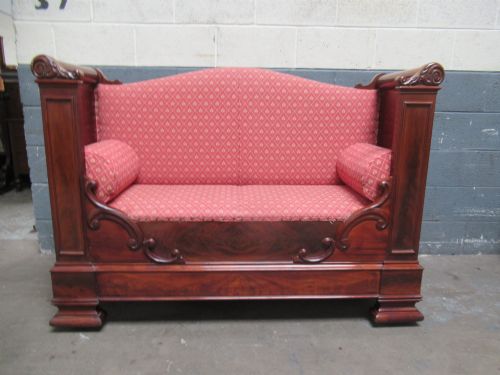
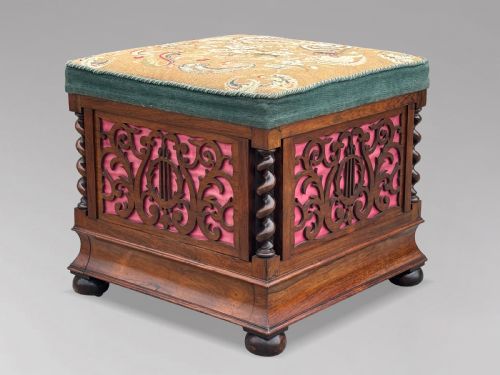


Upholstered Box Seat
An upholstered box seat offers both a comfortable perch and hidden storage, making it a practical addition to traditional living spaces.
Upholstered Box Seat
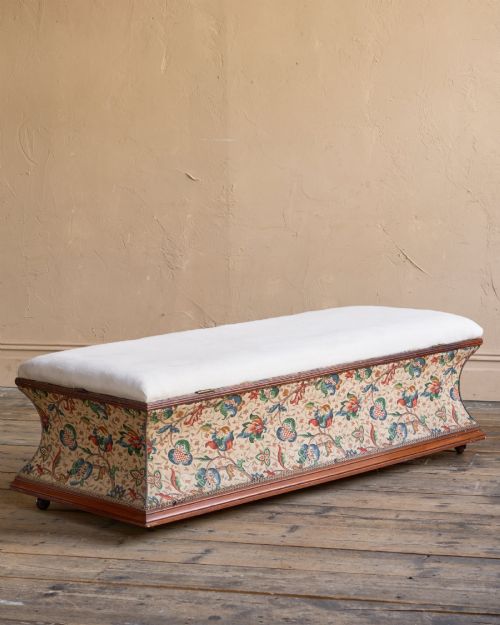
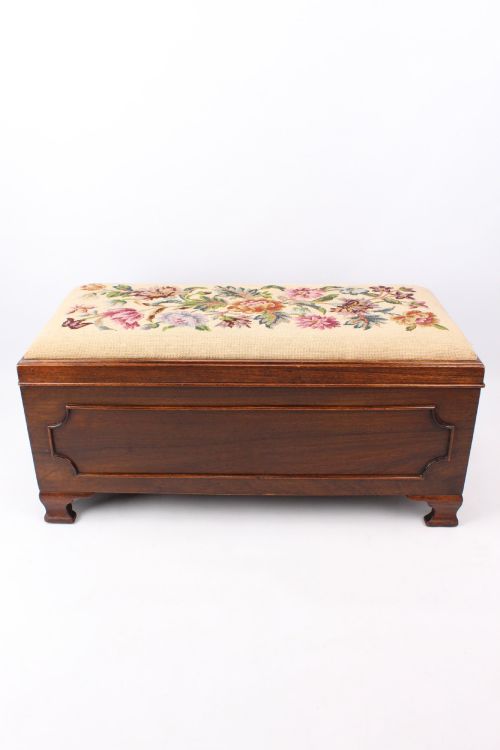
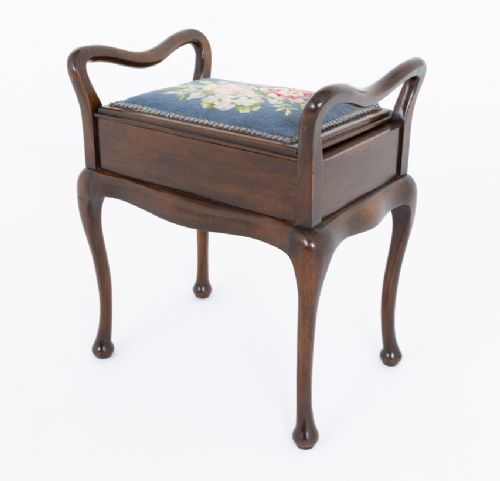
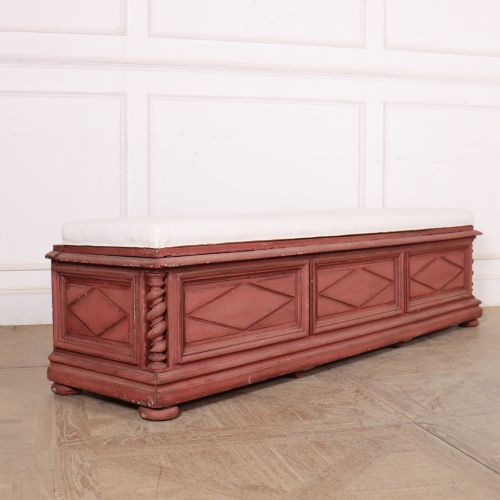
An upholstered box seat combines seating with a concealed compartment beneath the lid, appearing across nineteenth-century and early twentieth-century periods. These pieces include piano stools, ottomans, hall benches, and footstools designed to hold textiles, music sheets, or household items.
The materials recorded on this page range from mahogany and rosewood to walnut and oak, paired with fabric, velvet, wool, and tapestry coverings. Victorian and Edwardian examples dominate the selection, showing styles from English Country to French Renaissance Revival and Italian Neoclassical.
Materials and construction
Makers utilised solid timbers such as mahogany, rosewood, walnut, and oak to build the structural boxes and frames for these seats. Hardwoods provided the necessary strength to support daily use while housing internal storage compartments.
Upholstery methods involved textile coverings like velvet, wool, tapestry, and leather, often secured over padding and occasionally finished with deep buttoning or needlework. Brass hardware appeared on hinges and handles to facilitate access to the internal storage.
Upholstered Box Seat Retail Price Guide 2026
Typical asking prices for upholstered box seat among the pieces listed under this phrase on Sellingantiques today, from the lower quarter to the upper quarter. They describe what is for sale here now, not the wider market.
Some Victorian pianists required a box seat specifically to hide their sheet music from critical eyes.
Distinctions in quality
The standard of timber selection and cabinetmaking distinguishes finer examples from simpler utilitarian pieces. Dense grain hardwoods and precise joinery on the box structure indicate superior workshop production.
The execution of the upholstery and the choice of covering material also separate the grades. Finer pieces feature detailed needlework, leather, or heavy tapestry securely fastened to robust internal padding.
Hallett & Sons
The Upholstered Box Seat Glossary
- Ottoman
- A low, upholstered seat or bench, frequently featuring a hinged lid that opens to reveal a storage compartment for blankets or textiles. This form appears frequently in nineteenth-century variants.
- Piano stool
- A seat designed for use at a keyboard instrument, often featuring a mechanism or a box seat to hold music sheets. Examples in the listings date from the Victorian and Edwardian periods.
- Needlework
- Hand-stitched textile work utilised as a seat covering on historical furniture. This technique appears on specific nineteenth-century mahogany variants.
- Fall front
- A hinged panel that drops forward to provide access to the interior of a piece of furniture. This mechanism is found on specific Victorian walnut piano stools.
- Duet piano stool
- A wider seating variant designed to accommodate two musicians side by side. Edwardian mahogany versions appear in the current selection.
Upholstered Box Seat: Frequently Asked Questions
What is an upholstered box seat used for?
These pieces function as secondary seating while providing concealed storage space within the frame. Owners typically place them in hallways, bedrooms, or living rooms to store items out of sight.
The internal compartment makes them practical for holding blankets, music sheets, or everyday clutter. Their dual purpose has kept them useful across domestic interiors for generations.
How do I date a Victorian box seat?
Dating relies on identifying timber choices, decorative styles, and construction techniques associated with the nineteenth century. Rosewood and heavy mahogany often point toward earlier Victorian production, while Edwardian pieces introduce lighter mahogany framing.
Examining the internal hardware and upholstery style provides further context for the period of manufacture. Secondary woods and fastener types help confirm the exact decade of origin.
Where should I place an ottoman seat?
An ottoman sits comfortably at the foot of a bed, beside a fireplace, or along a hallway wall. Their compact footprint allows them to fit into spaces where a traditional chest or large bench might not fit.
Matching the wood tone and textile covering to existing furniture helps integrate the piece into a room. Placing them away from direct sunlight protects the fabric and timber finishes from fading.
How do I care for antique upholstery?
Maintaining upholstered furniture involves gentle cleaning appropriate to the specific textile used, whether velvet, wool, leather, or tapestry. Regular dusting prevents particles from embedding into the fibres of the fabric.
Keeping the pieces away from excessive moisture and heat sources preserves both the wooden frame and the internal padding. Professional textile cleaning is advisable for delicate needlework or vintage coverings.