








Upholstered Blanket Chest
An upholstered blanket chest brings domestic utility and seating together, offering a practical repository for linens that doubles as a handsome piece of furniture.
Upholstered Blanket Chest
When searching for an upholstered blanket chest, buyers encounter a sturdy lineage of storage forms designed to house heavy textiles while providing a cushioned seat or top. These pieces span the Regency, Victorian, and early twentieth-century eras, reflecting changing domestic habits across decades of British craftsmanship.
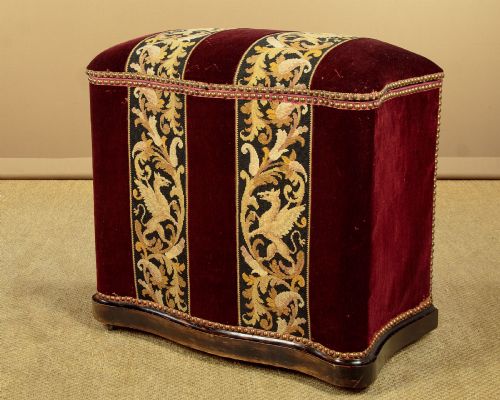
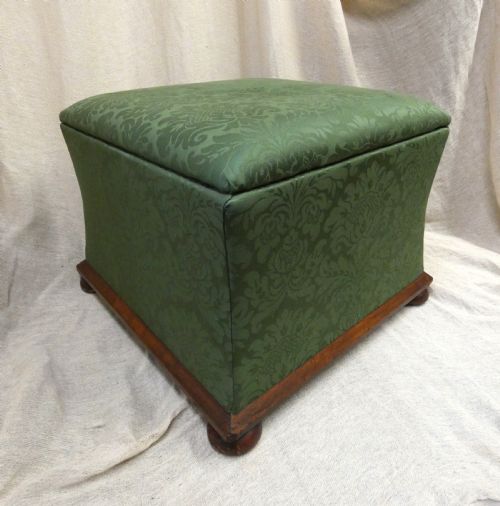
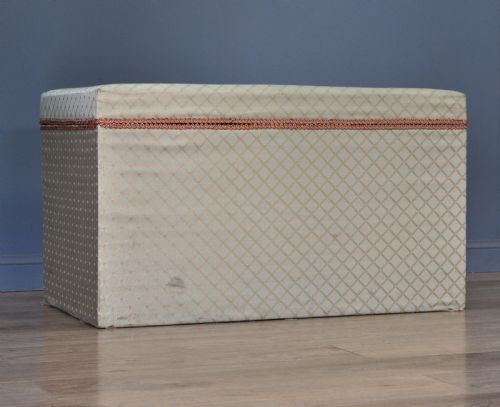
The objects appearing on this page range from generous pine country kists and mahogany storage chests to compact ottomans covered in fabric, leather, or tapestry. Many examples adopt rectangular proportions, though concave shapes and pieces raised on lions paw feet introduce distinctive architectural variation.
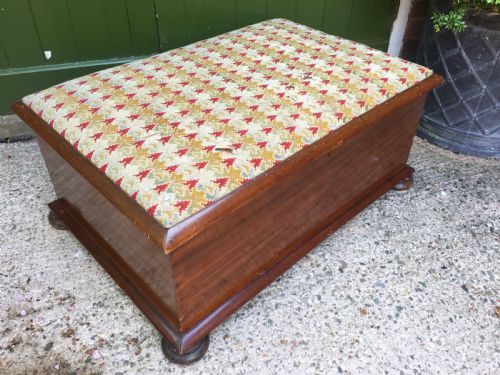
Most items combine a timber carcase of mahogany, rosewood, birch, or pine with a padded surface designed for resting feet or sitting. Collectors find these items listed under varied object types including blanket boxes, ottomans, and log boxes, yet all share the core dual purpose of concealment and comfort.
Materials and construction methods
Makers constructed the foundational boxes using solid timbers such as mahogany, rosewood, birch, and pine, joined to withstand the weight of stored household goods. Hardwood frames provided structural integrity, while softer pine served for utilitarian kists and regional storage trunks.
Upholstery techniques defined the upper sections, incorporating deep buttoning and padded layers covered in fabric, velvet, leather, or gros-point needlework. Artisans occasionally integrated brass details and carved elements like lions paw feet to elevate the visual weight of the timber frames.
Upholstered Blanket Chest Retail Price Guide 2026
Typical asking prices for upholstered blanket chest among the pieces listed under this phrase on Sellingantiques today, from the lower quarter to the upper quarter. They describe what is for sale here now, not the wider market.
Period examples span the Regency, Victorian, and early twentieth centuries, incorporating regional pine kists and refined mahogany ottomans.
Distinctions in standard and execution
The caliber of an upholstered blanket chest rests on the selection of timber and the precision of the box construction. Dense hardwoods like mahogany and rosewood indicate higher workshop ambitions than standard pine, while refined shaping such as concave curves demonstrates greater cabinetmaking skill.
Upholstery finish and the preservation of original textile coverings heavily influence the standard of the piece. Deep buttoning executed with disciplined symmetry and the retention of period needlework or leather signal superior original manufacture.
Hallett & Sons
The Upholstered Blanket Chest Glossary
- Ottoman
- A low, upholstered seat or storage box without back or arms. It serves as both a footrest and a receptacle for blankets.
- Gros-point
- A type of needlepoint embroidery worked on canvas using a coarse woollen yarn. This durable stitch often forms the patterned top of period seats.
- Kist
- A traditional regional term for a heavy wooden storage chest or box. These sturdy trunks typically store household linens or toys.
- Deep buttoning
- An upholstery method where stitches pull the fabric tight into recessed buttons in a geometric diamond pattern. This technique secures internal padding and adds decorative texture.
- Lions paw feet
- Carved furniture supports shaped to resemble the foot of a lion. They frequently appear on Regency and Victorian mahogany pieces.
Upholstered Blanket Chest: Frequently Asked Questions
What is an upholstered blanket chest?
An upholstered blanket chest is a dual-purpose furniture form featuring a wooden storage box with a padded, fabric-covered top. It functions primarily for keeping household linens while providing a place to sit.
These pieces range from formal Regency mahogany models to robust Victorian pine kists and later twentieth-century ottomans.
How were these chests used historically?
Households utilised these chests to store bulky textiles, blankets, and garments away from dust and moths. Placing them at the foot of a bed or in reception rooms allowed easy access to extra bedding.
The padded lid also provided convenient seating when dressing or resting in domestic chambers.
How do I identify a Regency chest?
Regency examples typically showcase dark timbers like mahogany or rosewood with restrained classical proportions. Details such as carved lions paw feet often point toward this earlier nineteenth-century aesthetic.
In contrast, later Victorian and twentieth-century versions frequently employ pine, birch, or deep buttoned upholstery.
How do I care for antique upholstery?
Protect antique fabric or leather coverings from direct sunlight to prevent fading and material degradation. Gentle dusting and minimal handling help preserve fragile needlework tops and original textiles.
Maintaining stable room humidity prevents the underlying wooden carcase from warping or splitting.