


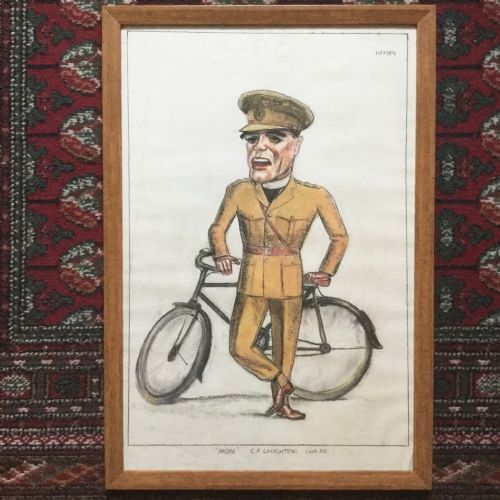


Uniformed Officer Artwork
Uniformed officer artwork records centuries of military and naval service through painted and drawn portraits.
Uniformed Officer Artwork
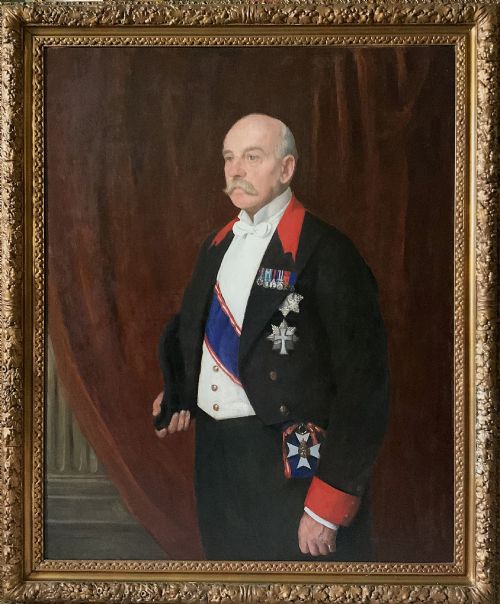
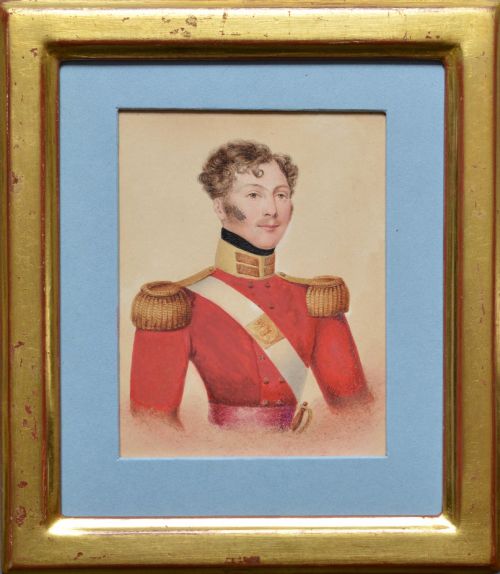
When browsing uniformed officer artwork, collectors encounter portraits depicting individuals from military and naval ranks, spanning the eighteenth century through the mid-twentieth century. These pieces record specific historical figures, ranging from decorated generals and admirals to regiment officers, captured in formal tunics and ceremonial dress.
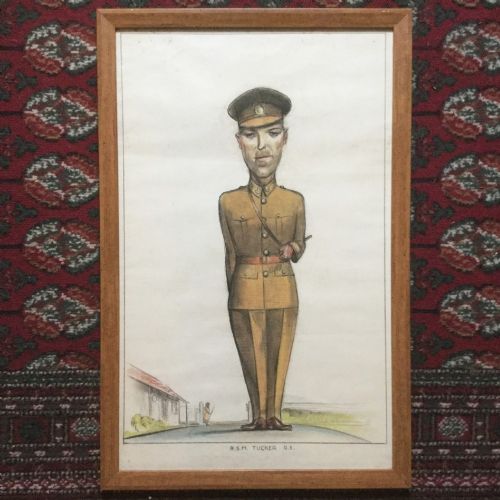
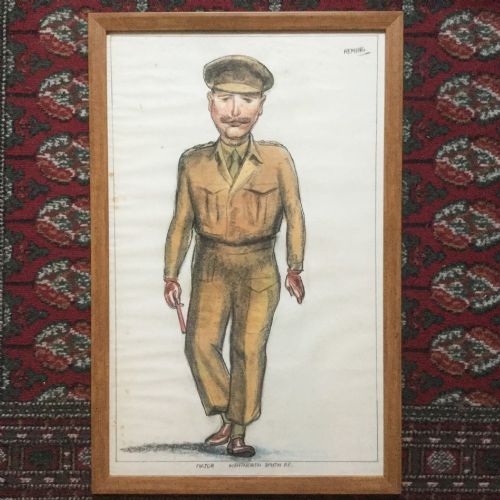
The selections on this page draw from British, European, and twentieth-century schools, presenting works executed in oil on canvas, watercolour, and pastel. Buyers frequently find framed drawings and oil paintings reflecting periods such as the Georgian, Victorian, and Edwardian eras, alongside wartime sketches from nineteen forty.
Materials and methods
Artists historically rendered these military subjects using oil paint on stretched canvas or wood panels, allowing for rich depictions of red tunics, medals, and gold braid. Watercolour and pastel on paper served as popular mediums for quicker portrait sketches, particularly during wartime documentation.
Framed works commonly utilise traditional wooden surrounds, occasionally protected by glass in the case of watercolours and pastels. The application varies from highly finished academic oil paintings to rapid preparatory sketches capturing the likeness of an officer in the field.
Uniformed Officer Artwork Retail Price Guide 2026
Typical asking prices for uniformed officer artwork among the pieces listed under this phrase on Sellingantiques today, from the lower quarter to the upper quarter. They describe what is for sale here now, not the wider market.
Several officers gaze sternly past the viewer while quietly immortalised alongside their faithful chargers and favourite marching brass bands.
Judging quality in military portraits
Quality in these portrait works rests upon the precision of the facial likeness, the anatomical accuracy of the figure, and the detailed rendering of military insignia, lace, and uniform textiles. Master portraitists capture character and authority alongside the exact heraldry of a regiment.
The reputation of the artist and the documentation of the sitter elevate certain pieces. Works signed by listed painters or executed by contemporary school artists demonstrate superior handling of light, shadow, and fabric texture compared to standard unsigned portraits.
John Simmons·Sir Thomas Lawrence·Edward Pugh·Aubrey Sykes·Albert Ferdinand Le Dru·Henry Walton·Henry Hoppner Meyer·John Laviers Wheatley·Ruth Cecil Latter·Robert Ker Porter·Sir Richard Westmacott·Henry Wyatt·Richard Hall·Ambrosini Jerome
The Uniformed Officer Artwork Glossary
- Oil on Canvas
- A traditional painting medium utilising pigment suspended in drying oil applied to a woven fabric support. This technique permits deep colour saturation and gradual tonal blending.
- Watercolour
- A painting method where fine pigment is suspended in a water-soluble binder, typically applied to paper. It yields translucent washes well-suited to portable portrait sketches.
- Pastel
- A dry drawing medium consisting of pure powdered pigment and a binder, formed into sticks. It creates velvety textures with immediate colour impact on paper surfaces.
- Gouache
- An opaque water-based paint containing pigment and a binding agent, often combined with pastel in military sketches. It provides solid areas of flat colour and sharp highlights.
- Regiment
- A permanent unit of an army commanded by a colonel, whose specific uniform details identify the branch of service. Collectors utilise these uniform distinctions to date and attribute portraits.
Uniformed Officer Artwork: Frequently Asked Questions
How do I identify the military rank in a portrait?
Military rank is typically indicated by specific insignia on the collar, cuffs, or shoulder boards of the uniform. Accoutrements such as sashes, swords, and medals also provide clues to the seniority and branch of the sitter.
Historical records and regimental histories help cross-reference these details when names or dates are inscribed on the artwork or frame.
What periods do these officer portraits cover?
The available selection spans primarily from the eighteenth century through the mid-twentieth century. Pieces range from Georgian and Regency depictions to Edwardian works and wartime sketches from nineteen forty.
Each period reflects distinct shifts in portraiture styles, from formal academic oil paintings to rapid pastel field drawings.
Are these portraits usually signed by the artist?
Many works feature artist signatures, monograms, or contemporary inscriptions on the front or reverse of the canvas and paper. Signed pieces by recorded painters carry distinct attribution value.
Unsigned works are frequently attributed through stylistic analysis, school characteristics, or archival records matching the sitter to a known commission.
How should I care for antique portrait paintings?
Oil paintings on canvas require stable indoor humidity and protection from direct sunlight to prevent cracking and fading. Keeping the canvas surface free of dust with a soft brush preserves the pigment integrity.
Works on paper, such as watercolours and pastels, need framing behind glass with acid-free mounts to guard against environmental moisture and degradation.