
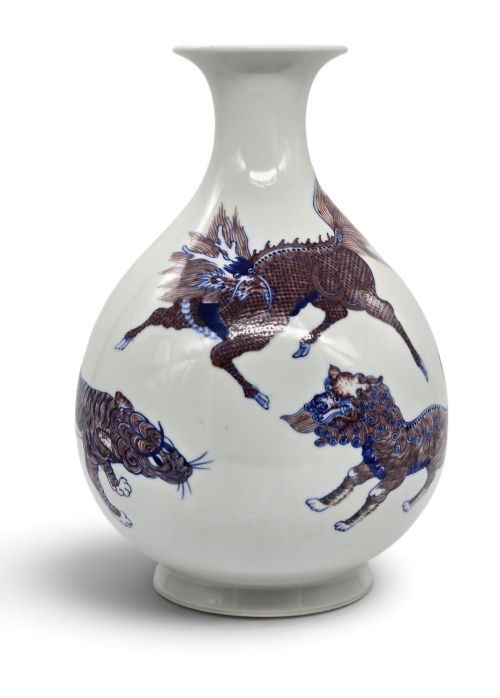
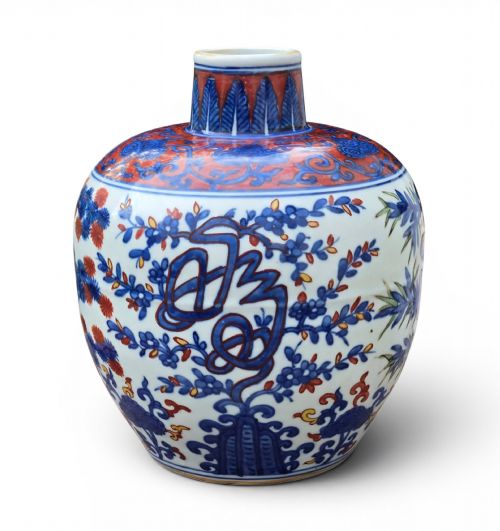


Underglaze Red Porcelain Vase
An underglaze red porcelain vase brings copper-rich crimson tones beneath a clear glaze, offering a sophisticated focal point for a collector.
Underglaze Red Porcelain Vase
An underglaze red porcelain vase encompasses forms shaped from clay, painted with copper-derived pigments, and fired at high temperatures. Buyers exploring this category encounter varied vessels originating from the Ming Dynasty through the late Qing and Meiji periods.
Vessels span multiple centuries, with pieces recorded from the sixteenth, seventeenth, and nineteenth centuries. The recurring presence of porcelain bodies combined with enamel, cobalt glaze, and iron-red highlights defines the aesthetic of the category.
Materials and construction
Potters shaped fine porcelain clay into vessels before applying metallic pigments beneath a transparent glaze. The copper-red pigment required precise kiln temperature control to achieve the desired crimson coloration during the high-heat firing process.
Many examples incorporate secondary decorative elements such as gold leaf, iron-red enamel, and cobalt glaze to enrich the surface. Artisans sometimes combined underglaze painting with overglaze enamels to introduce contrasting green and yellow tones onto the porcelain body.
Some nineteenth-century makers evidently decided a stately ceramic jar made a splendid foundation for an electrified reading lamp.
Evaluating craftsmanship and distinction
Quality rests in the precision of the brushwork and the stability of the copper pigment during the high-temperature firing. Finer examples display controlled red tones without excessive blurring or grey discolouration in the glaze.
The sophistication of the painted motifs, such as mythical beasts or longevity symbols, distinguishes standard production from superior pieces. Imperial marks and deliberate form shaping further separate ordinary vessels from those representing advanced ceramic workshops.
The Underglaze Red Porcelain Vase Glossary
- Underglaze
- A decoration applied to ceramic bodies before the application of a clear glaze and subsequent firing. This technique protects the pigment beneath a glassy protective layer.
- Celadon
- A pale green jade-like glaze applied to porcelain wares. It results from iron oxides fired in a reduction atmosphere.
- Enamel
- A low-firing glass-based pigment applied over a fired glaze. It permits vibrant colours like iron-red and green to sit on the exterior surface.
- Imari
- A Japanese export porcelain style characterised by underglaze blue combined with iron-red, gold, and other enamels. The aesthetic emerged during the Edo period and gained popularity globally.
- Transitional
- A stylistic phase in Chinese ceramics bridging the Ming and Qing dynasties. Pieces from this period frequently display dynamic narrative painting and vibrant enamel additions.
Underglaze Red Porcelain Vase: Frequently Asked Questions
What is an underglaze red porcelain vase?
An underglaze red porcelain vase is a ceramic vessel decorated with copper-bearing pigments applied beneath a transparent glaze before firing. These pieces originate from historic Asian periods including the Ming and Qing dynasties.
Collectors prize them for the technical difficulty involved in firing copper oxide to achieve a stable red tone. The inventory includes diverse forms such as garlic-mouth vessels, jars, and lamps.
How do I date an antique vase?
Dating relies on examining the potting technique, the characteristics of the porcelain body, and the style of the painted decoration. Stylistic shifts between Ming Dynasty work and late Qing pieces provide clear chronological markers.
Certain items feature reign marks or stylistic traits typical of specific centuries, such as the seventeenth-century Transitional period. Comparing glaze textures and enamel types aids verification.
How were these vases used historically?
These vessels served primarily as decorative objects within elite interiors, often displayed in reception rooms or scholar's studios. Some jars functioned as containers, while other pieces were designed purely for floral arrangement.
Over subsequent centuries, European and domestic markets adapted several ceramic vessels into table lamps. This practical conversion integrated antique porcelain into nineteenth-century domestic lighting schemes.
How should I display a porcelain vase?
Displaying a porcelain vase requires a stable surface away from high traffic areas to protect the ceramic body and glaze. Placing the vessel where natural light illuminates the underglaze painting enhances its visual depth.
Avoid positioning antique porcelain in direct sunlight that might affect delicate overglaze enamels or gold leaf details. Ensuring adequate clearance prevents accidental knocks to fragile rims and handles.