


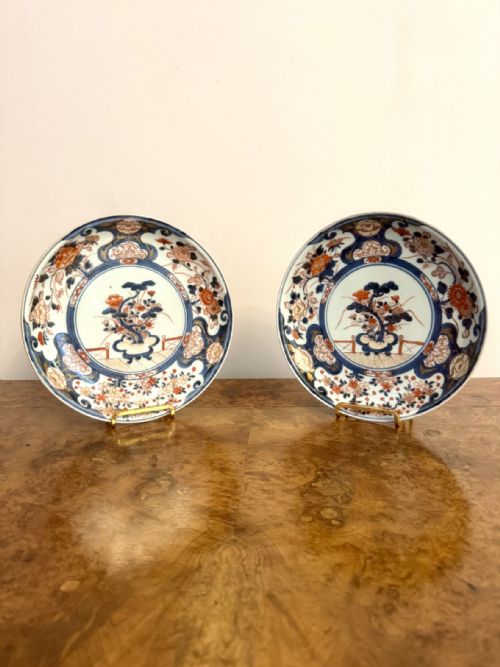
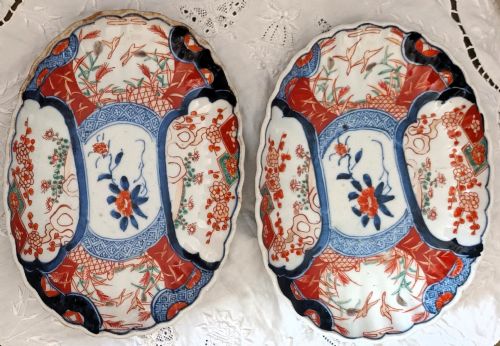


Underglaze Blue Japanese Plates
Underglaze blue japanese plates bring rich cobalt tones and historic craftsmanship into a room, offering both decorative presence and centuries of ceramic tradition.

Underglaze Blue Japanese Plates
Underglaze blue japanese plates encompass a variety of decorative chargers, dishes, and platters spanning several centuries. Buyers searching for underglaze blue japanese plates frequently encounter nineteenth-century Meiji period examples alongside eighteenth-century Edo period pieces.
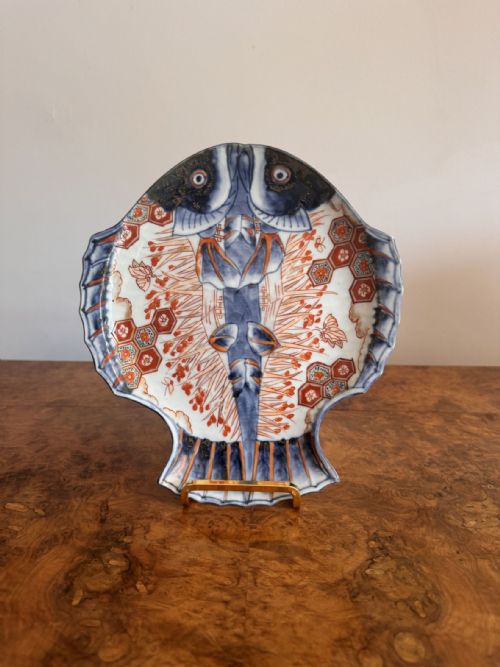
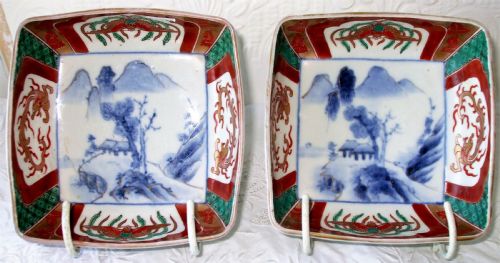
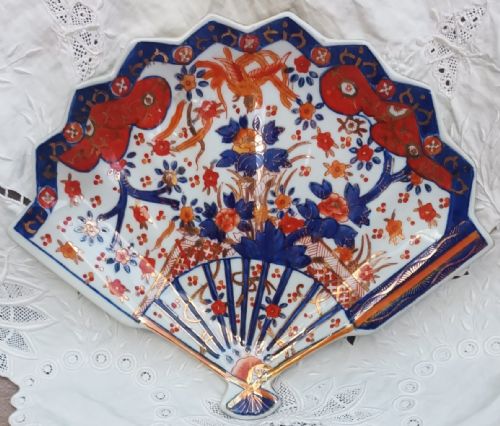
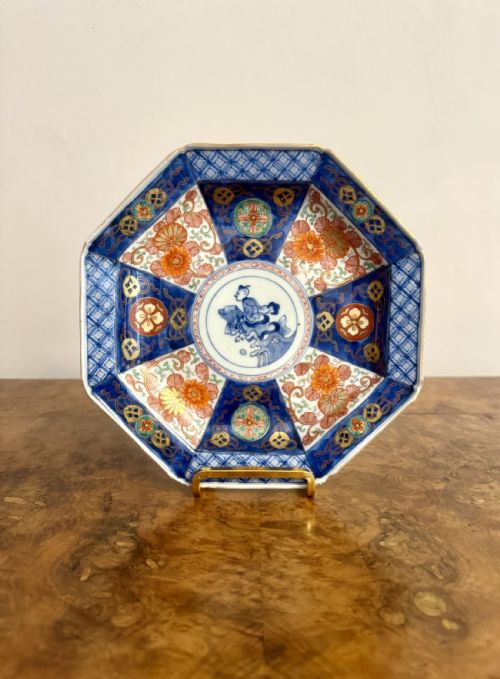
The selection ranges from large chargers depicting koi carp and cranes to hexagonal, scalloped, and fish-shaped dishes. Most listings concentrate on Japanese Imari and Arita wares made from porcelain.
Pieces from the nineteenth and early twentieth centuries dominate the selection, though earlier Edo and seventeenth-century works appear. These ceramic items function primarily as decorative objects for display on walls or tables.
Materials and Construction
Makers shaped these items from porcelain and ceramic bodies, applying cobalt underglaze pigments before the final firing. This cobalt glaze creates the characteristic deep blue designs beneath a clear protective finish.
Certain pieces incorporate additional decoration such as enamel, gilt, and gold leaf applied over the glaze to highlight specific motifs. Artisans formed the ceramic bodies using both standard circular throwing methods and specialised moulds for hexagonal and scalloped edges.
Materials recorded across the inventory include cobalt underglaze, enamel, gilt, and gold leaf applied to traditional Arita porcelain bodies.
Assessing Quality and Execution
Quality in underglaze blue japanese plates rests upon the crispness of the cobalt painting and the precision of the form. Pieces featuring hand-painted motifs like koi carp or cranes demonstrate superior artisan skill compared to simpler production wares.
Unusual shapes, such as fish-form dishes or complex scalloped edges, demand greater technical mastery during the moulding and firing process. The clarity of the cobalt underglaze and the successful integration of supplementary enamel or gold leaf distinguish finer examples.
The Underglaze Blue Japanese Plates Glossary
- Imari
- A style of Japanese porcelain decorated in underglaze blue, iron red, and gold. This traditional aesthetic originated in the town of Arita during the Edo period.
- Arita
- The Japanese town renowned as the birthplace of Japanese porcelain production. Kilns in this region produced vast quantities of export wares.
- Meiji Period
- The era in Japanese history spanning from 1868 to 1912. Many decorative plates and chargers originate from this period of increased international trade.
- Edo Period
- The historical epoch in Japan lasting from 1603 to 1867. Early ceramic pieces from this time command particular interest from collectors.
- Charger
- A large decorative plate utilised historically for service or display. These substantial vessels often feature complex hand-painted cobalt designs.
Underglaze Blue Japanese Plates: Frequently Asked Questions
How do I display large chargers safely?
Large chargers require sturdy wall hangers specifically designed for heavy porcelain or dedicated plate stands with secure bases. Ensure the weight is evenly distributed to prevent accidental slips.
Keep display locations away from direct sunlight and high foot traffic areas to protect the ceramic surface and any delicate gold leaf or enamel details.
Can I use these plates for dining?
Antique ceramic plates and chargers serve primarily as decorative objects for interior display. Regular use with cutlery can scratch the historic glaze and delicate overglaze enamels.
Gentle hand washing in lukewarm water without harsh detergents is recommended if cleaning becomes necessary, avoiding dishwashers entirely.
How do I tell Edo and Meiji pieces apart?
Edo period ceramics often exhibit a more restrained aesthetic with looser brushwork and distinct potting characteristics typical of earlier Arita kilns. Meiji pieces frequently display denser decoration and sharper cobalt underglaze.
Examining the foot ring, glaze pooling, and overall weight helps collectors differentiate between eighteenth-century production and late nineteenth-century export wares.
What do fish and crane motifs mean?
Motifs such as koi carp and cranes carry deep symbolic weight in Japanese art, representing longevity, perseverance, and good fortune. Artisans painted these subjects to convey auspicious wishes to the owner.
The presence of twin koi or soaring birds adds narrative depth to the underglaze blue composition.