

Umbrella Rack Drip Tray
An umbrella rack drip tray keeps hallway floors dry while holding wet walking sticks and wet umbrellas in style.
Umbrella Rack Drip Tray
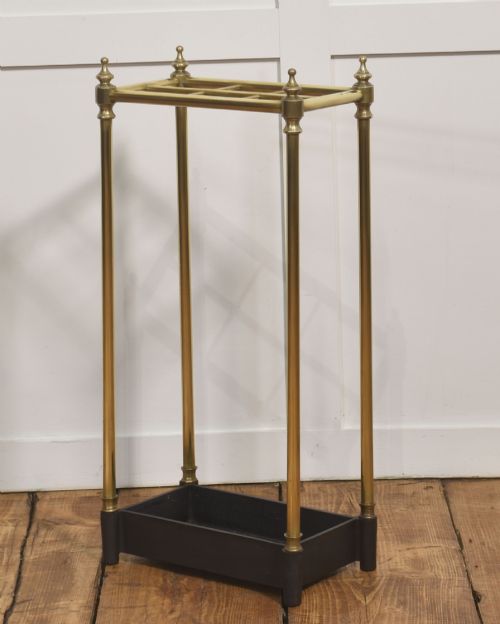
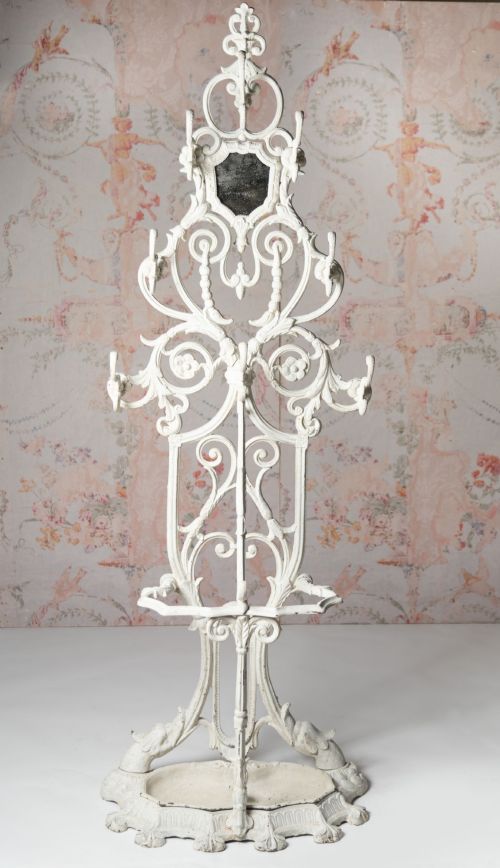
An umbrella rack drip tray serves as the functional base of a hall stand or stick holder, catching water from wet umbrellas and walking canes. These pieces emerge in materials like cast iron, brass, and oak across the nineteenth and twentieth centuries.
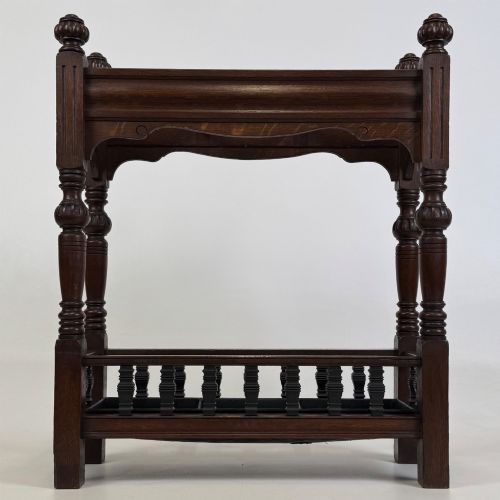
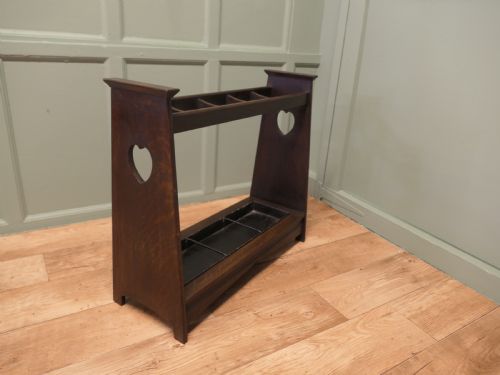
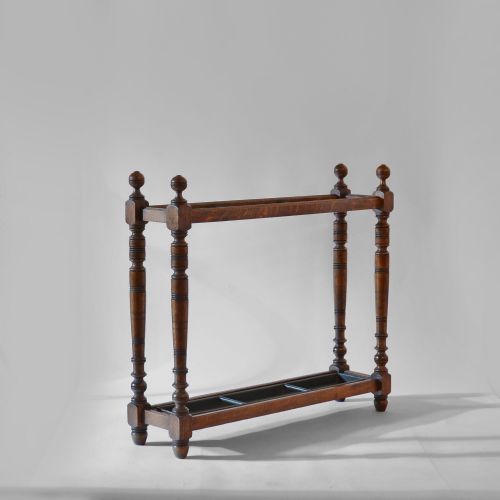
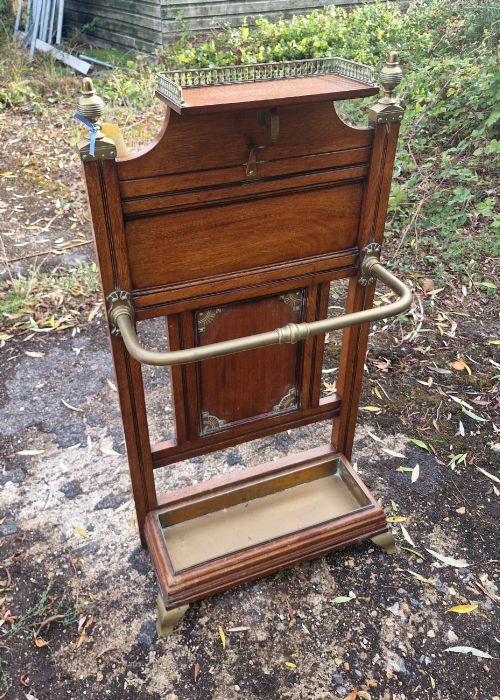
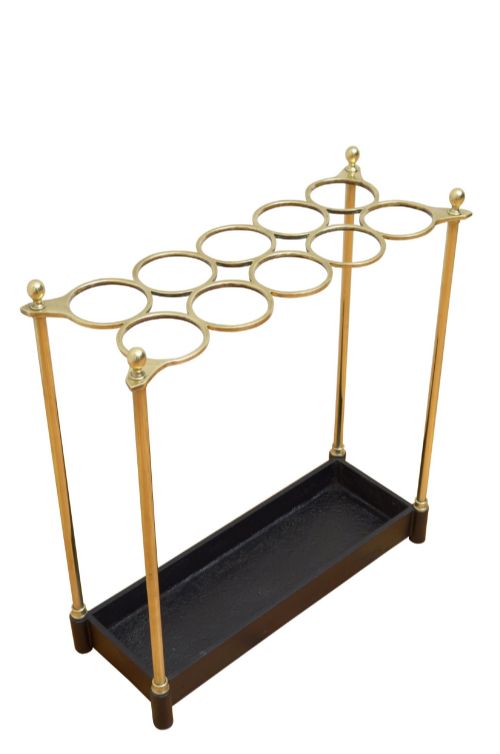
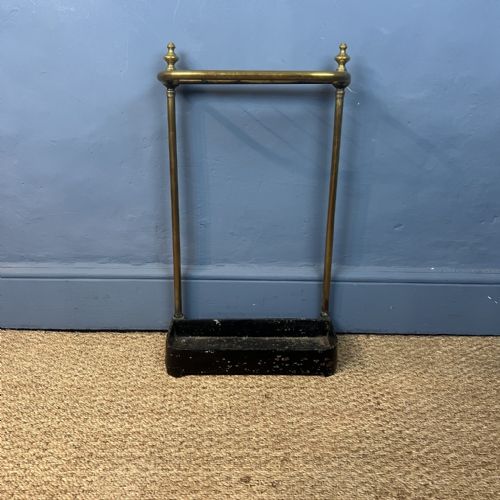
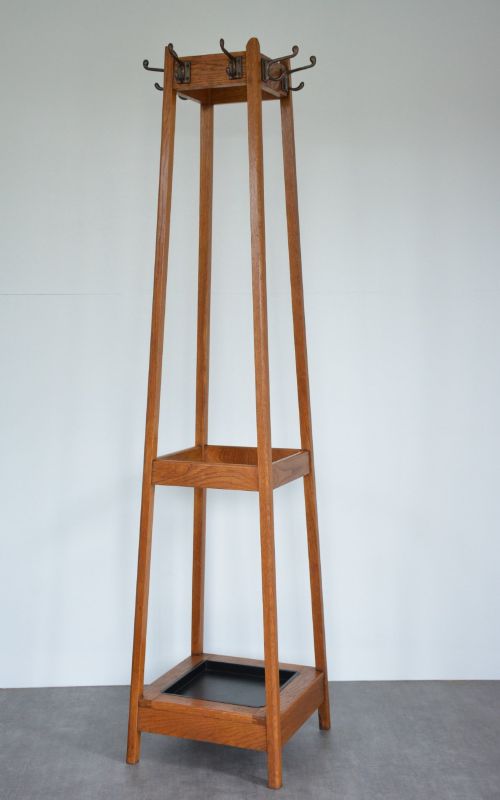
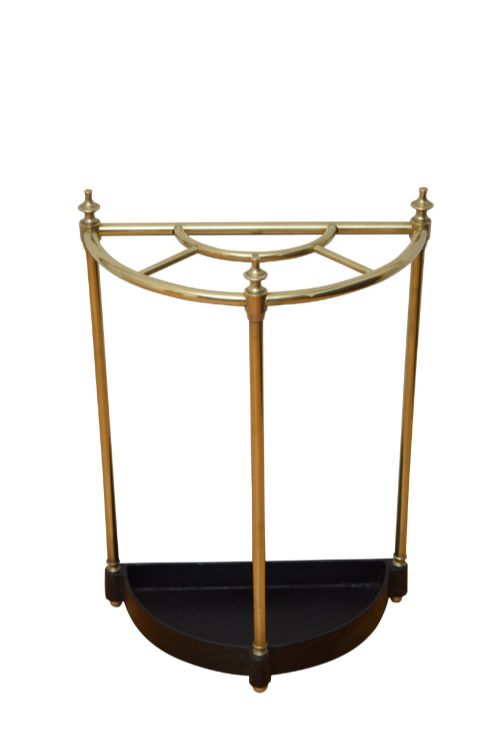
Buyers encounter numerous variants on this page, ranging from freestanding brass demi-lune designs to large oak hallway pieces featuring integrated trays. The selection spans distinct aesthetic movements, including Arts and Crafts interpretations and late Victorian country house examples.
How they were made
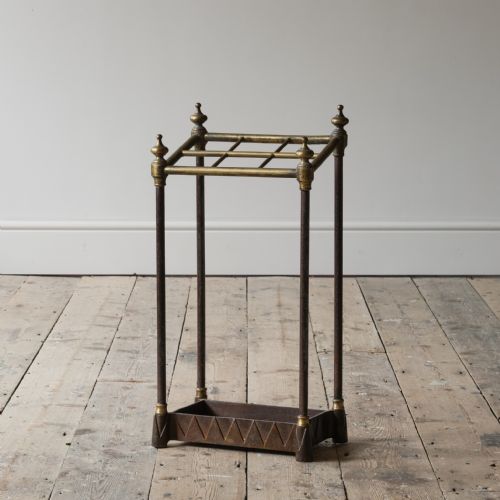
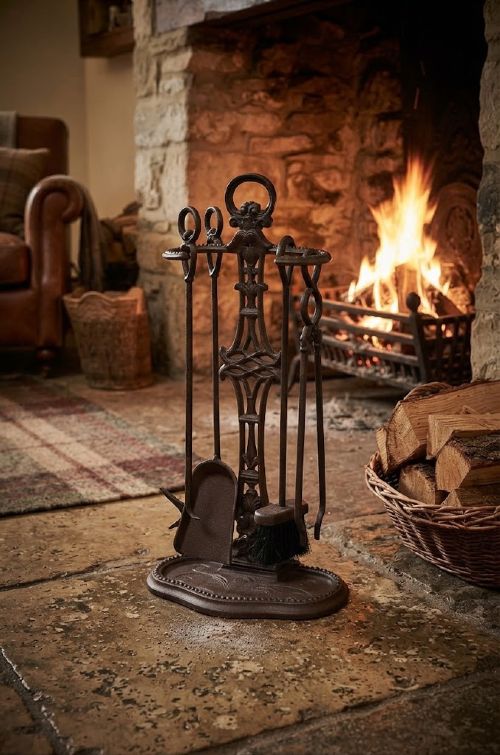
Maker workshops utilised durable metals such as brass, cast iron, and steel to form the structural frames and removable lower trays that resist moisture. Iron components frequently show cast ornamentation, ball finials, and dog-tooth tray detailing.
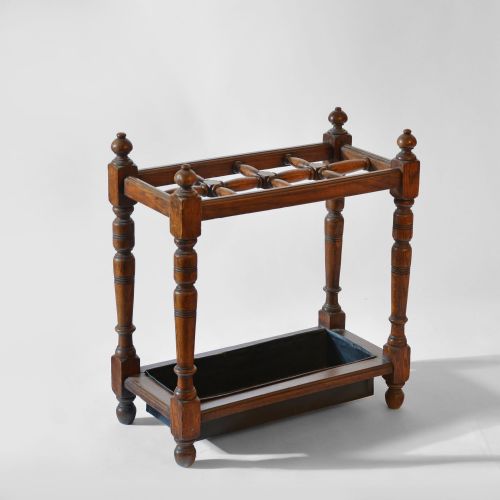
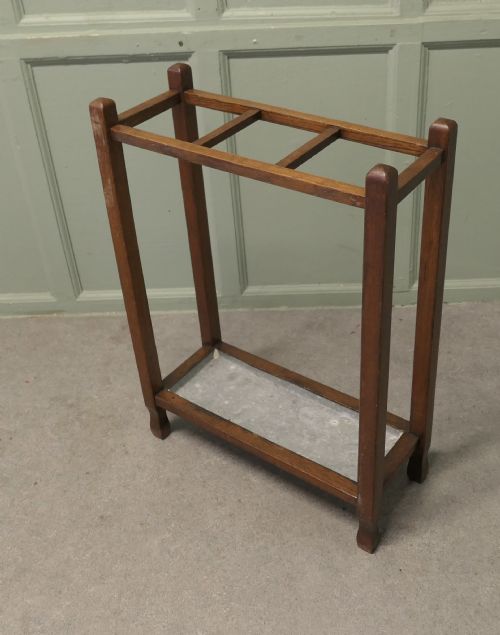
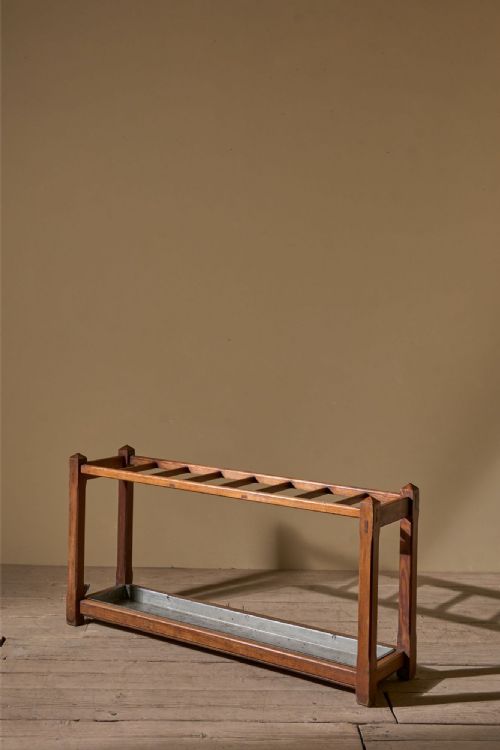
Carpenters constructed wooden versions using solid oak, mahogany, and pine, sometimes incorporating bentwood techniques or applied decorative panels. These timber stands often paired central uprights with dedicated metal water catchers at the base.
Several stands feature dedicated dog-tooth trays designed to keep your dripping walking gear from splashing the hallway rug.
What varies in quality
Construction methods and material selection define the distinction between standard utility items and finer workshop pieces. Heavier cast bases, robust framing joints, and substantial brass gauge thickness mark out superior examples.
The integration of the water receptacle also influences the piece, with original removable metal trays showing better proportion to the main stand than later replacements. Distinctive decorative elements, such as decorative ball finials or marked foundry work, elevate the overall execution.
Coalbrookdale·Thonet·Heals of London·Liberty
The Umbrella Rack Drip Tray Glossary
- Demi lune
- A half-moon shape commonly utilised for brass umbrella stands designed to sit flush against a hallway wall. This configuration saves valuable floor space in narrow entryways.
- Cast iron
- An iron-carbon alloy poured into moulds to create rigid frames and patterned panels for stick stands. It provides the necessary weight to prevent tipping when holding heavy canes.
- Bentwood
- A technique of steaming timber until pliable and bending it into curved forms, notably used by makers like Thonet. This process creates lightweight yet resilient umbrella frames.
- Arts and Crafts
- A design movement valuing handcraft, honest materials, and simple construction over mass production. Pieces from this tradition typically feature quarter-sawn oak and exposed joinery.
Umbrella Rack Drip Tray: Frequently Asked Questions
How do I protect my floor?
These stands utilise integrated metal trays at the base to catch runoff water from wet umbrellas.
Ensure the removable tray is emptied and dried regularly to prevent moisture pooling on wooden hallway flooring.
Where should I place it?
Hallways and entryways serve as the traditional and most practical locations for these stands, keeping wet gear near the door.
Demi-lune shapes work particularly well against narrow walls, while larger oak pieces suit spacious country halls.
How do I date the stand?
Materials and design styles offer clear indicators of the period, such as heavy cast iron frames pointing to the Victorian era.
Arts and Crafts oak stands typically display characteristic pegged joinery and simpler geometric lines from around nineteen hundred.
Can they hold walking sticks?
Most umbrella holders double as walking cane and stick stands due to their matching interior ring diameters.
Narrower antique variations suit slim walking canes, whereas larger frames accommodate broader umbrella handles easily.