

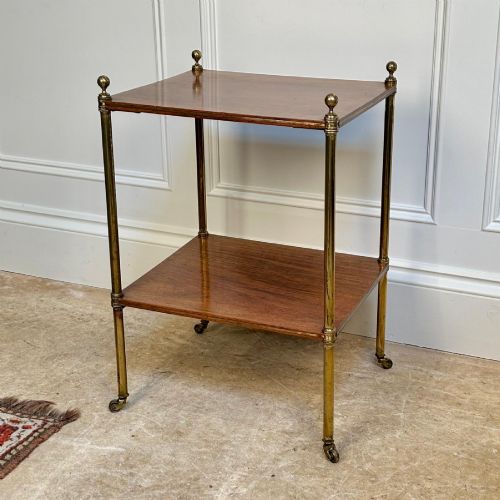
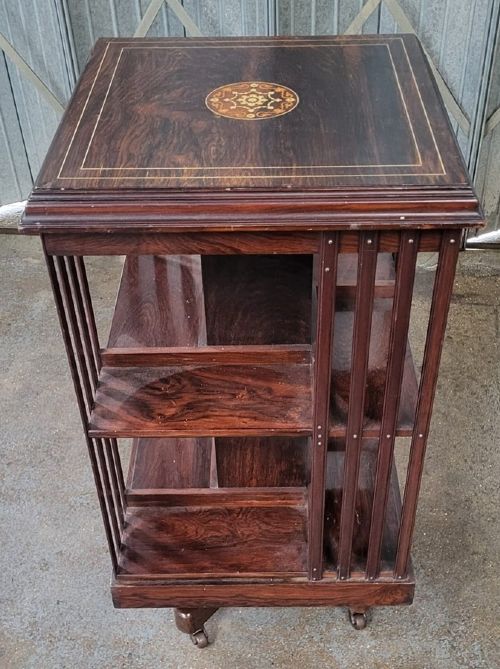
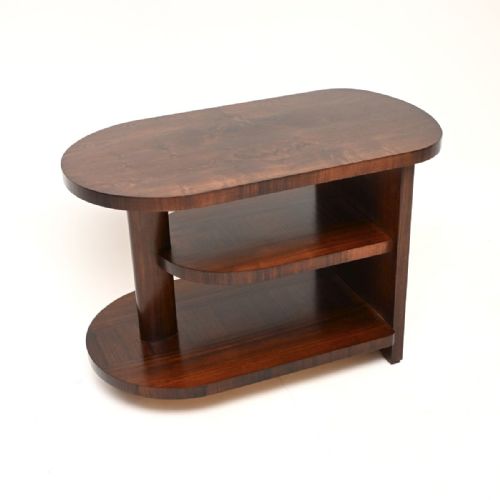
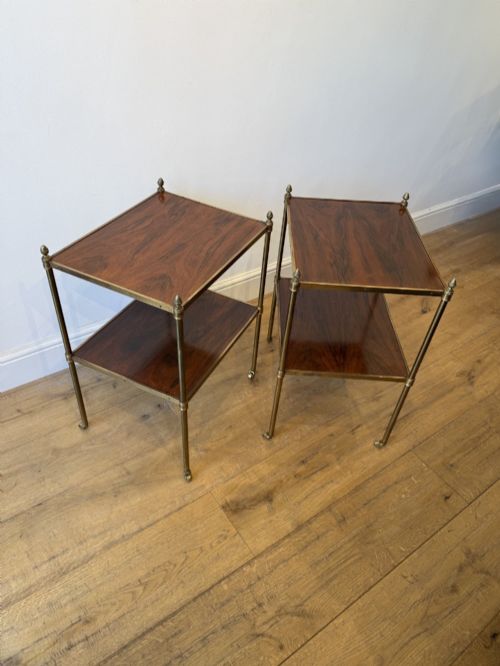

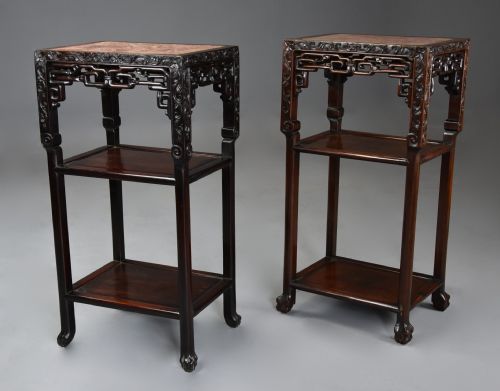
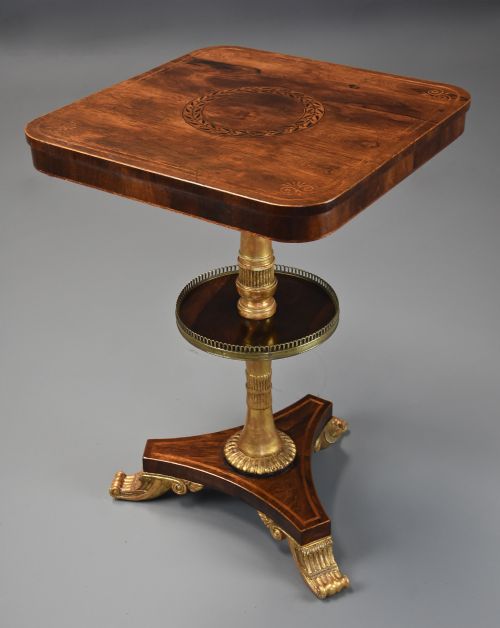


Two Tier Rosewood Table
A two tier rosewood table offers stacked surface space with rich timber grain, serving as a versatile piece for lamps, books or display.
Two Tier Rosewood Table
When searching for a two tier rosewood table, buyers encounter a variety of forms including etageres, occasional tables, lamp tables, and plant stands across multiple periods. The selection spans the 19th century, Victorian, Edwardian, and Art Deco eras, with pieces originating from English, French, and Chinese workshops.
Occasional tables and etageres dominate the current offerings, providing dual surfaces supported by slender legs or columns. These tiered surfaces function practically as side tables, display stands, or serving pieces while maintaining a compact footprint in a room.
What Varies in Quality
The degree of refinement in the timber selection and inlay work separates standard examples from exceptional pieces. Finely executed boxwood, satinwood, and bone inlay demonstrate superior craftsmanship compared to plain or simply bordered surfaces.
Attribution to documented makers or specific design manners elevates a piece, as seen in works associated with firms like Edwards & Roberts, Howard & Sons, or designers such as George Bullock. The integration of cast bronze or ormolu mounts and refined secondary timbers further distinguishes the upper tier of the range.
Two Tier Rosewood Table Retail Price Guide 2026
Typical asking prices for two tier rosewood table among the pieces listed under this phrase on Sellingantiques today, from the lower quarter to the upper quarter. They describe what is for sale here now, not the wider market.
Listings span periods from Regency through to Art Deco, featuring English, French, and Chinese manufacturing origins.
Mallett·George Bullock·Edwards & Roberts·Majorelle·Howard & Sons·Donald Ross
The Two Tier Rosewood Table Glossary
- Etagere
- A set of open shelves or tiers designed for displaying small objects, ornaments, or books. This French form became popular in various iterations during the nineteenth and early twentieth centuries.
- Marquetry
- The art of applying pieces of veneer to a structure to form decorative patterns and pictures. Craftsmen utilise different coloured woods to create floral or geometric designs on tabletops.
- Ormolu
- Gilded bronze mounts applied to furniture for decorative effect. It gained widespread use in French and English luxury cabinetmaking during the nineteenth century.
- Crossbanding
- A strip of veneer running perpendicular to the main grain of the tabletop. This technique creates a distinct border that frames the central wood panel.
- Jardiniere
- A decorative pot or stand intended to hold plants or flowers. In table form, it incorporates a lined well or a dedicated lower tier for display.
Two Tier Rosewood Table: Frequently Asked Questions
What is a two tier rosewood table used for?
These tables function primarily as occasional surfaces for lamps, drinks, or books while providing an extra lower shelf for display. Their dual-level design maximises utility in smaller sitting rooms without taking up additional floor space.
They also serve as etageres and plant stands for holding decorative ceramics, urns, or floral arrangements. The upper and lower tiers allow for balanced arrangement of objects across different heights.
How do I date a two tier table?
Dating relies on stylistic markers, timber choice, and construction techniques associated with periods such as the Regency, Victorian, Edwardian, and Art Deco eras. Heavier rosewood construction with bold brass mounts often points to the nineteenth century, while lighter inlaid satinwood suggests the Edwardian period.
Makers' marks, paper labels, or stamps underneath the tiers can provide definitive workshop attribution. Examining the secondary timbers and the style of inlay helps narrow the decade of manufacture.
Are Chinese hardwood tables the same as English ones?
Chinese hardwood tables from the Qing dynasty utilise dense timbers like Hongmu rather than European rosewood and feature traditional carved joinery. Their construction avoids Western veneer techniques in favour of solid, heavy frames designed as pedestals or urn stands.
English and French examples tend to focus on veneered surfaces, marquetry inlay, and ormolu mounts typical of European revival styles. Both traditions utilise two tiers, but the aesthetic and structural approach remains distinct to each region.
How do I care for rosewood furniture?
Rosewood requires stable indoor humidity away from direct sunlight and heat sources to prevent the timber and veneer from drying out. Dusting regularly with a soft, dry cloth maintains the polished finish without building up residue.
Avoid using silicone-based polishes or harsh chemical cleaners that can damage historical French polish or wax surfaces. Occasional professional waxing helps nourish the grain and protect the antique timber.