


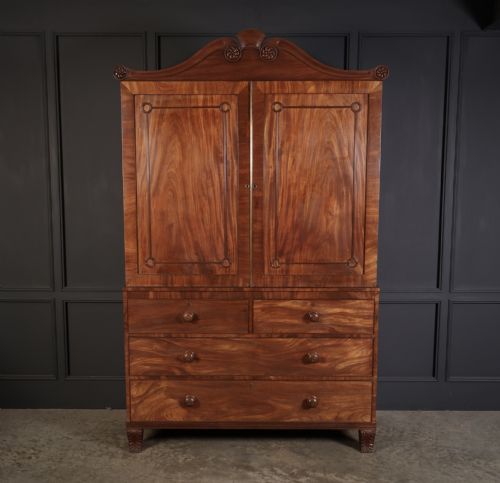


Two Section Cupboard
A two section cupboard is a stacked storage piece built to hold linen, books or provisions, prized for its imposing timber presence.
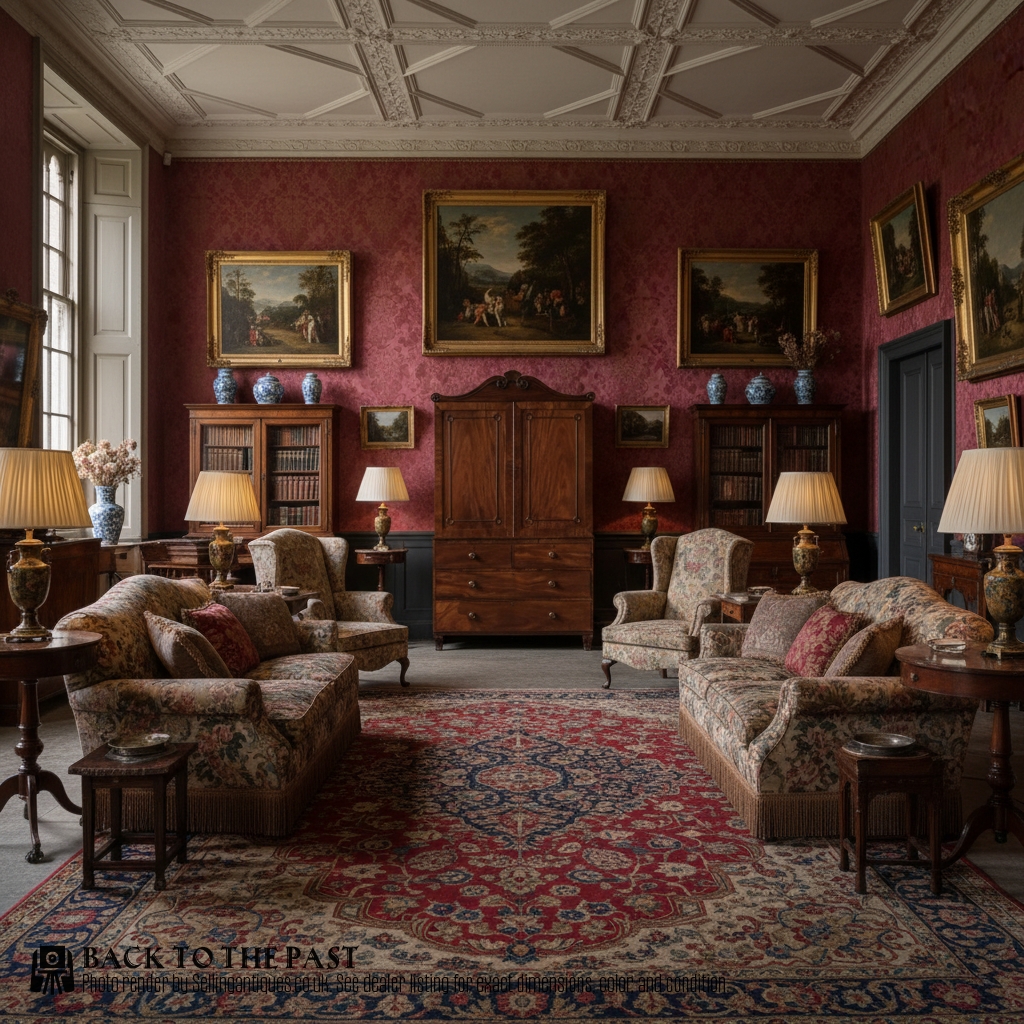
Two Section Cupboard
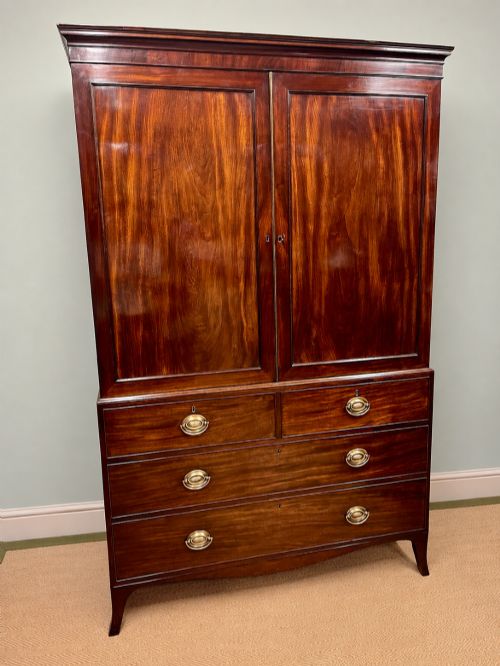
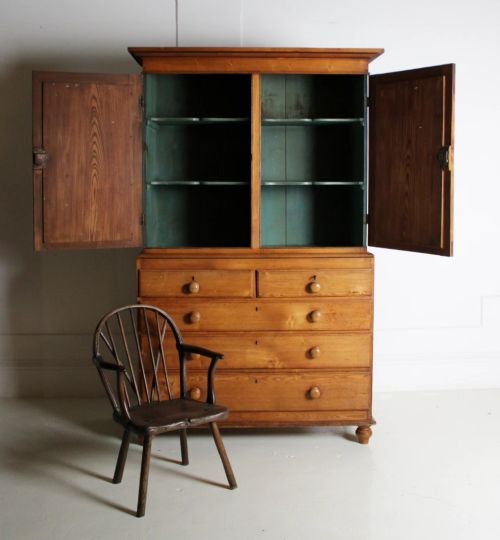
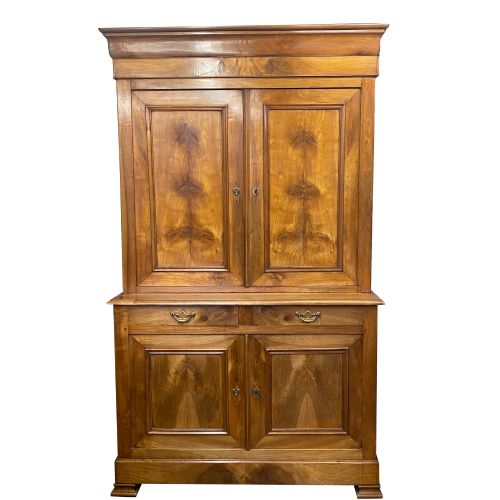
A two section cupboard is a stacked furniture form split into an upper and lower tier, frequently appearing as a linen press, housekeeper's cupboard, or bookcase cabinet. These pieces bridge utilitarian storage and formal display across Georgian, Victorian, and Edwardian periods.
The version most commonly met on this page is the mahogany or oak linen press, combining upper cupboard doors with lower chest drawers. Alternatively, bookcase cabinets pair glazed top sections with timber bases in walnut, ash, or painted pine.
How they were made
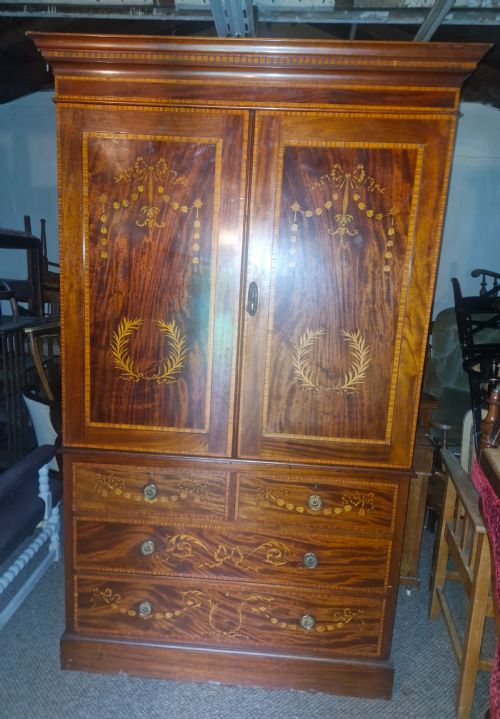
Cabinet makers constructed these stacked carcasses predominantly in solid mahogany, oak, and walnut, often applying flame mahogany or rosewood crossbanding to primary surfaces. Secondary timbers provided internal support for adjustable shelves and sliding trays.
Joinery techniques included dovetailed drawer construction and panelled door framing, supplemented by brass hardware such as turned knobs, drop handles, and locking escutcheons.
Listings feature oak, mahogany, walnut, ash, and painted pine across 18th, 19th, and early 20th-century periods.
What varies in quality
The standard of a two section cupboard rests upon timber selection and veneer matching, where finely figured flame mahogany or dense old-growth oak elevate a piece above plain utility. Proportions between the upper and lower tiers dictate the visual harmony of the design.
Detailing such as inlaid crossbanding, panel configuration, and original brass hardware distinguish workshop production from standard regional joinery.
Druce & Co.·Whytock & Reid of Edinburgh
The Two Section Cupboard Glossary
- Linen press
- A tall two-part storage piece comprising an upper cupboard fitted for textiles and a lower chest of drawers. The form evolved to protect household linens from dust and damp.
- Crossbanding
- A decorative border of veneer laid with the grain running perpendicular to the main panel. It frames drawer fronts and cabinet doors on higher-grade pieces.
- Secretaire
- A writing drawer or section integrated into the carcass, featuring a fall-front that drops to reveal internal pigeonholes and small drawers. It adds a secondary function to the storage unit.
- Deuddarn
- A traditional Welsh two-part cupboard constructed in oak. These regional pieces reflect vernacular building traditions distinct from formal urban cabinet work.
Two Section Cupboard: Frequently Asked Questions
What is a two section cupboard used for?
These cabinets served primarily for storing household linens, books, and provisions within domestic rooms. The upper and lower tiers allowed segregation of heavy textiles from smaller garments or daily items.
The stacked construction made heavy furniture manageable to transport room by room during house moves. Today, they function as primary storage or display furniture in large living spaces.
How do I date a two section cupboard?
Dating relies on timber choice, construction methods, and stylistic details visible across periods from the Georgian era to the Edwardian period. Mahogany and walnut dominate earlier pieces, while ash, pine, and painted finishes appear in regional or later examples.
Secondary wood examination and hardware style provide further clues to the manufacturing decade. Cabinet feet and cornice mouldings shift from bracket forms to plinths and turned pegs.
How do I live with a two section cupboard?
Placing these tall pieces requires measuring ceiling height and ensuring adequate wall clearance for two-part assembly. The deep carcasses provide substantial volume for modern storage needs.
Maintaining stable room humidity protects old timbers and prevents veneer splitting. Adjustable shelving in bookcase variants allows customisation for modern display or book storage.
Are two section cupboards heavy to move?
The stacked design splits the weight into two separate carcases, making transport easier than a single solid unit of equivalent height. Removing internal trays, shelves, and drawers further lightens each section during transit.
Professional removal is recommended for large hardwood examples in mahogany or oak due to dense timber weight. Securing the upper tier to the lower base ensures stability once positioned.