


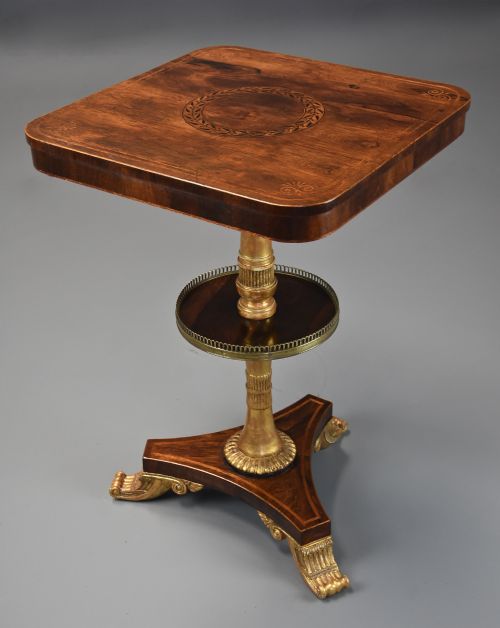
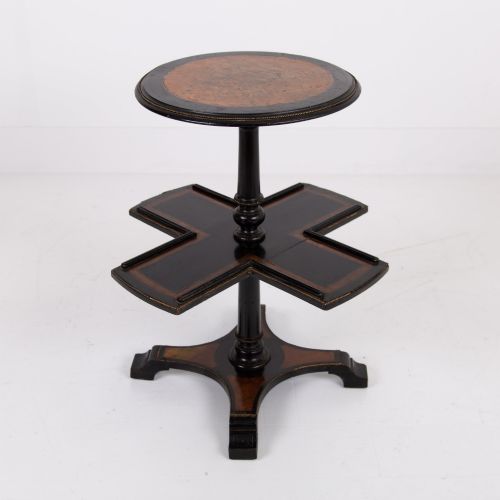
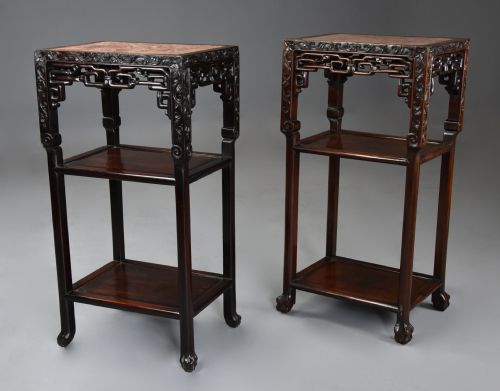
Two Pedestal Table
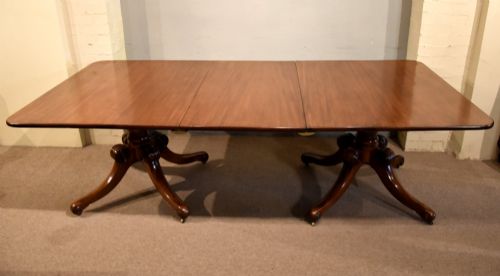
A two pedestal table brings formal dining and library work together through twin pillars supporting timber leaves.
Two Pedestal Table
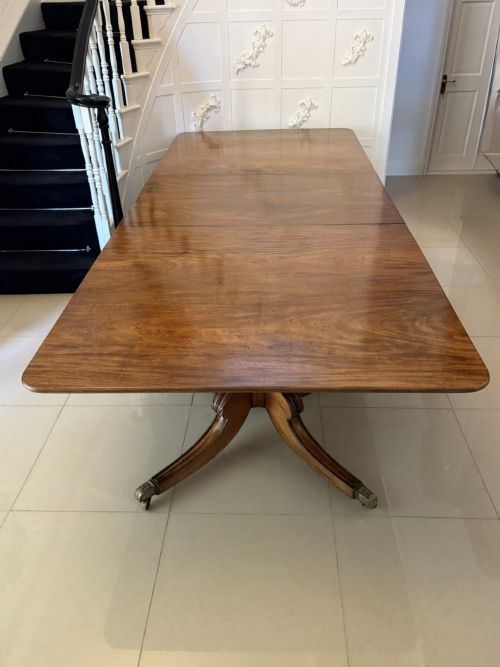
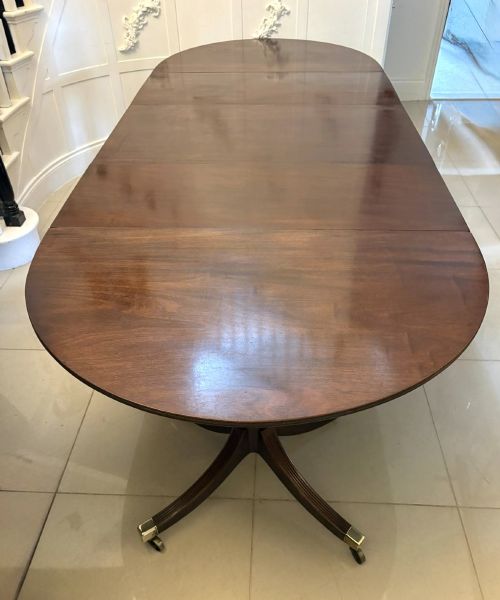
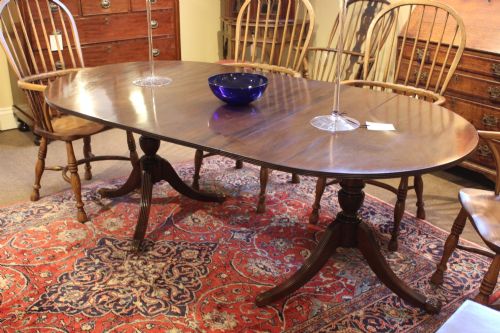
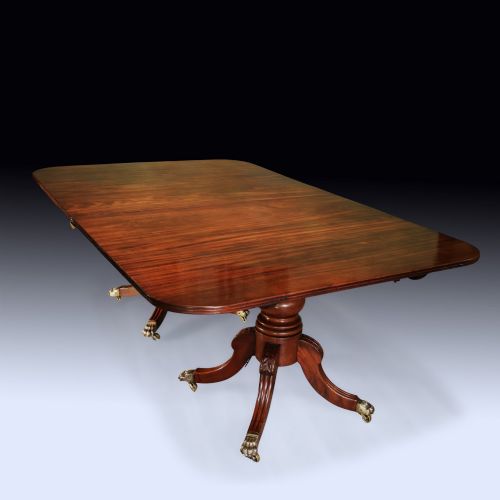
A two pedestal table typically appears as a dining table supported by two distinct pillars or columns, frequently accompanied by extending leaves. These items emerge across the nineteenth and twentieth centuries, spanning Regency, Victorian, and later periods.
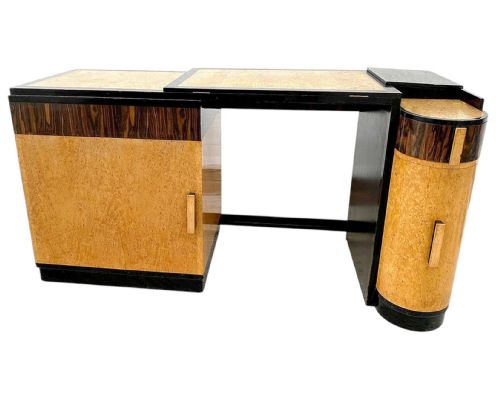
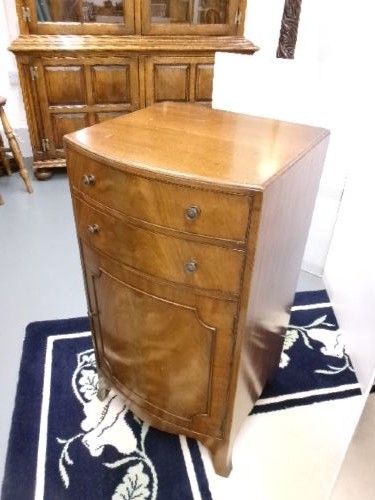
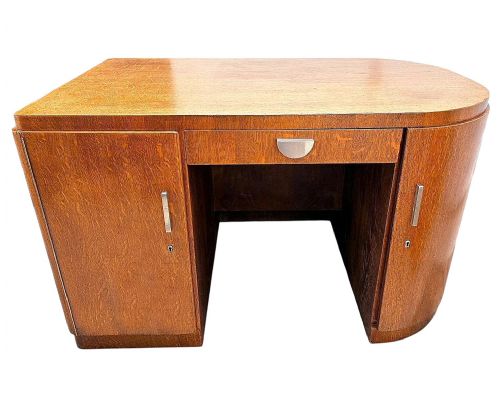
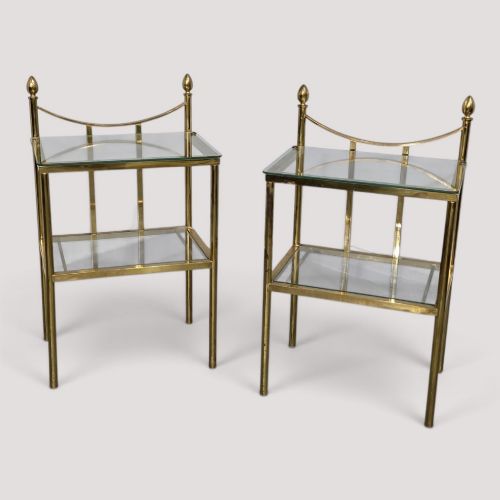
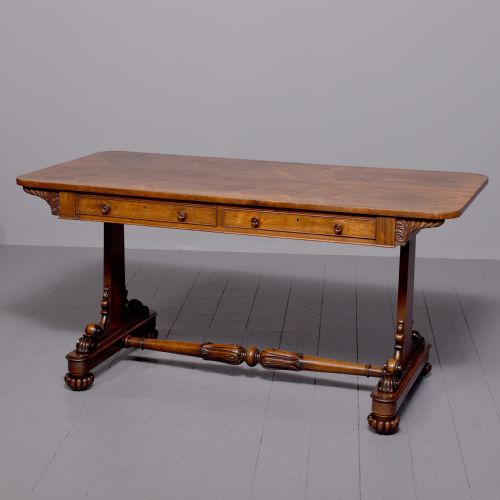
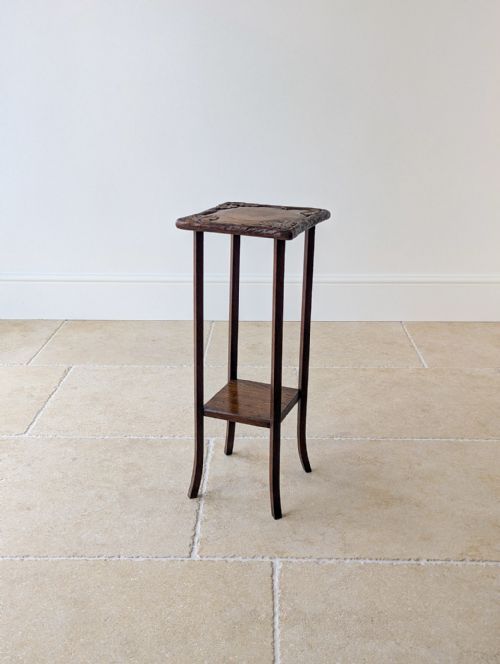
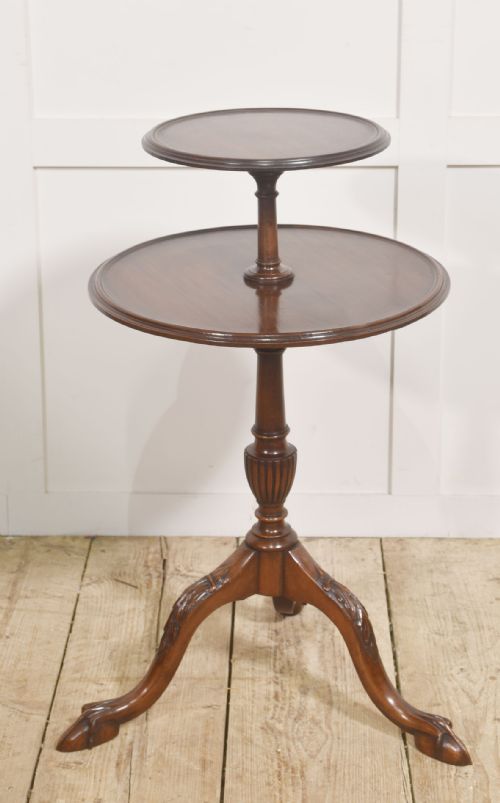
Beyond large dining formats, the phrase encompasses side tables, library tables, and occasional pieces that utilise a dual support arrangement. Mahogany remains the dominant timber across these varied forms, supplemented by rosewood, walnut, and oak.
Dining versions often include leaves for extension, while smaller iterations serve as lamp tables or plant stands. The design balances weight between two focal points rather than standing on four corner legs.
How they were made
Cabinet makers constructed these pieces predominantly using solid and veneered timbers, with mahogany and rosewood selected for their grain and durability. Pillars often rest on splayed brass-capped legs fitted with castors to allow movement across floors.
Joinery techniques involve precision fitting for extending leaves, securing the tabletop to the twin pedestals with robust internal blocks and rails. Brass inlay and carved details appear on higher-status examples from the Regency and Victorian eras.
Two Pedestal Table Retail Price Guide 2026
Typical asking prices for two pedestal table among the pieces listed under this phrase on Sellingantiques today, from the lower quarter to the upper quarter. They describe what is for sale here now, not the wider market.
The archive includes nineteenth-century dining tables alongside twentieth-century walnut and mahogany extending formats.
What varies in quality
The choice of timber grain defines the visual impact, with figured mahogany and burr walnut representing superior selections over plain stock. Figured surfaces display rich patterns that require expert matching across tabletop sections and leaves.
Construction rigidity at the pillar junctions determines daily utility, particularly on extending dining formats that endure weight and movement. Finishes range from simple wax applications to hand-polished surfaces that highlight the depth of the wood.
Liberty of London·George Bullock·Daniel and Arter of Birmingham
The Two Pedestal Table Glossary
- Pedestal
- A central support column holding up a table surface. It replaces traditional corner legs to allow greater legroom.
- Twin Pillar
- A structural arrangement using two distinct columns beneath a top. This format provides stability for extending dining formats.
- Library Table
- A large freestanding table designed for books and papers. These pieces often incorporate drawers and finished backs for central room placement.
- Gueridon
- A small round occasional table supported by a central column or pillars. French examples frequently incorporate marble tops.
- Sofa Table
- A rectangular table designed to stand in front of a sofa. These items typically feature drop leaves and two small drawers.
Two Pedestal Table: Frequently Asked Questions
How do I seat guests around a twin pillar table?
The twin pillar design places supports inward from the corners, which frees up legroom along the sides of the table. Extending leaves allow the top to expand for larger gatherings.
Chairs slide easily between the pedestals when the table is configured for daily use or extended for formal dining.
Where should I place a library table in a room?
Library tables feature finished backs and sides, making them suitable for positioning in the centre of a room rather than against a wall. Their substantial proportions suit studies and drawing rooms.
Drawers built into the apron provide storage for small items while maintaining the clean lines of the piece.
How do I distinguish Regency period tables from later styles?
Regency pieces date from the early nineteenth century and utilise dense mahogany or rosewood with restrained brass mounts. Proportions tend to be classical and austere.
Later Regency style or reproduction pieces built in the twentieth century often display different timber seasoning and machine-cut internal elements.
Can I use an occasional table as a lamp stand?
Occasional tables and lamp tables provide stable surfaces for lighting and decorative objects. Their smaller footprints fit easily beside seating arrangements.
Height and surface area vary, so matching the table scale to your lighting fixtures ensures proper balance.