


Two Light Bronze Candelabrum
These two light bronze candelabrum selections bring nineteenth-century French and English illumination into the home with cast metalwork and classical detail.
Two Light Bronze Candelabrum
A two light bronze candelabrum provides twin candle nozzles supported by arms extending from a central shaft or figural stem. These pieces emerge primarily from nineteenth-century French and English workshops, spanning Regency, Victorian, and Second Empire periods.
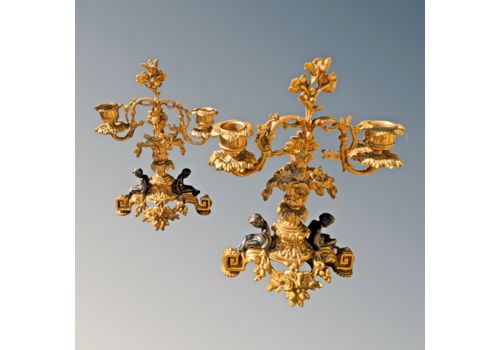
The versions most common on this page are matched pairs designed for mantelpieces, sideboards, or console tables. They frequently incorporate gilt bronze, ormolu, and patinated bronze, often combined with marble bases or porcelain elements.
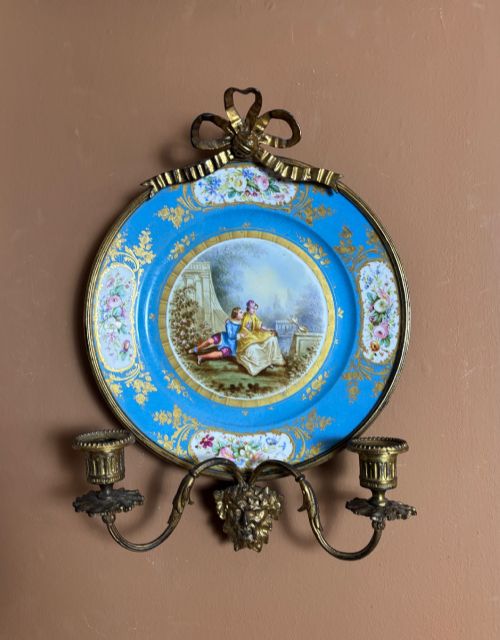
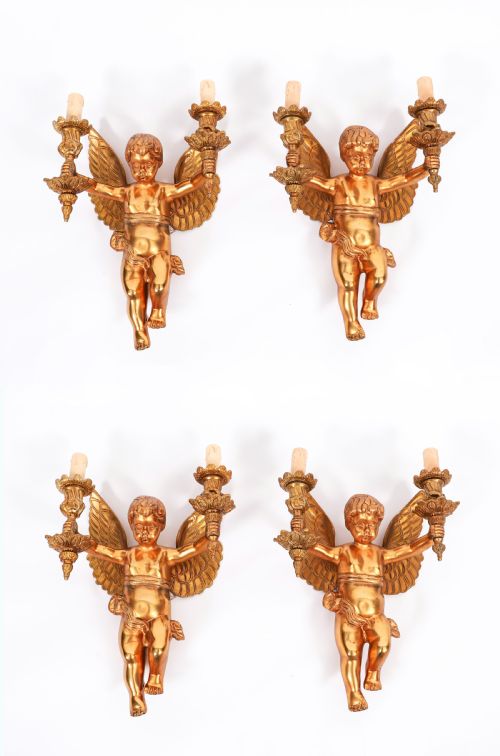
Makers and designers of the era also adapted these forms into wall sconces, wall lights, and occasional table lamps. The core structure remains focused on holding two candles, though variations include figural cherubs and architectural torchères.
How they were made
Foundries produced these objects by casting bronze in sectional moulds, combining patinated dark surfaces with fire-gilded ormolu highlights. Artisans chased the cooled metal by hand to sharpen details on foliage, drapery, and figural anatomy.
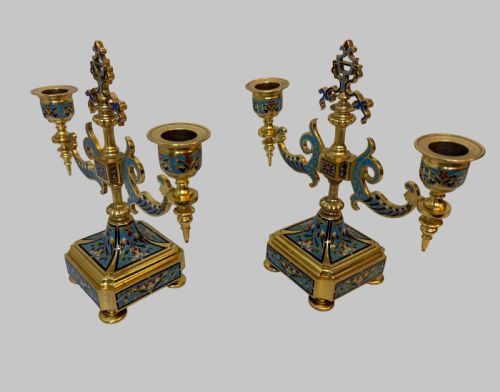
Marble bases and carved porcelain components were integrated using threaded metal rods and bolted mounts to secure the heavy cast branches. Champleve enamel and applied brass elements further enriched the surfaces of selected Victorian and continental pieces.
Listings here feature materials including champleve enamel, Sevres porcelain, and statuary marble alongside cast bronze and ormolu.
What varies in quality
The refinement of the hand-chasing on the bronze surface distinguishes finer examples from simpler production pieces. Sharp casting lines and deep relief work indicate skilled workshop execution rather than mass replication.
Material combination also elevates a piece, such as the integration of heavy statuary marble plinths and fire-gilded ormolu rather than plain lacquered brass. Completeness of matched pairs and original patination preserves historical integrity.
Auguste Cain·Claude Clodion·François-Christophe-Armand Toussaint
The Two Light Bronze Candelabrum Glossary
- Ormolu
- A method of applying finely ground high-carat gold to a bronze object using a mercury amalgam, followed by heat-firing to leave a rich golden finish. This technique creates the bright metallic lustre seen on nineteenth-century French mounts.
- Champleve
- An enamelling technique where troughs or cells are hollowed out of the metal surface and filled with vitreous paste before firing. The resulting coloured glass designs contrast sharply with the surrounding bronze.
- Patinated Bronze
- The darkened or chemical finish applied to the bronze surface to create contrast against gilt elements. It highlights the modelling of figures and foliage.
- Torchere
- A standing or wall-mounted ornamental candleholder or light fixture modelled after an ancient torch bearer. In nineteenth-century examples, these often take the form of patinated bronze figures holding branched lights.
- Regency
- An English design period spanning the early nineteenth century defined by classical Greco-Roman motifs and restrained elegance. Pieces from this era often pair dark patinated bronze with bright ormolu mounts.
Two Light Bronze Candelabrum: Frequently Asked Questions
Were these candelabra wired for electricity?
Most nineteenth-century examples were originally manufactured solely for wax candles. Many have since been adapted for electricity by feeding wires through the central stem.
Converted table lamps and wall sconces often retain their original candle drip pans and nozzles to preserve their appearance.
What is the difference between ormolu and gilt bronze?
Ormolu specifically describes objects treated with mercury-gilded gold amalgam during the eighteenth and nineteenth centuries. The term gilt bronze is a broader description that can include various modern or historical gold-plating techniques.
Both finishes provide a brilliant golden surface designed to catch candlelight in period drawing rooms.
How can I tell a French candelabrum from an English one?
French pieces from the nineteenth century frequently employ exuberant Rococo Revival or Empire styling with heavily chased cherubs and Sevres porcelain components. English Regency designs tend toward stricter classical geometry and simpler bronze mounts.
Foundry marks and stylistic proportions often provide further clues to regional origin.