

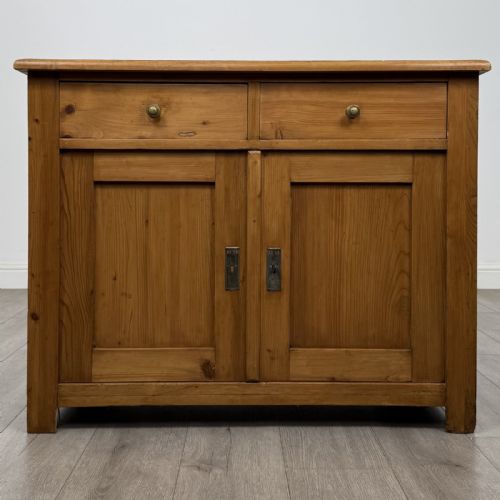
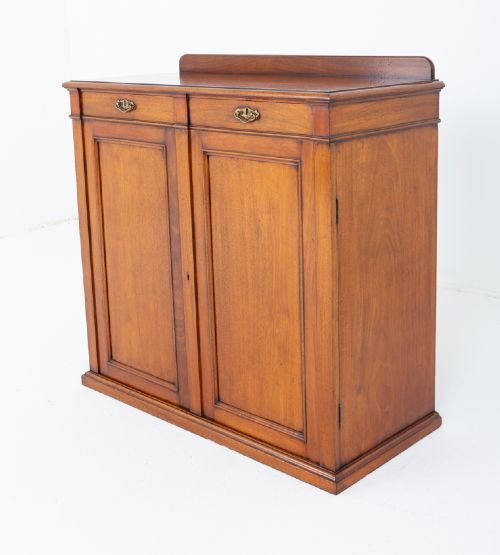
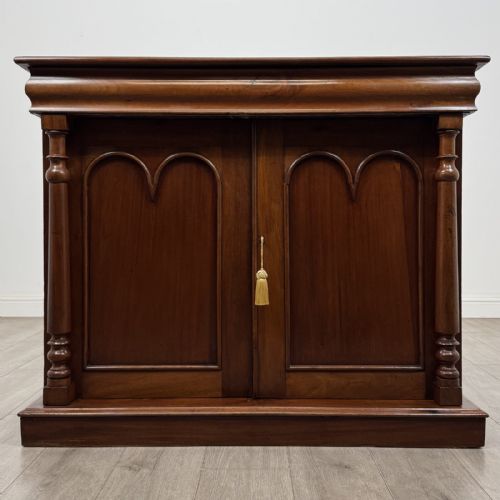
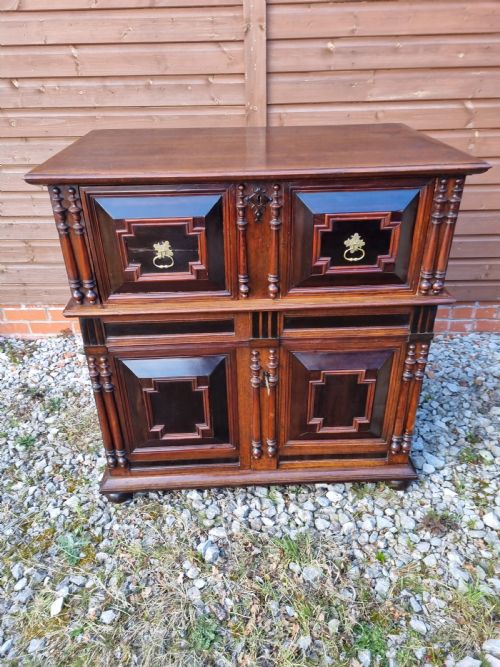
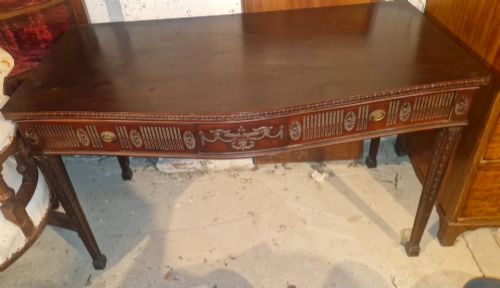
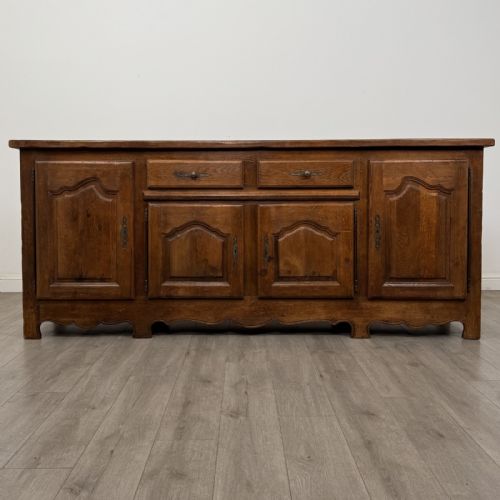
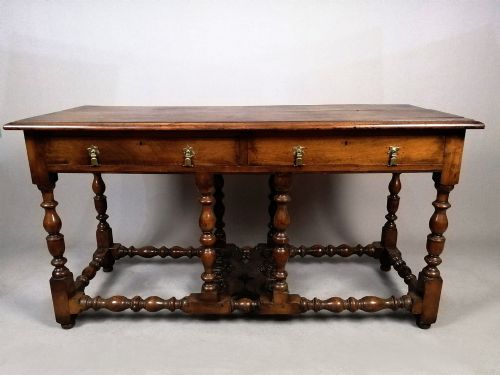
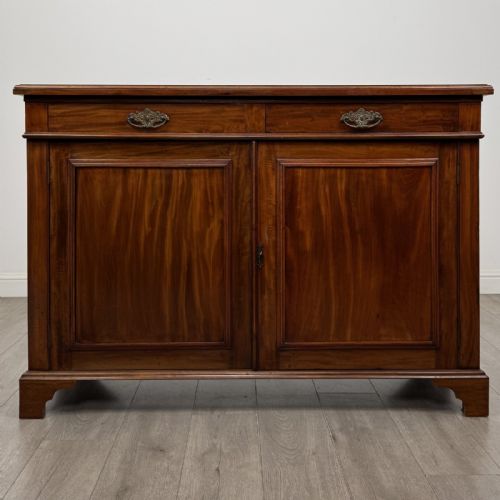
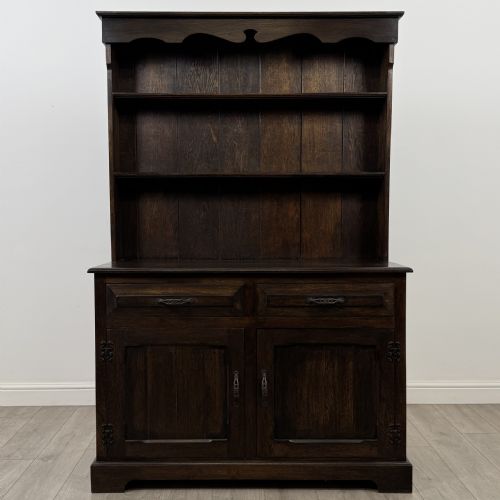
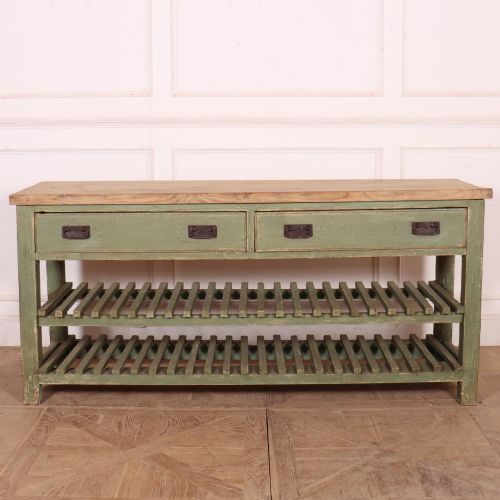
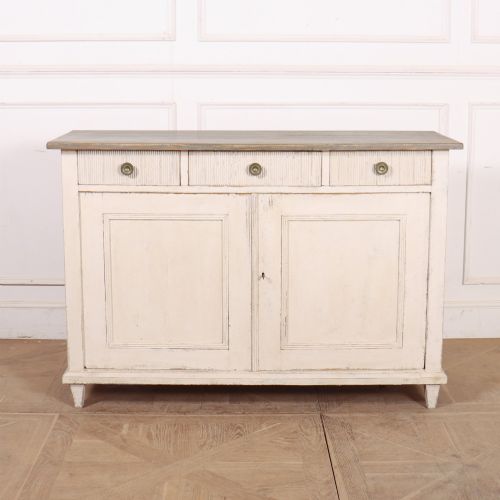
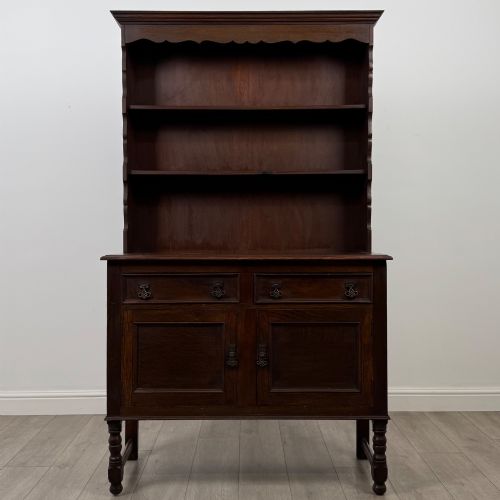
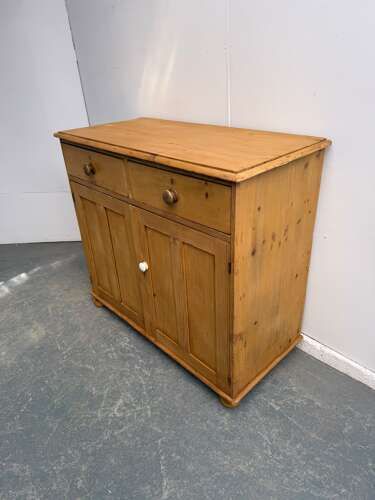
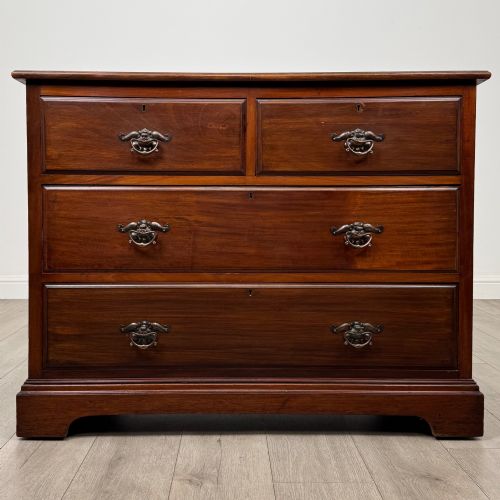
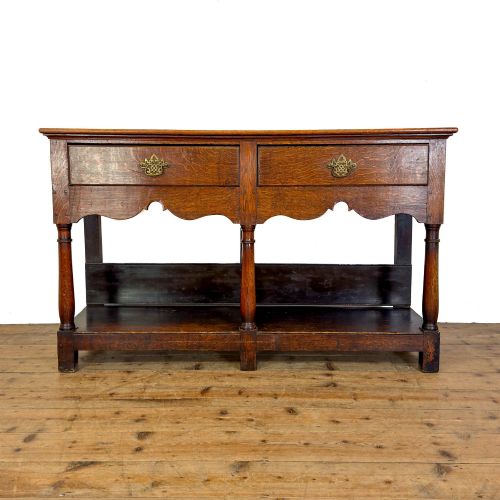

Two Drawer Sideboard
A two drawer sideboard offers practical storage with surface space, combining sturdy timber construction with period character for the home.
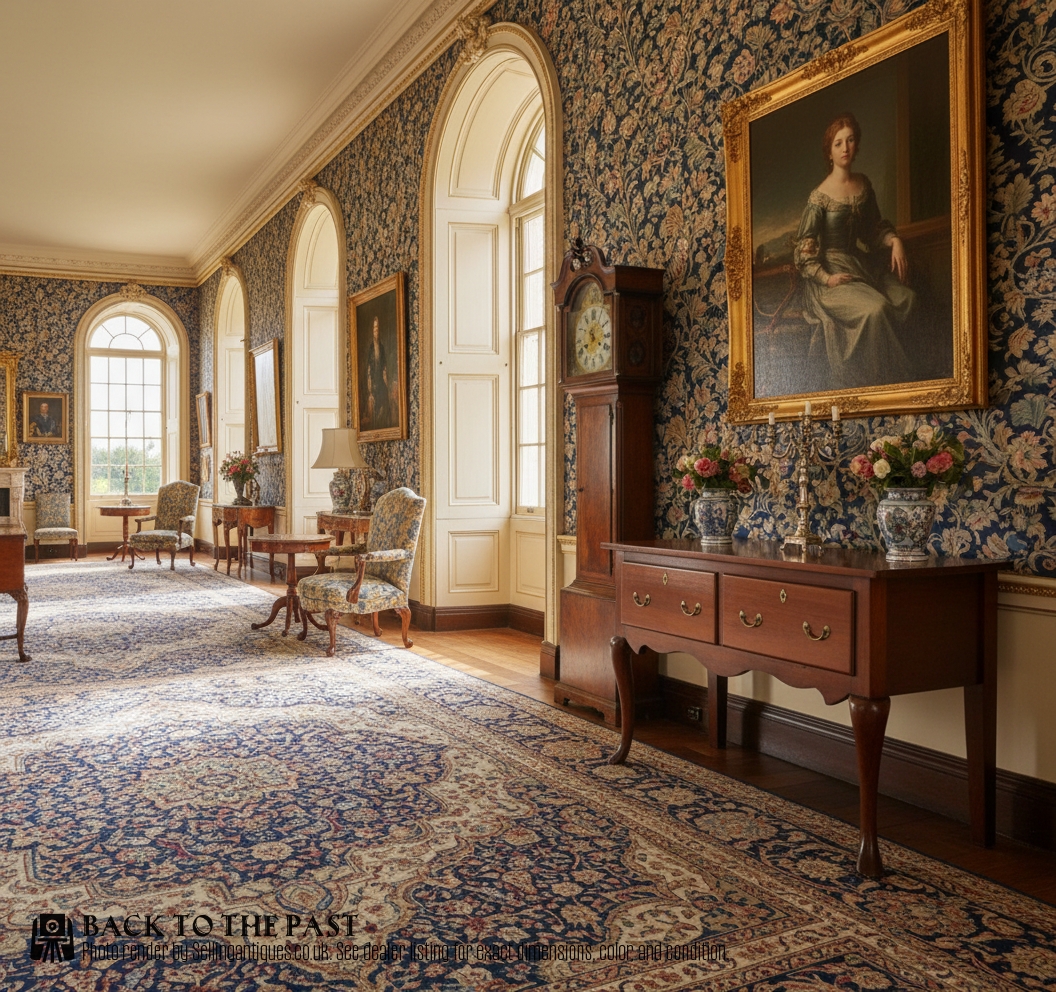
Two Drawer Sideboard
A two drawer sideboard brings together traditional forms such as dresser bases, chiffoniers, servers, and low cupboards designed for domestic storage and display. When you search for a two drawer sideboard, you encounter practical furniture pieces originating from various periods including the Georgian era, the Victorian period, and the Edwardian epoch.
The pieces on this page span diverse regional traditions, from English and Welsh country oak designs to French fruitwood and walnut commodes. Dresser bases with potboards and low chests of drawers frequently share these proportions, providing twin drawers set above cupboards or open shelves.
Makers and craftsmen utilised native and exotic timbers to construct these functional items, adapting styles from Jacobean Revival to simple country vernacular. Selecting one means choosing a utilitarian form that has survived through decades of daily use.
Materials and construction methods
Cabinet makers relied primarily on hardwoods such as oak, mahogany, walnut, and teak, alongside domestic softwoods like pine for carcass work and drawer linings. Joinery techniques involved hand-cut dovetails for drawers and mortise and tenon frames to ensure structural rigidity.
Surfaces received various finishes depending on regional origin and period, ranging from traditional wax polish on oak and mahogany to painted or bleached treatments on continental commodes and pine furniture. Brass or iron hardware, including drop handles and keyplates, secured doors and drawer fronts.
Two Drawer Sideboard Retail Price Guide 2026
Typical asking prices for two drawer sideboard among the pieces listed under this phrase on Sellingantiques today, from the lower quarter to the upper quarter. They describe what is for sale here now, not the wider market.
Listings feature items built from oak, mahogany, pine, walnut, cedar, teak, cherrywood, and painted wood across the 18th, 19th, and 20th centuries.
Judging quality in construction and material
Quality rests in the selection of timber figures, the precision of the joinery, and the retention of original hardware and structural surfaces. Finer examples display carefully matched wood grain across drawer fronts and sound, unwarped timbers that indicate superior seasoning.
The integrity of the construction, visible in hand-dovetailed drawer boxes and solid backboards, separates utilitarian workshop pieces from finer cabinet work. Retaining original patination and untreated or properly waxed surfaces rather than excessive modern stripping preserves the historical integrity of the piece.
Maple and Co
The Two Drawer Sideboard Glossary
- Dresser base
- A low wooden storage unit featuring drawers above cupboards or an open potboard shelf below. These pieces formed the lower section of traditional kitchen dressers.
- Chiffonier
- A compact sideboard or low cabinet developed in the Regency period, typically enclosed with doors and fitted with drawers or a shelf superstructure.
- Potboard
- An open slatted lower shelf found on country dresser bases, originally designed to hold pots and heavy kitchenware.
- Commode
- A low French or Italian chest of drawers or cabinet, often featuring decorative veneers or serpentine fronts.
- Dovetail
- A traditional interlocking joint used in drawer construction to provide robust tensile strength without relying solely on metal fasteners.
Two Drawer Sideboard: Frequently Asked Questions
What is a two drawer sideboard used for?
These pieces serve as versatile storage units in dining rooms, hallways, and kitchens, holding tableware, linens, and everyday household items.
The surface provides space for serving food or displaying decorative objects, making the furniture both practical and decorative.
How do I identify a Georgian sideboard?
Georgian pieces display restrained classical proportions, often executed in rich mahogany or oak with subtle moulding and hand-cut dovetail joints.
Hardware tends to consist of brass drop handles on backplates that match the understated elegance of the period.
Are these sideboards made of solid wood?
Most period examples utilise solid timbers such as oak, mahogany, pine, and walnut throughout their construction and drawer linings.
Subsequent eras occasionally introduced veneers over secondary woods, though country pieces typically remained entirely solid.
How do I care for a waxed pine sideboard?
Maintain the finish by applying a traditional beeswax polish periodically to nourish the timber and protect the surface from moisture.
Avoid placing the furniture in direct sunlight or near heat sources to prevent the wood from drying out or splitting.