
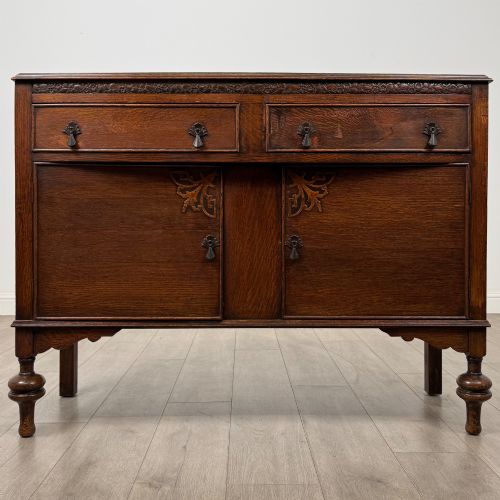
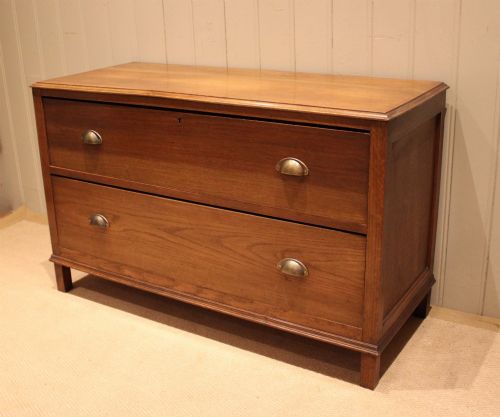
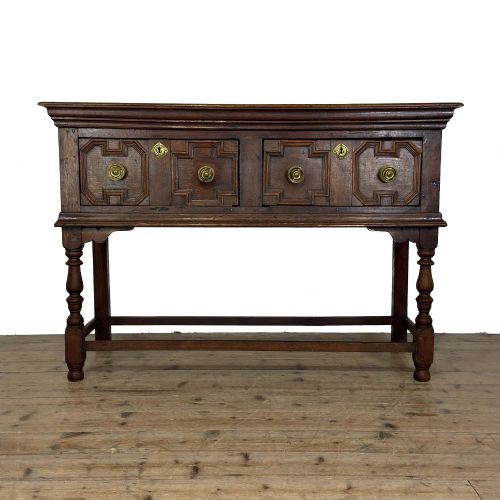
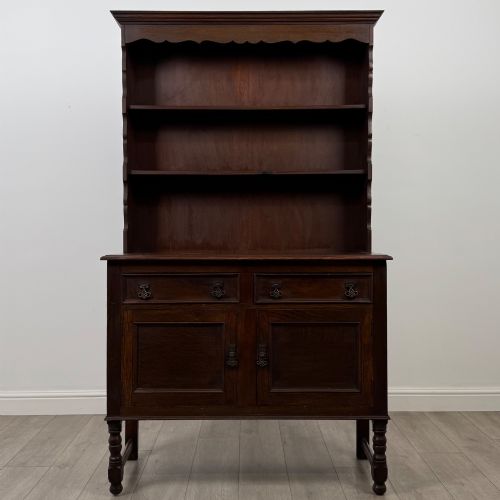


Two Drawer Oak Sideboard
These two drawer oak sideboard pieces combine honest utility with rich timber grain, offering a sturdy surface and practical storage for everyday living.
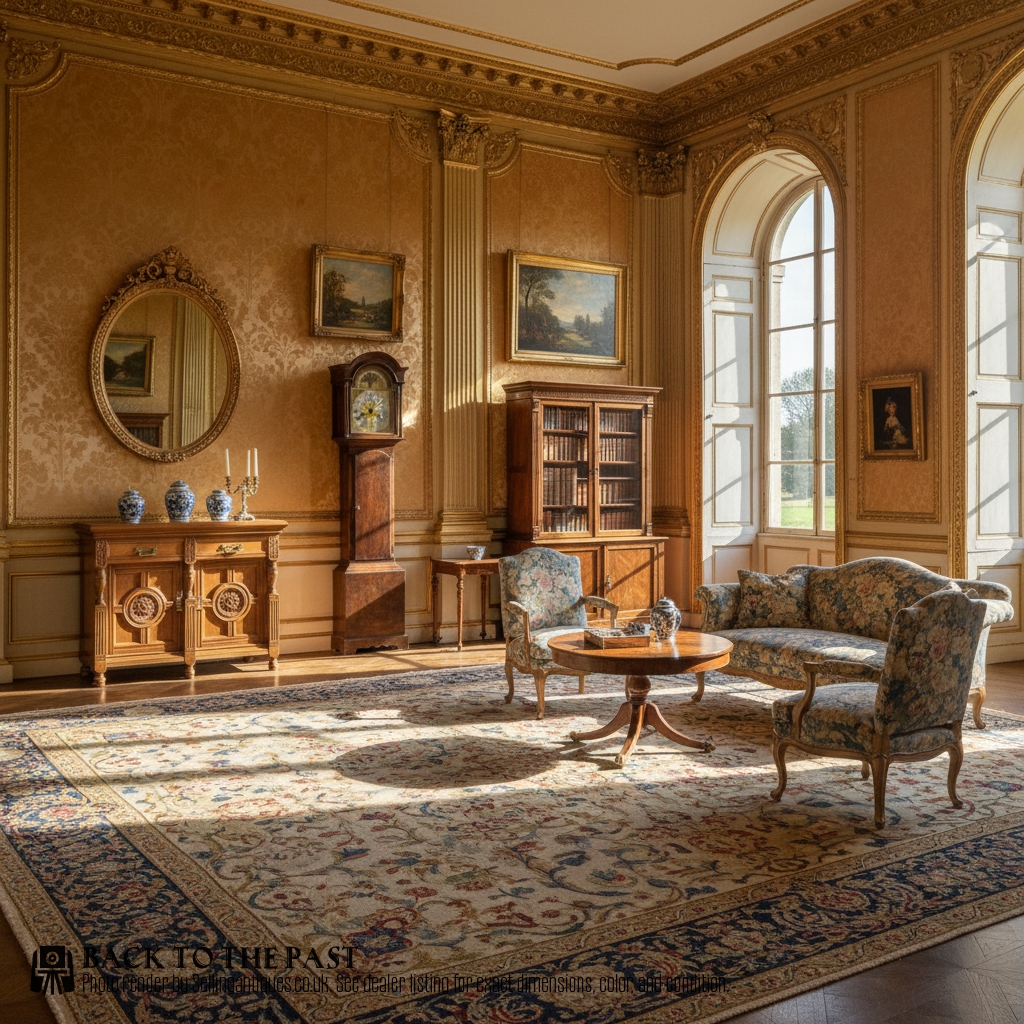
Two Drawer Oak Sideboard
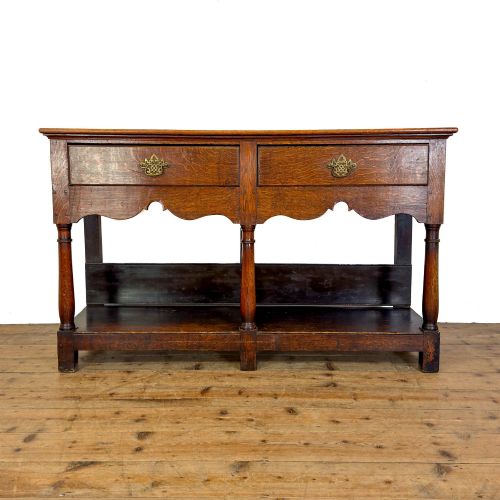
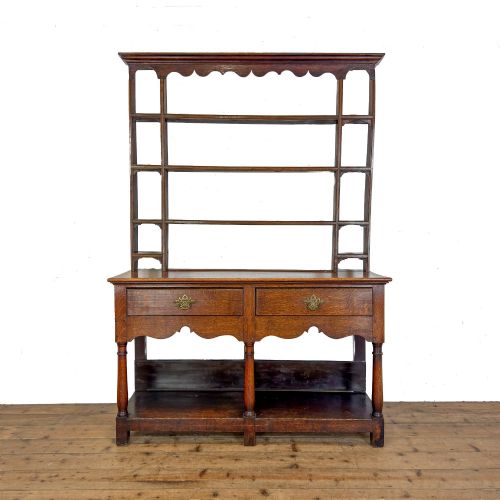
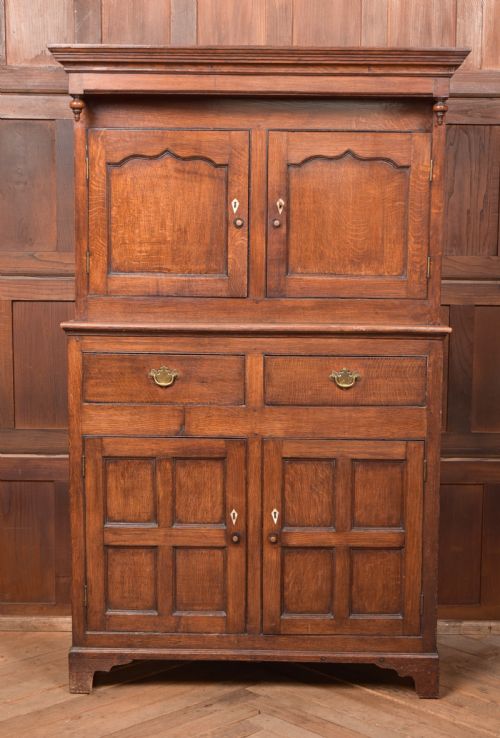
When you search for a two drawer oak sideboard, you are looking at functional storage furniture built from timber, spanning periods from the eighteenth century through to the Edwardian era. These forms frequently appear as dresser bases, low chests of drawers, servers and commodes alongside standard sideboards.
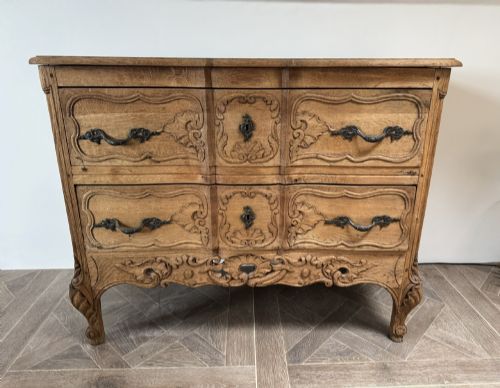
You are most likely to meet nineteenth century and Edwardian interpretations on this page, often showing regional English, Welsh, French or Spanish vernacular traditions. The designs range from plain country oak surfaces to pieces decorated with carved details and brass or iron hardware.
The underlying structure serves multiple rooms, functioning just as well in a dining room for tableware as it does in a hallway or living space. Each piece balances surface display area with enclosed compartment storage beneath the top drawers.
How they were made
Construction relies heavily on solid oak timbers, chosen for durability and distinctive grain patterns, sometimes backed or lined with secondary woods like pine. Craftsmen shaped these materials using traditional joinery methods to build robust frames that withstand decades of daily use.
Metal fittings such as brass and iron provide functional handles, hinges and escutcheons that secure the doors and drawers. Surface finishes vary from natural waxed oak to painted wood and bleached patinations achieved through regional workshop practices.
Some country pieces still carry deep ink stains inside their drawers from centuries of household accounts.
What varies in quality
Quality rests in the depth of timber selection and the integrity of the original construction, distinguishing honest country workshop pieces from later revival items. The crispness of hand-carved details and the proportion of the proportions dictate visual success.
Surface patination and the survival of original brass or iron hardware influence the character of each example. Pieces retaining their early finish show a warmth that over-restored surfaces lose.
Maple and Co
The Two Drawer Oak Sideboard Glossary
- Dresser base
- A low wooden sideboard fitted with drawers and cupboards, originally used in kitchens or dining rooms for food preparation and storage.
- Commode
- A low chest of drawers or cabinet with doors, originating in French furniture traditions and frequently constructed in bleached oak.
- Court cupboard
- An antique enclosed cabinet featuring upper and lower tiers with doors, designed for displaying plate and storing valuables.
- Jacobean revival
- A nineteenth century style imitating seventeenth century English furniture, characterised by geometric moulding and heavy turned supports.
- Welsh dresser
- A traditional tall storage unit featuring open shelving above a base fitted with drawers and cupboards.
Two Drawer Oak Sideboard: Frequently Asked Questions
How do I date an oak sideboard?
Dating relies on examining construction marks, timber preparation techniques, and regional stylistic traits. Earlier pieces often display hand-sawn boards and pegged joinery.
Later Edwardian and twentieth century examples show more uniform machine milling and standardised hardware fixings.
Where should I place a sideboard?
These pieces suit dining rooms, hallways, and living spaces where surface area and enclosed storage are both required. Their shallow depth allows them to sit comfortably against walls without dominating the room.
Keep them away from direct heat sources to protect the solid oak timber from splitting.
What is bleached oak?
Bleached oak is timber that has undergone a process to lighten its natural dark tone, creating a softer, paler finish. This treatment appears frequently on French and Spanish provincial furniture.
It highlights the grain while giving the wood a more neutral appearance suited to contemporary interiors.
How do I care for antique oak?
Maintain the surface by applying natural beeswax periodically and buffing with a soft cloth to preserve the finish. Avoid using silicone sprays or harsh chemical cleaners that can damage the antique patination.
Stable room humidity prevents the timber from warping or cracking over time.