

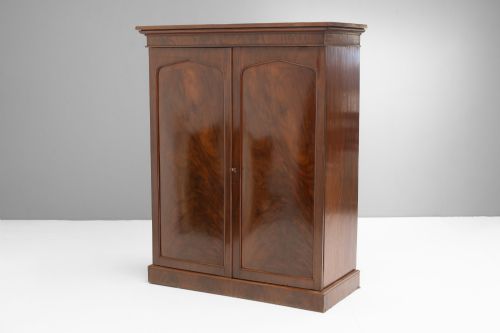
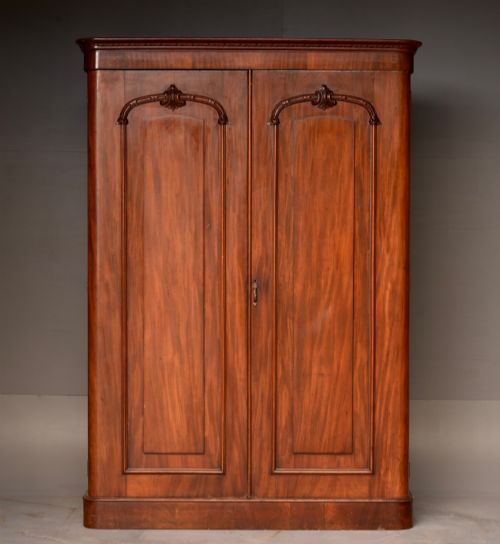
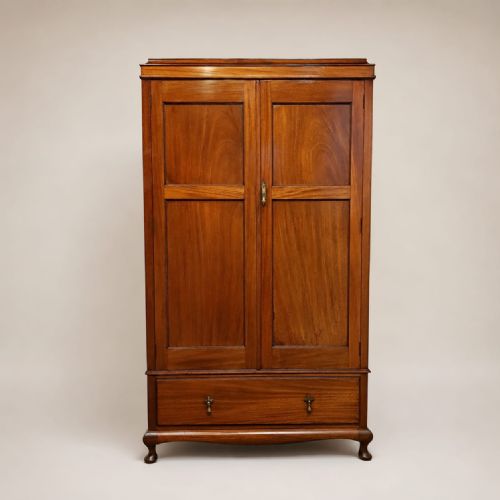
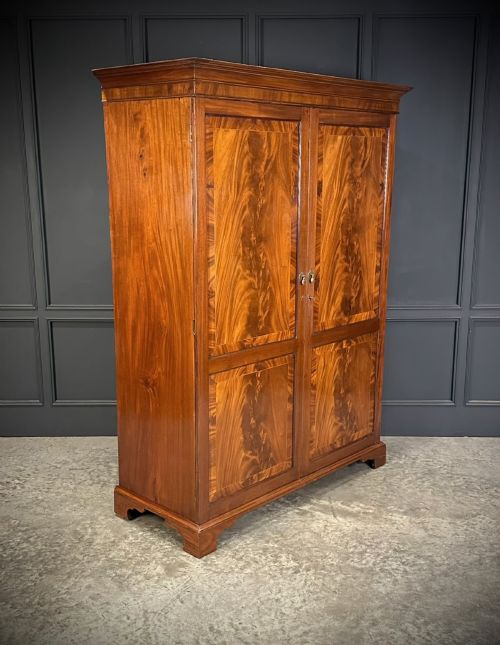
Two Door Mahogany Armoire
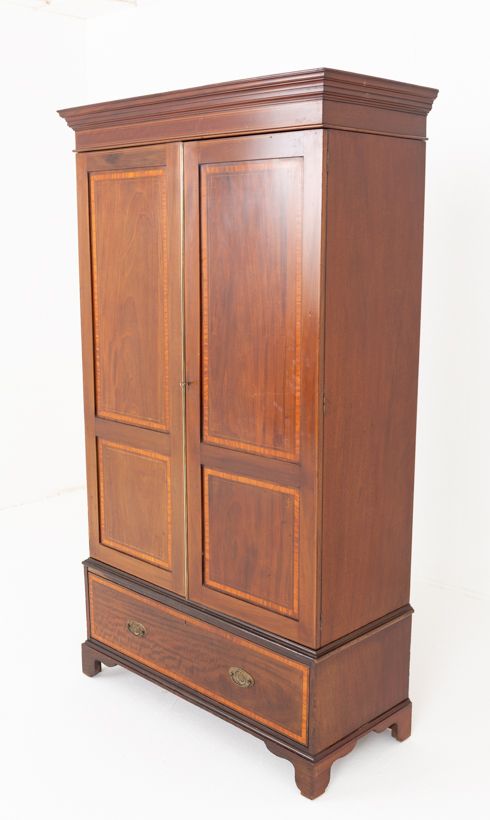
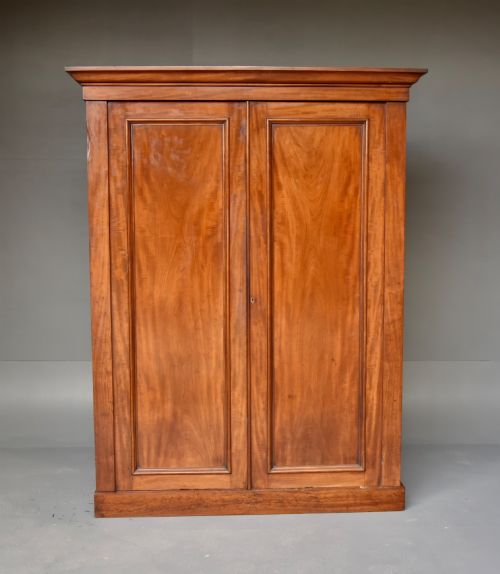
A two door mahogany armoire brings substantial storage and deep timber warmth to a bedroom, combining practical hanging space with architectural presence.
Two Door Mahogany Armoire
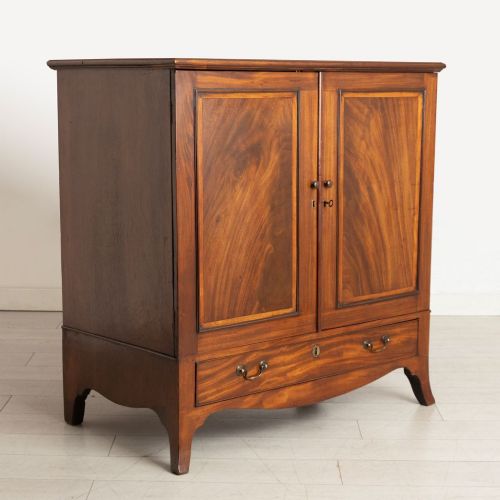
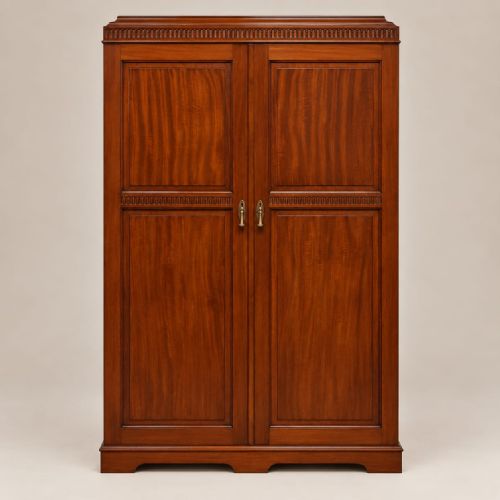
When you search for a two door mahogany armoire, you encounter a variety of large storage pieces designed to house garments and linen. The selection spans robust Georgian and Regency designs through to Victorian and Edwardian interpretations, alongside French and Continental armoires.
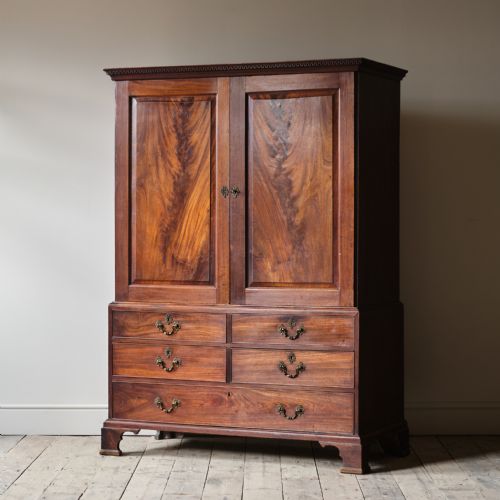
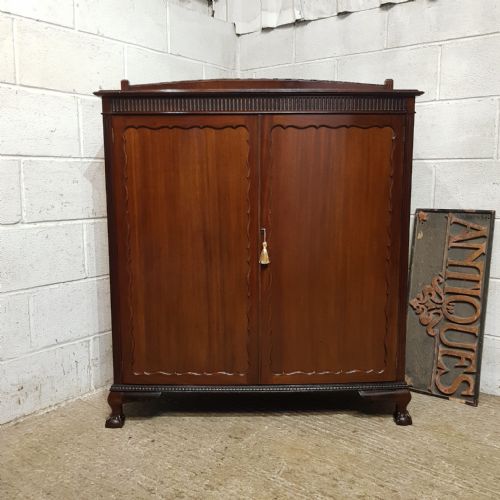
You are most likely to meet double wardrobes, linen presses, and cupboards originating from the eighteenth and nineteenth centuries. These pieces often feature timber panels enclosing generous hanging compartments or sliding trays, grounded in regional British and French workshop traditions.
Construction and materials
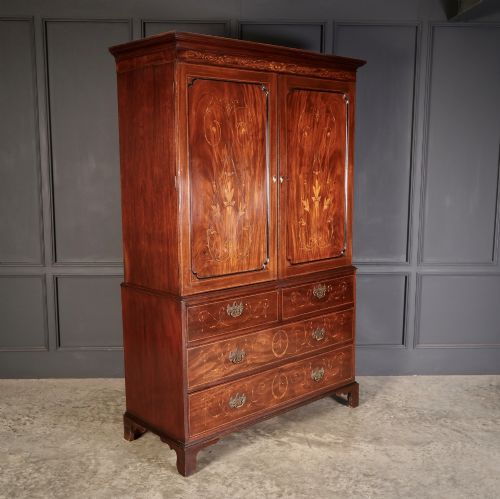
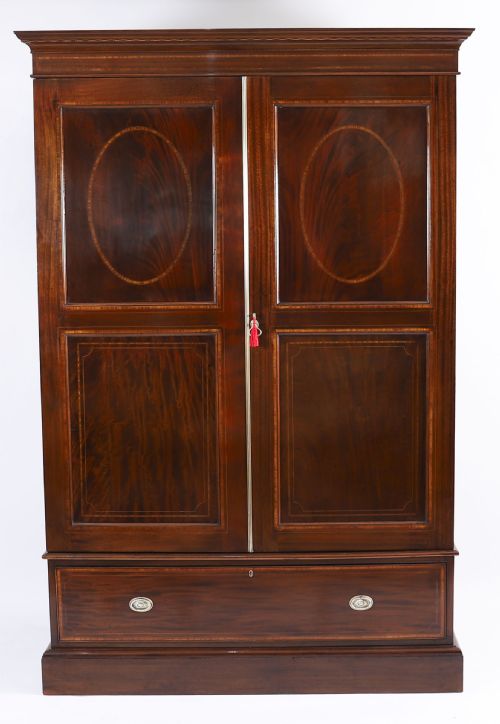
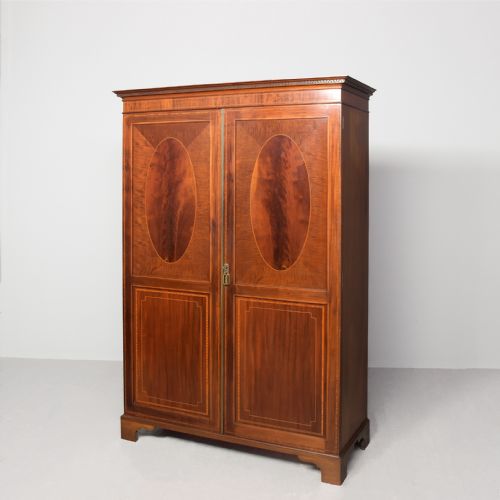
Cabinetmakers built these pieces using solid mahogany and flame mahogany veneers applied to secondary timbers such as oak. Workshops employed boxwood inlay, satinwood detailing, and brass hardware to accentuate the structural lines of the doors and cornices.
Techniques relied on sturdy frame and panel construction to accommodate the natural movement of large timber surfaces over time. Carved details and crossbanding required precise hand joinery, uniting structural integrity with polished grain patterns.
Two Door Mahogany Armoire Retail Price Guide 2026
Typical asking prices for two door mahogany armoire among the pieces listed under this phrase on Sellingantiques today, from the lower quarter to the upper quarter. They describe what is for sale here now, not the wider market.
One stamped cabinet carries the enduring mark of Berners Street, proving that even grand wardrobes appreciate a good address.
Judging quality and proportion
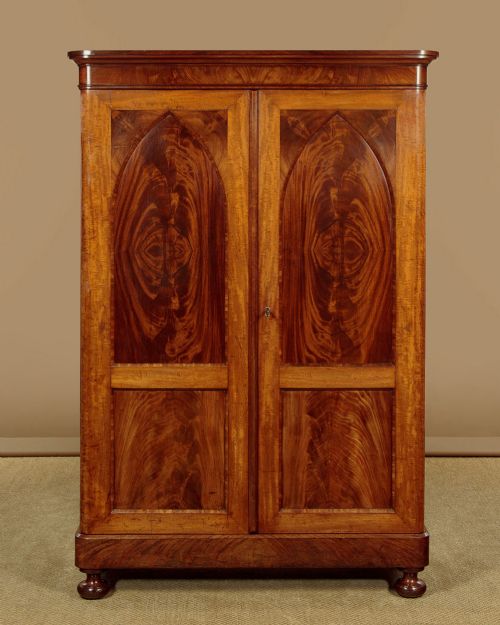
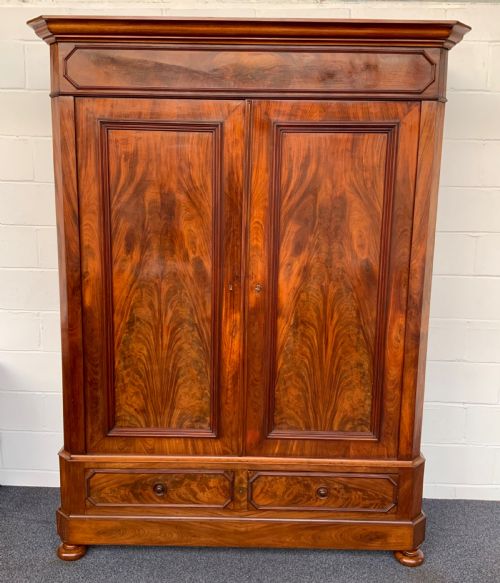
Quality rests upon the selection of timber figures, particularly where symmetrical flame mahogany veneer matches across twin doors. Superior examples display restrained carving, crisp boxwood inlay, and original brass fittings that complement the scale of the piece.
The architectural balance of the cornice and the integrity of the internal fittings, whether sliding linen trays or hanging rails, distinguish finer commissions. Regional variations, from Channel Island workshops to London cabinetmakers, reveal distinct standards in moulding profiles and timber choice.
Heals·Francis Brodie·Howard & Son's
The Two Door Mahogany Armoire Glossary
- Flame mahogany
- A veneer cut from the fork of the mahogany tree, producing a distinctive flickering flame pattern across large cabinet doors.
- Linen press
- A tall cabinet featuring upper sliding trays for folded textiles and lower drawers for hanging garments.
- Compactum
- A fitted wardrobe designed with internal compartments, drawers, and hanging space combined within one footprint.
- Crossbanding
- A decorative border of veneer laid perpendicular to the grain of the main surface to frame panel edges.
Two Door Mahogany Armoire: Frequently Asked Questions
How do I fit an armoire in a modern bedroom?
Measure your ceiling height and floor space carefully, remembering that these pieces are often deep and heavy.
Position the cabinet away from direct heat sources to protect the mahogany timber and veneer from drying out.
What is the difference between an armoire and a wardrobe?
An armoire traditionally refers to a large Continental cupboard with doors enclosing shelves or hanging space, while a wardrobe is the British term for clothes storage.
In practice, both terms overlap significantly in the antiques market for two door mahogany storage furniture.
How do I care for mahogany surfaces?
Dust the timber regularly with a soft, dry cloth and apply a quality beeswax periodically to nourish the polish.
Avoid chemical sprays and keep the room at a stable humidity to prevent the wood from warping.
How do I distinguish Georgian from Victorian pieces?
Georgian pieces from the eighteenth and early nineteenth centuries typically show architectural restraint, classical proportions, and fine bracket feet.
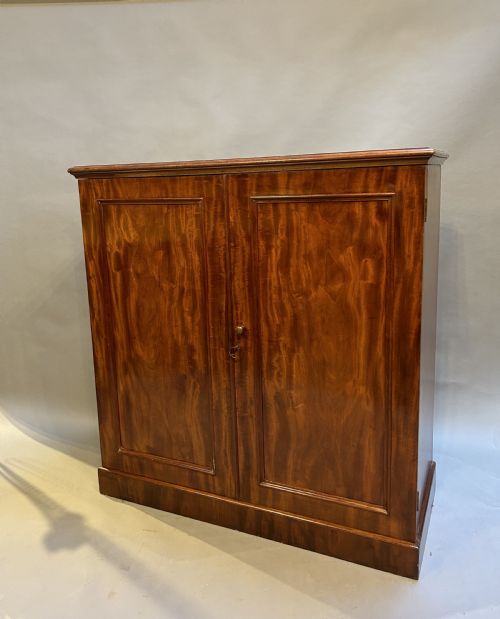
Victorian examples from the mid to late nineteenth century often feature heavier mouldings, plinth bases, and deeper red tones in the mahogany.