

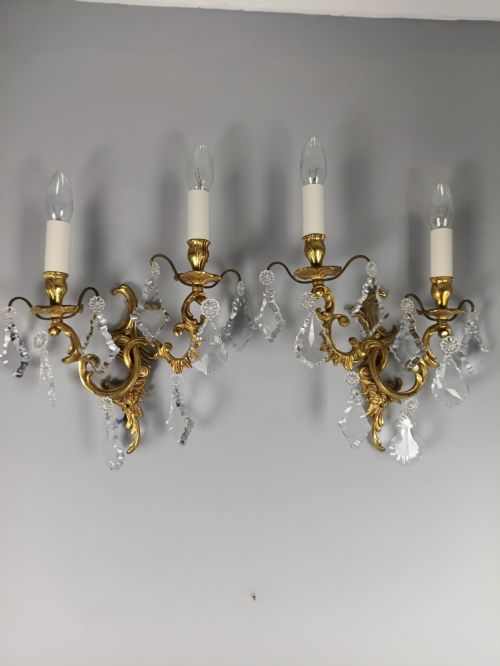
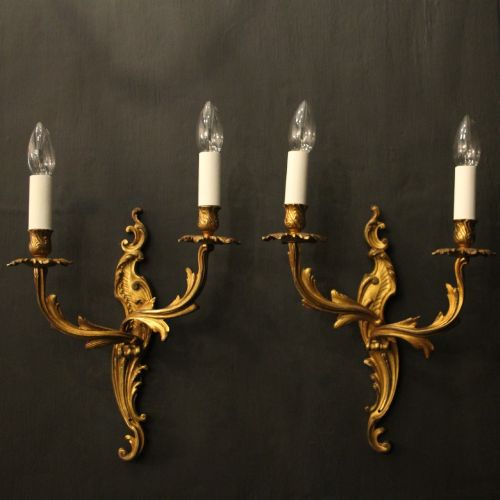
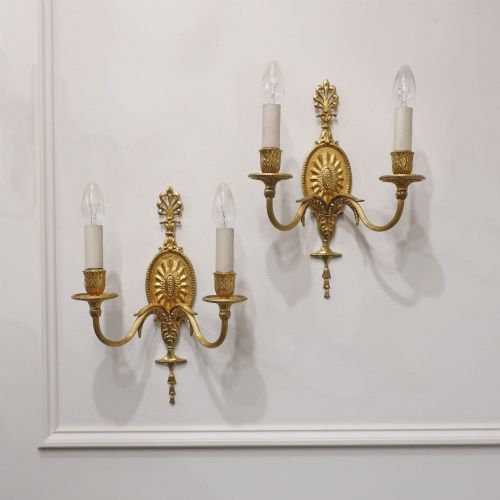
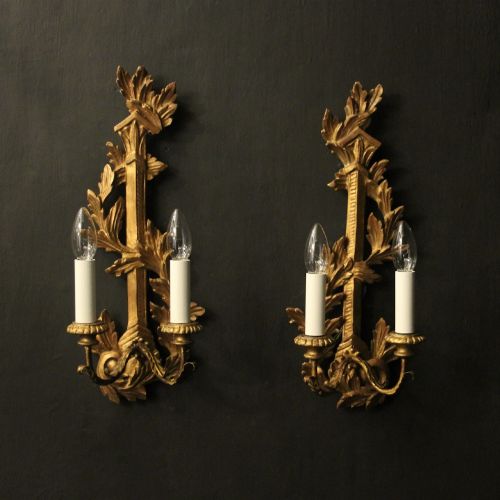
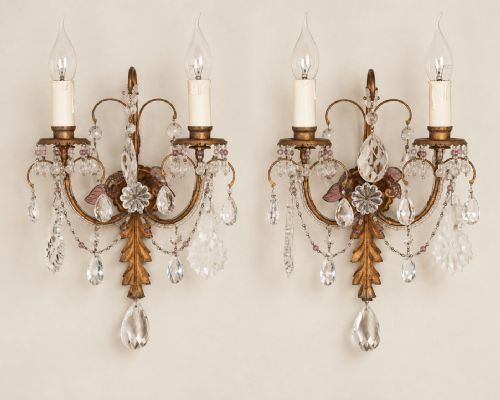
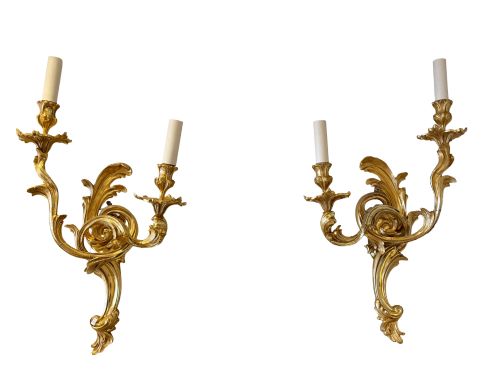
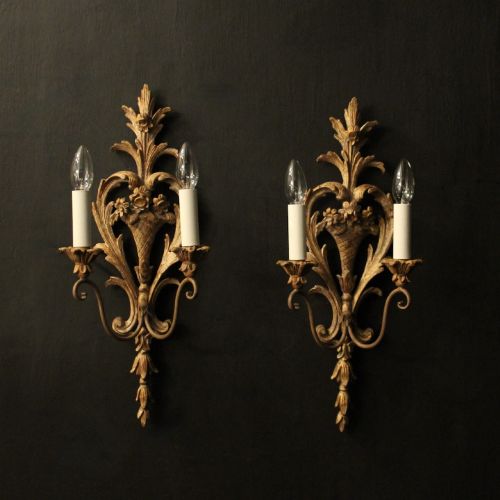
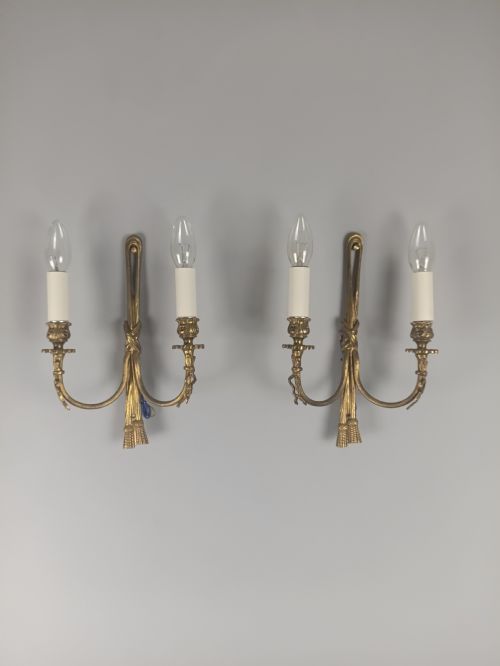
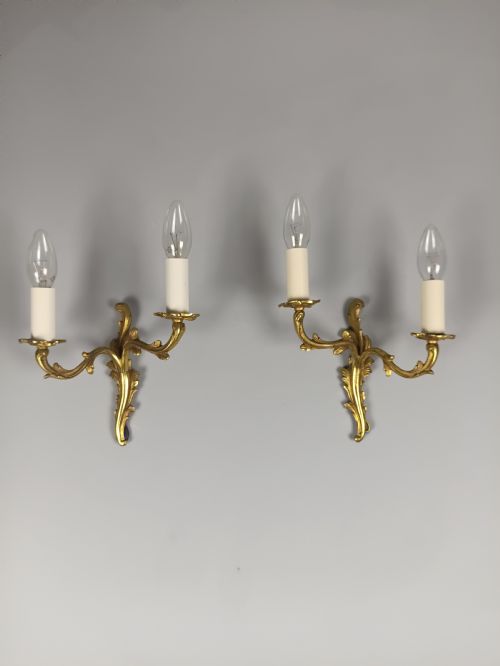
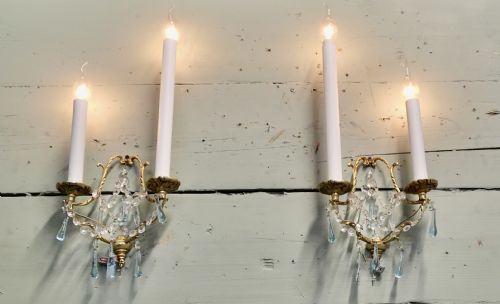
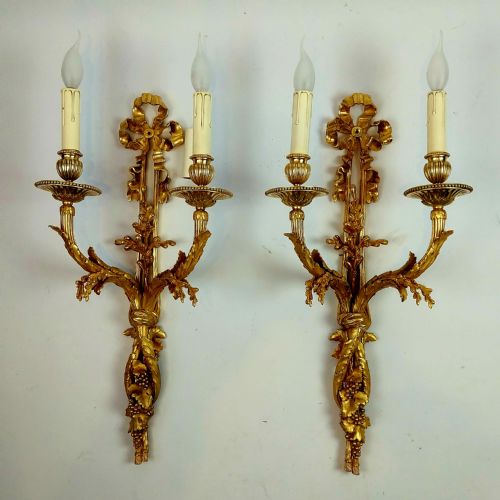


Two Arm Gilt Sconces
Two arm gilt sconces bring warm, reflected candle or electric light to a room through gilded metal and classical or revival forms.
Two Arm Gilt Sconces
Two arm gilt sconces are wall-mounted light fittings designed to hold candles or electric bulbs across a pair of branching arms. When people search for two arm gilt sconces, they are looking for decorative wall fixtures that project illumination while adding metallic sheen to an interior surface.
The pieces on this page originate predominantly from French workshops spanning the nineteenth century through the early decades of the twentieth century. Examples range from compact Edwardian brass designs to substantial nineteenth-century gilt bronze pieces rooted in historical revivals.
Forms vary from restrained Regency and Adam style compositions to elaborate French Rococo and Louis XV revival arrangements featuring twin arms. Wall lights, wall sconces and related candelabras dominate the selections, usually presented in pairs for balanced placement.
Materials and Craftsmanship
Foundations rely on cast and wrought metals including brass, bronze, and occasionally wood or carved elements. Artisans applied surface gilding through gold leaf or ormolu techniques to create a lustrous golden finish that catches ambient room light.
Many specimens incorporate glass or crystal components to enhance visual brilliance through prismatic reflection. Metal arms and backplates were shaped, chased and pinned together to support the weight of twin candle sockets or electrical conversions.
Two Arm Gilt Sconces Retail Price Guide 2026
Typical asking prices for two arm gilt sconces among the pieces listed under this phrase on Sellingantiques today, from the lower quarter to the upper quarter. They describe what is for sale here now, not the wider market.
Listings feature pieces spanning the nineteenth century through the 1930s, utilising brass, gilt bronze, ormolu, glass and crystal.
Distinctions in Quality
Quality separates along the crispness of the casting and the depth of the metalwork. Finer examples display sharp, hand-chased detail in the acanthus leaves, ribbons or figural motifs rather than soft, blurred edges from worn production moulds.
The choice of base metal and gilding method dictates longevity and visual warmth. Heavy gilt bronze or ormolu retains a richer lustre over time compared to thinner brass applications that reveal base metals underneath.
The Two Arm Gilt Sconces Glossary
- Ormolu
- Finely ground high-carat gold mercury-gilded onto a bronze base. This technique creates a deep, durable metallic glow characteristic of finer antique lighting.
- Gilt Bronze
- Bronze metal that has been coated with a thin layer of gold or gold-coloured leaf. It provides structural strength alongside a decorative golden surface.
- Rococo Revival
- A nineteenth-century design style emulating the asymmetric scrolls, shell motifs and natural curves of the eighteenth-century French movement. These pieces embrace ornate, flowing lines across their twin arms.
- Empire Style
- A neoclassical design movement drawing inspiration from ancient Roman and Greek forms. Such sconces often feature strict symmetry, military trophies or classical urn motifs.
- Wall Sconce
- A decorative bracket fixture fixed to a wall to hold lamps or candles. They function primarily to provide layered ambient light within domestic interiors.
Two Arm Gilt Sconces: Frequently Asked Questions
How were two arm gilt sconces historically used?
These fixtures were mounted beside mirrors, doorways or mantelpieces to multiply candle illumination within formal rooms. The gilded backplates acted as reflectors, bouncing the warm flame glow back into the living space.
Over time, many surviving examples were adapted for domestic electricity while retaining their original wall-mounting plates and decorative twin arm configurations.
How do I distinguish between periods?
Nineteenth-century pieces tend to utilise heavy cast bronze with meticulous hand-finishing, whereas early twentieth-century editions often employ lighter brass or simpler stamped metal components. Stylistic clues also help, as Rococo revival pieces display asymmetric scrolling while Adam or Regency styles favour geometric rigour and neoclassical urns.
Material weights and fastener types further assist in dating the metalwork accurately.
Can these antique sconces take modern bulbs?
Many listings indicate that the fixtures have been rewired to accommodate contemporary electrical standards safely. It remains prudent to consult a qualified electrician regarding bulb wattage limits and current wiring compatibility.
Original candle sockets can sometimes be fitted with small candle-tube bulbs to maintain the historic aesthetic.