

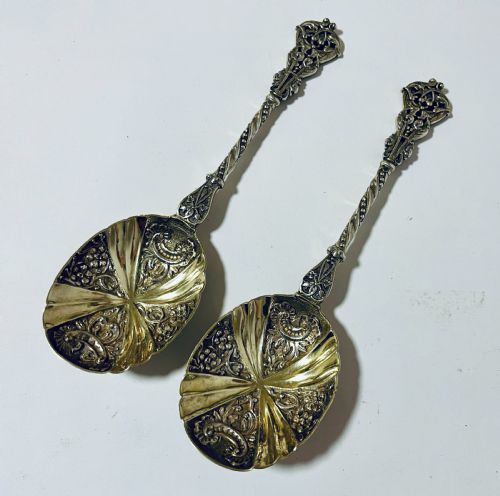


Twisting Stem Silver Spoons
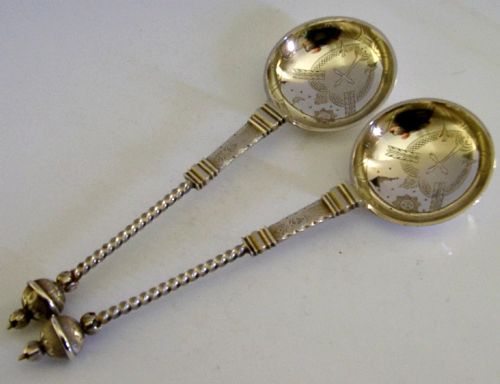
Twisting stem silver spoons bring tactile movement to the table, combining functional silverware with intricate spiral handles.
Twisting Stem Silver Spoons
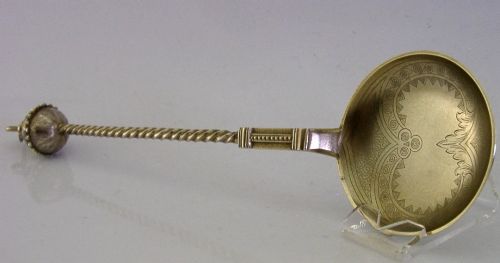
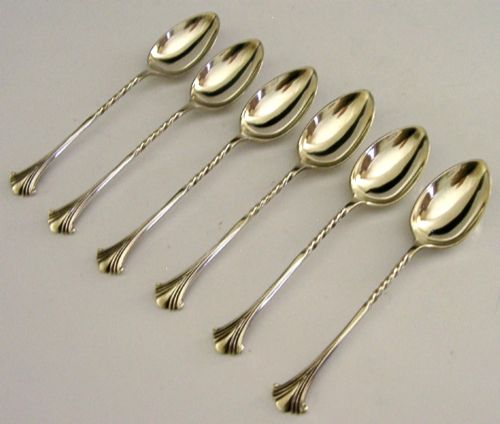
When buyers search for twisting stem silver spoons, they seek functional cutlery that incorporates spiral or helical stem formations. The selection ranges from Victorian serving spoons and ladles to caddy spoons and teaspoons.
Most examples originate from the Victorian and Edwardian eras, alongside pieces from the Arts and Crafts movement and international workshops. Forms span simple condiment ladles to large gilt serving pieces and complete boxed sets.
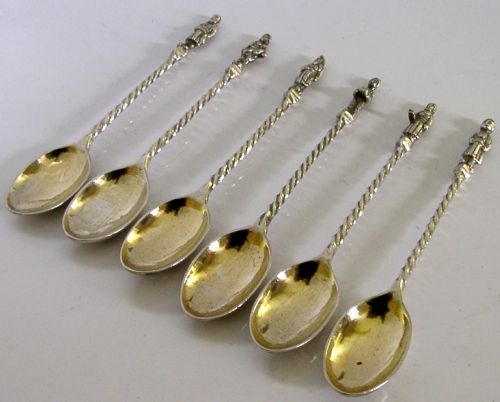
Buyers frequently encounter matching sets complete with tongs or individual pieces featuring figural decoration and enamel work. The defining characteristic across these variations remains the distinct twisted form of the handle.
How they were made
Makers shaped these pieces predominantly from sterling silver and solid silver, frequently applying a layer of gold wash known as silver gilt. Some specialised items incorporate detailed cloisonné enamel work directly onto the metal surface.
Blacksmiths and silversmiths twisted the metal stems by hand or utilised specialised mechanical twisting plates while the silver was malleable. Handles were often cast separately before being joined to bowls, or hammered from single ingots.
Twisting Stem Silver Spoons Retail Price Guide 2026
Typical asking prices for twisting stem silver spoons among the pieces listed under this phrase on Sellingantiques today, from the lower quarter to the upper quarter. They describe what is for sale here now, not the wider market.
Some apostle spoons come paired with matching sugar tongs, ready to supervise your afternoon tea with twelve tiny silver apostles watching.
What varies in quality
The precision and uniformity of the spiral twist along the stem dictate the baseline quality of each piece. Superior items maintain a crisp, deep helix without thinning the metal structural integrity.
Finishing details separate standard production items from masterwork spoons, particularly in the sharpness of figural elements, the application of silver gilt, and the clarity of hallmarks indicating origin and date.
Dmitrii Nikolaevich Nikolaev
The Twisting Stem Silver Spoons Glossary
- Silver gilt
- Sterling silver that has been coated with a thin layer of gold on the surface. This technique imparts a rich yellow gold tone while retaining the underlying weight of silver.
- Hallmark
- An official stamp applied to precious metals indicating the standard of purity, the maker, and the office of assay. These marks provide precise dating evidence for British and provincial silver.
- Cloisonne
- An ancient enamel technique where thin metal wires are soldered to a metal base to create compartments filled with coloured glass paste. The piece is then fired and polished smooth.
Twisting Stem Silver Spoons: Frequently Asked Questions
How do I clean twisting stem silver spoons?
Clean silver spoons gently using a specialised microfibre cloth and warm soapy water to avoid scratching the recessed areas of the twist. Avoid harsh chemical dips that strip away desirable patina and damage delicate silver gilt surfaces.
Store pieces in dry conditions away from direct sunlight, ideally within lined boxes or specialised pouches to prevent natural tarnishing over time.
Can I use antique silver spoons daily?
Solid silver items are durable enough for regular dining use provided they are washed by hand immediately after meals. Avoid putting antique cutlery into mechanical dishwashers, as strong detergents and high heat ruin the metal finish.
Ladle and serving spoon variations handle soft foods and condiments exceptionally well without incurring structural damage during normal household service.
What periods do these silver spoons come from?
The pieces span the Victorian and Edwardian eras, extending into the nineteen-twenties and nineteen-thirties. Earlier nineteenth-century examples often display provincial British marks, while later items reflect Arts and Crafts or continental influences.
Stylistic shifts appear clearly in the handle geometry and decorative motifs, moving from ornate Victorian cast work to cleaner modernist lines.
How are caddy spoons different from regular spoons?
Caddy spoons feature shorter handles and wider bowls specifically designed for measuring loose tea leaves from storage caddies. Their compact dimensions allowed them to fit neatly inside tea containers.
Makers often embellished these small spoons with ornate chased patterns or twisting stems to make them decorative display items during formal tea ceremonies.