
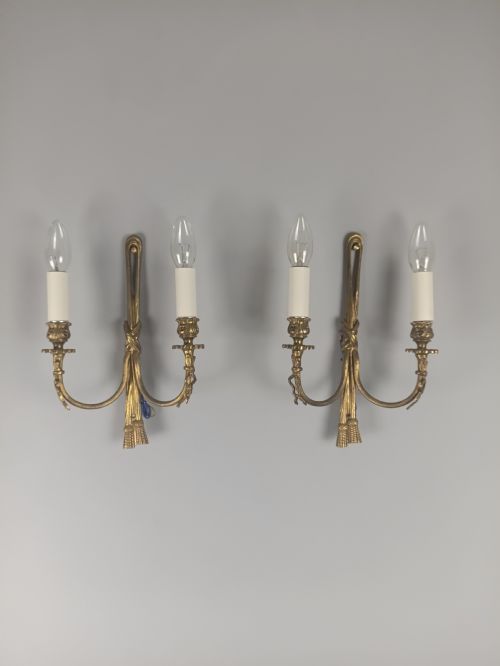
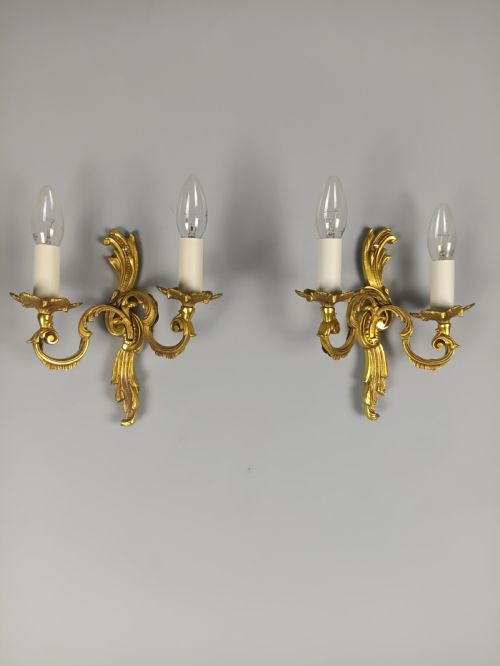
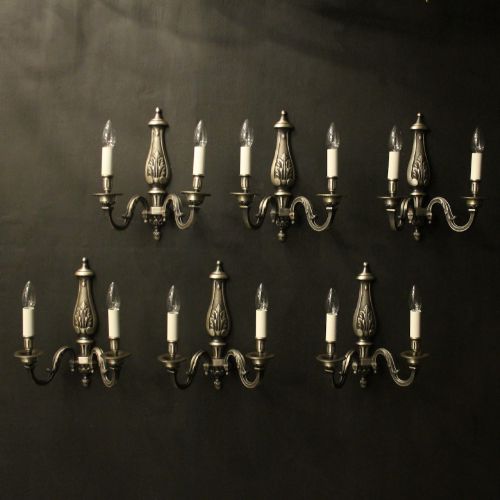
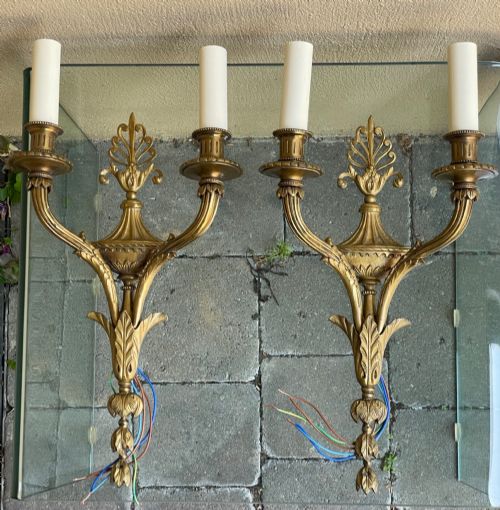

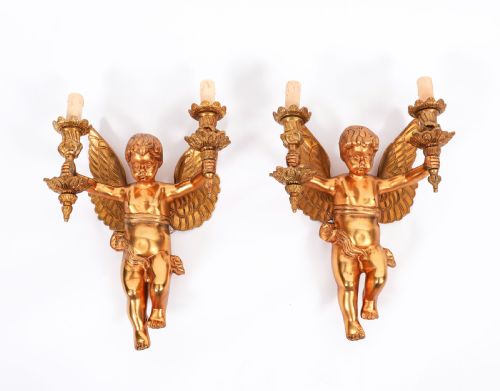

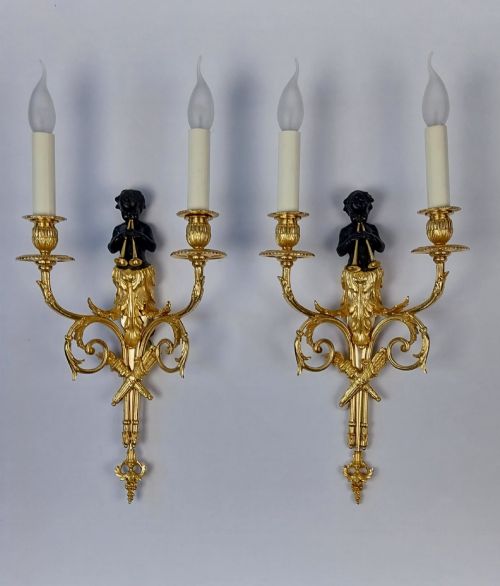


Twin Branch Candle Sconces
Twin branch candle sconces bring architectural symmetry and warm illumination to interiors, uniting functional metalwork with decorative period styles.
Twin Branch Candle Sconces
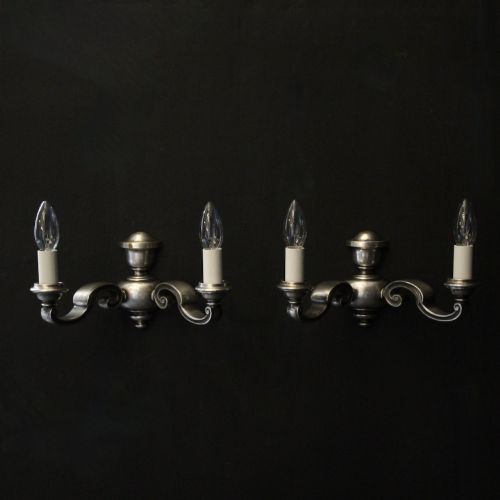
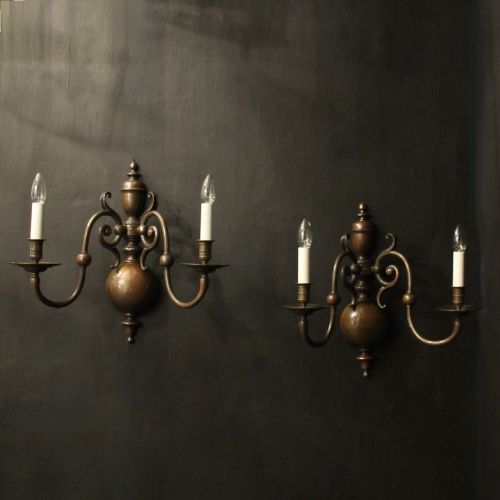
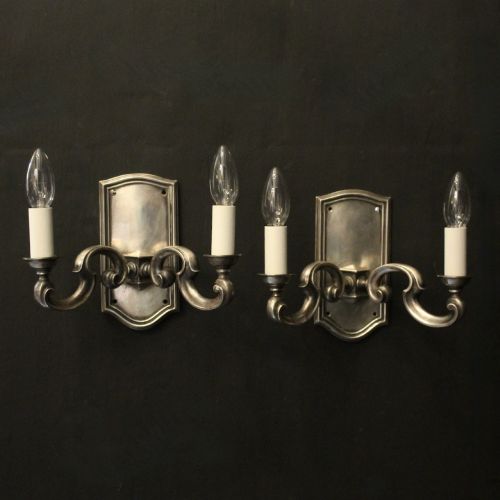
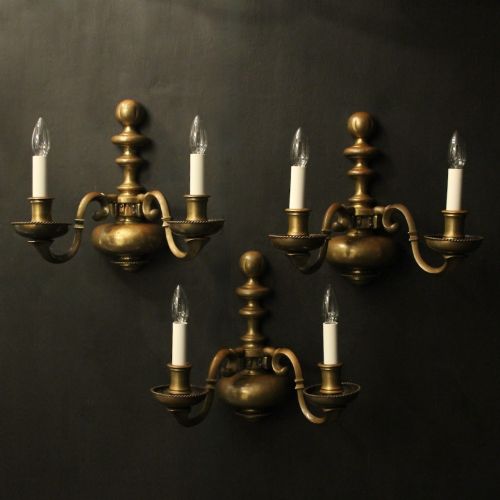
Twin branch candle sconces are wall-mounted lighting fixtures designed to hold multiple candles upon projecting arms. The examples gathered here span from the nineteenth century through the early decades of the twentieth, encompassing both English traditional pieces and continental interpretations.
Makers drew on historicist vocabularies, producing works in French Rococo, Neoclassical, and Georgian Revival styles. Buyers encounter everything from restrained English brass designs to elaborate gilded bronze and ormolu castings bearing cherubs or ribbon motifs.
Materials and Construction
Foundry techniques defined the creation of metal sconces, utilising cast bronze, brass, and ormolu alongside silver plating on base metals. Molten metal poured into sand or lost-wax moulds formed the rigid backplates and branching arms, which workers subsequently chased and finished by hand.
Gilding methods varied, employing mercury gilding on earlier ormolu pieces and gold leaf applied over composition or gesso on carved giltwood girandoles. Mirror glass frequently served as a backing plate on girandoles to multiply the candlelight reflected into the room.
Listings feature brass, bronze, silver plate, and carved giltwood across Victorian, Edwardian, and 1930s periods.
Judging Quality and Execution
The integrity of the construction determines longevity, distinguishing solid bronze and heavy brass castings from thin pressed metal assemblies. Original surface treatments, such as untouched patination or authentic period gilding, elevate a piece above later refinishing or over-cleaning.
Baccarat·F. & C. Osler
The Twin Branch Candle Sconces Glossary
- Girandole
- A branched wall light, often incorporating a mirror glass backplate to reflect and amplify candle illumination. These fixtures combined decorative carving or metalwork with practical lighting.
- Ormolu
- Finely chased gilt bronze, created by applying an amalgam of gold and mercury to a bronze base and heating it to vaporise the mercury. The technique produced a durable, rich golden surface on luxury decorative objects.
- Appliqué
- A French term for a wall sconce or bracket light fixed directly to panelling or plaster. It denotes lighting fixtures that sit flat against the vertical plane.
- Chinoiserie
- European decorative style reflecting imaginative interpretations of Chinese and East Asian artistic traditions. It frequently appeared on eighteenth-century inspired wall lights and furniture.
- Repoussé
- A metalworking technique where metal is hammered from the reverse side to form a raised design in relief. It allowed makers to create lightweight yet ornate backplates.
Twin Branch Candle Sconces: Frequently Asked Questions
How do I hang antique sconces securely?
Wall lights require appropriate fixings suited to the substrate, whether solid masonry or lath and plaster. Weight distribution across the backplate dictates the choice of screws and wall plugs.
Professional installation ensures that heavy bronze or giltwood pieces anchor safely without damaging surrounding wall surfaces or historic plaster.
Were these sconces wired for electricity?
Most surviving examples originated as pure candle holders before the widespread adoption of domestic electric lighting. Many have since been adapted to house internal wiring for candle-style bulbs.
Conversions should be assessed to ensure internal components meet modern safety standards while preserving the original metal arms and drip pans.
How should I clean antique metal sconces?
Dusting with a soft, dry brush removes surface particles without disturbing vulnerable patination or delicate gilding. Chemical polishes risk stripping original finishes, particularly on silver-plated or ormolu surfaces.
Preserving the aged appearance maintains both the visual character and the historical integrity of the piece.
How do I date a pair of wall sconces?
Stylistic clues, such as the symmetrical restraint of Neoclassical designs or the organic asymmetry of Art Nouveau, point toward specific manufacturing eras. Construction methods, screw types, and casting seams offer further chronological markers.
Comparing backplate fixings and metal composition helps distinguish nineteenth-century production from later revival periods.