





Twentieth Century Floral Painting
Twentieth century floral painting brings botanical studies and garden scenes into domestic interiors through oils, watercolours, and ceramics.
Twentieth Century Floral Painting
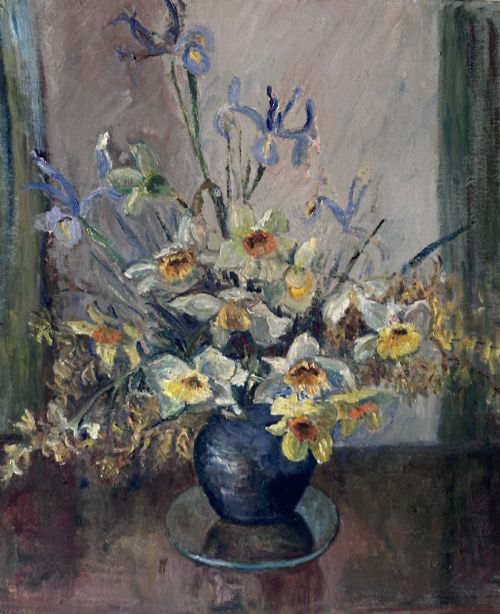
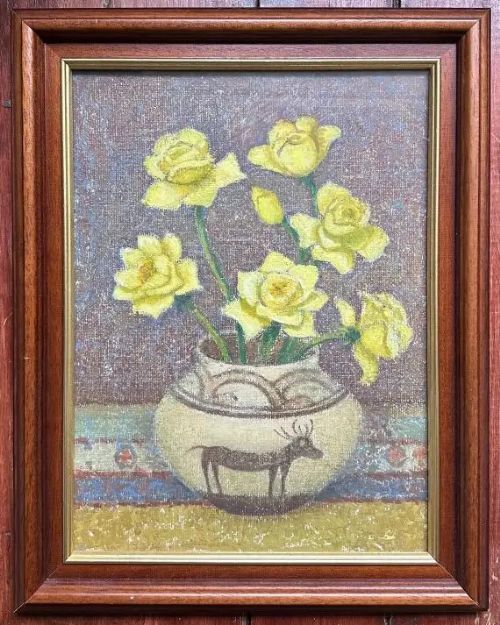
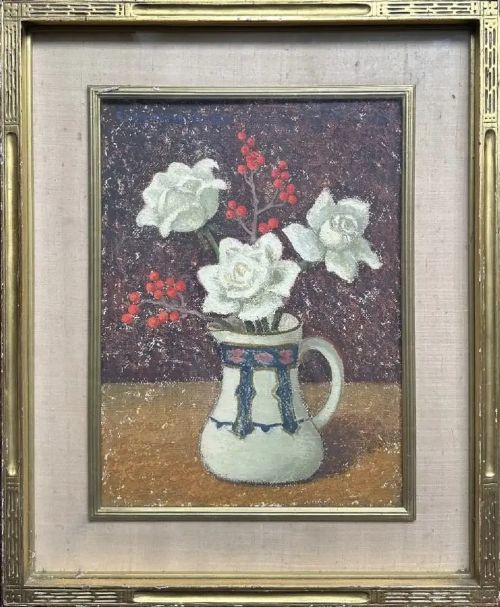
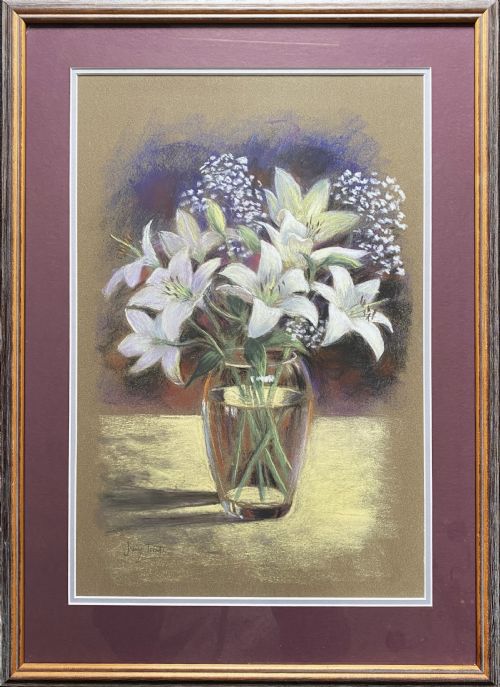
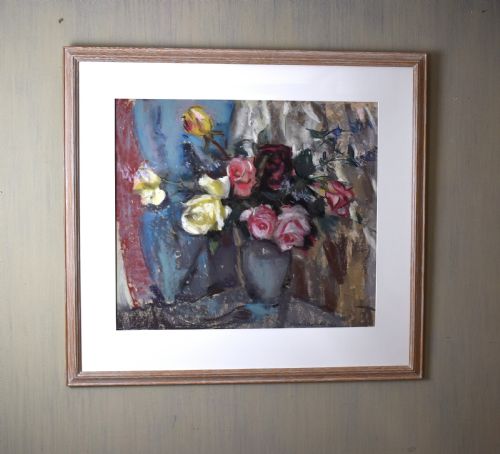
Twentieth century floral painting encompasses a diverse range of botanical representations, spanning from Edwardian watercolours to mid-century pastels and oils on canvas. When you search for twentieth century floral painting, you encounter framed artwork and wall art depicting garden scenes, hedgerows, and still lifes of roses, lilies, and daffodils.
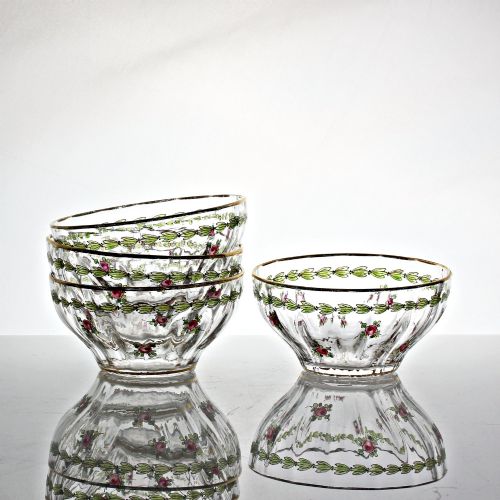
The pieces on this page originate from various decades across the century, reflecting shifts in artistic interpretation from traditional impressionist approaches to modern realist studies. Alongside traditional paintings on paper and canvas, the selection includes ceramic vases and earthenware vessels decorated with floral motifs.
Makers and artists working within this span capture flowers either freshly cut in interior settings or growing naturally within artist gardens and public parks. These works range in form from intimate pastel sketches to large pair compositions suited for country house interiors.
Materials and techniques
Artists working on these pieces utilised oil paint on canvas or board to build rich textures and deep colour saturation, particularly evident in depictions of roses and heavy blooms. Watercolour and pastel on paper offered a lighter touch, capturing the delicate translucence of spring crocuses, daffodils, and wild hedgerow flowers.
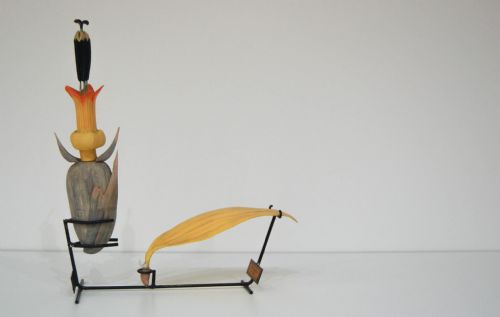
Ceramic vessels such as earthenware vases incorporated painted floral decoration beneath a glazed surface, sometimes reflecting regional pottery traditions like Poole or Iznik styles. Plaster and mixed media likewise appear in three-dimensional botanical models designed to record plant anatomy with sculptural precision.
Twentieth Century Floral Painting Retail Price Guide 2026
Typical asking prices for twentieth century floral painting among the pieces listed under this phrase on Sellingantiques today, from the lower quarter to the upper quarter. They describe what is for sale here now, not the wider market.
Listings feature works spanning from the Edwardian era through the 1960s, executed in oil, watercolour, pastel, ceramic, and plaster.
Distinguishing quality
Quality in these works rests upon the surety of the draughtsmanship and the artist's command of light across petal and leaf. Superior paintings demonstrate deliberate brushwork or pigment placement that brings depth to a still life, whereas lesser examples rely on flat application and predictable composition.
The integration of the subject within its setting further separates accomplished pieces from routine decorative output. In ceramics and painted models, fine detail and the preservation of the original glazed or pigmented surface determine the standing of the piece.
Emma Fordyce MacRae·Peter Newcombe·Lena M Alexander·Owen Bowen·Jennifer Toombs·Beatrice Parsons·Poole Pottery
The Twentieth Century Floral Painting Glossary
- Watercolour
- A painting method where fine pigment is suspended in a water-based solution and applied to paper. It allows for transparent washes that suit delicate botanical subjects.
- Still life
- An artwork depicting inanimate subject matter, typically everyday objects or harvested flowers. In twentieth century pieces, these compositions often focus on vases of cut garden blooms.
- Impressionism
- An artistic style characterised by relatively small, thin yet visible brush strokes and an open composition. It emphasises accurate depiction of light and its changing qualities.
- Pastel
- A dry painting medium in the form of a stick, consisting of powdered pigment and a binder. Pastels produce velvety colour fields well suited to soft floral petals.
- Earthenware
- Pottery fired at relatively low temperatures, remaining slightly porous until glazed. Many twentieth century decorative vases utilise this clay body.
Twentieth Century Floral Painting: Frequently Asked Questions
How do I date a twentieth century floral painting?
Dating relies on stylistic clues, framing materials, and the signatures or documentation associated with the artist. Comparing the handling of paint or watercolour to established periods helps narrow down the decade of creation.
Evidence from signatures and biographical dates of painters further assists in placing a work securely within the twentieth century timeline.
Where were these floral paintings displayed originally?
These artworks typically hung in domestic settings, ranging from formal drawing rooms in English country houses to mid-century suburban interiors. They served to bring natural colour and seasonal garden views inside throughout the year.
Ceramic vases adorned with similar floral themes functioned both as decorative mantel pieces and as functional vessels for the very flowers depicted in contemporaneous paintings.
What is the difference between an oil and a watercolour floral painting?
Oil paintings utilise pigment suspended in drying oils on canvas or panel, offering heavier textures and deeper tones. Watercolours use water-soluble mediums on paper, yielding a lighter, more translucent finish.
Both media were widely employed across the twentieth century, with watercolours often favoured for quick botanical studies and oils for finished exhibition pieces.
How should I care for a vintage floral pastel?
Pastels consist of loose pigment powder and require careful handling behind glass to prevent smudging or loss of material. Framing should incorporate a mount that keeps the paper from touching the glass directly.
Displaying pastels away from direct sunlight protects the fugitive pigments often found in twentieth century floral works from fading over time.