



Twentieth Century British Landscape
Twentieth century british landscape painting captures changing rural and urban views across the decades in oil, watercolour and ink.
Twentieth Century British Landscape
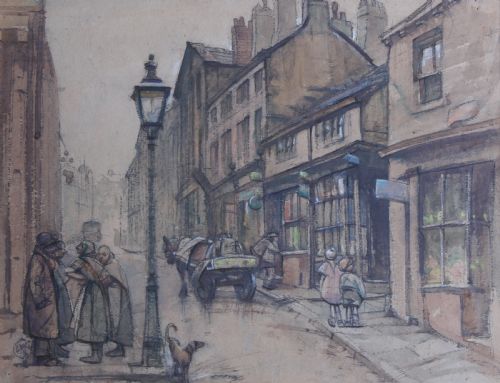
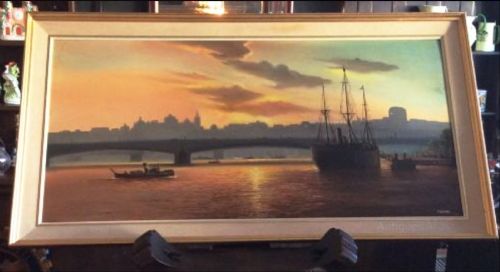
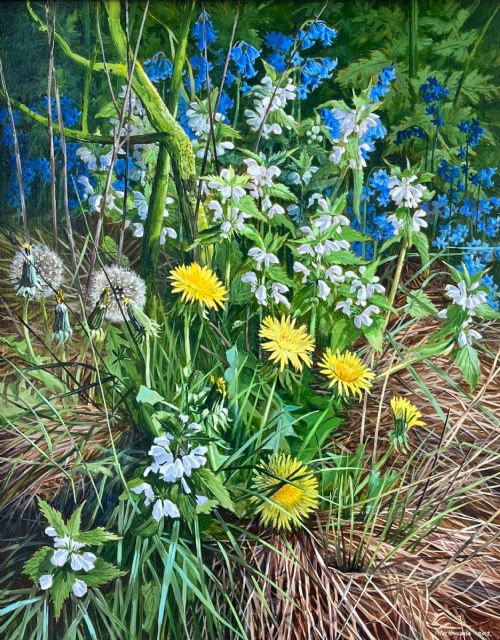
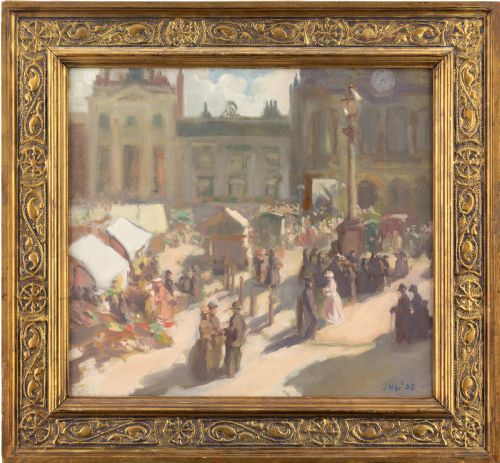
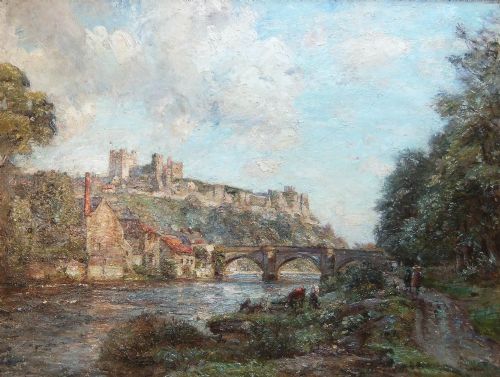
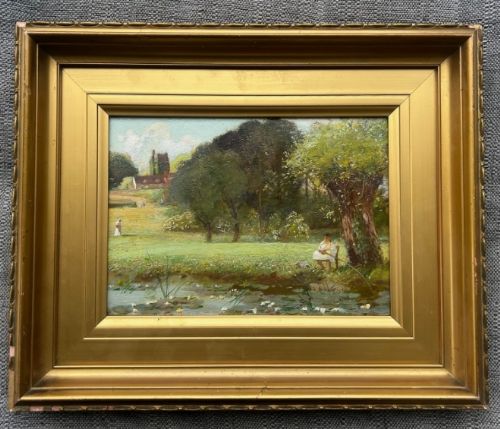
These works represent regional views, coastal harbours, market towns and pastoral river scenes created by artists working across the British Isles from the Edwardian era through the mid-century decades. The selection centres on oil paintings on canvas and wood panel alongside delicate watercolours on paper, recording topographical changes and local life.
Buyers encounter depictions ranging from Yorkshire dales and Cornish fishing villages to London streets and Scottish borders. The forms include finished exhibition pieces, plein air sketches and panoramic harbour views produced within distinct regional artistic circles such as the Staithes and Newlyn schools.
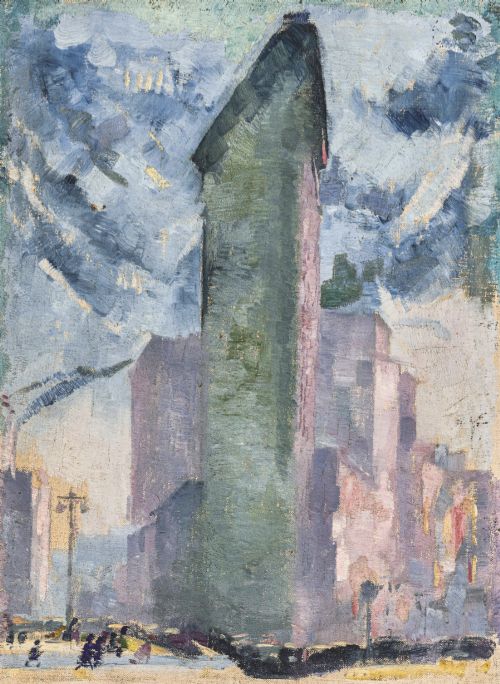
The material record spans traditional oil paint, transparent watercolour and ink wash applied to paper, canvas and wood panels. Pieces date from the early 1900s through the nineteen-sixties, illustrating the transition from traditional academic realism to twentieth century British Impressionism and modern idioms.
How they were made
Painters utilised oil paint on stretched canvas or prepared wood panels for robust coastal and pastoral scenes, allowing for rich impasto and deep tonal layering. Watercolours were applied to heavy paper sheets, frequently supported by pencil or ink outlines to capture rapid atmospheric shifts outdoors.
Artists worked directly from life in plein air settings across Yorkshire, Cornwall and London, employing swift brushstrokes or controlled washes to record changing light. Framing often utilised period wood mouldings suited to the specific decade of creation.
The selection includes views of Yorkshire, Cornwall, London and Scotland recorded by artists associated with regional British schools.
What varies in quality
The handling of light and atmospheric depth distinguishes accomplished compositions from routine topographical records, showing how adeptly the painter translated natural colour. Strong brushwork, confident draughtsmanship and harmonious palette selection elevate individual works above standard regional output.
Condition plays a role in lasting appeal, particularly the stability of the paint layer on canvas or wood and the absence of discolouration on paper supports. Original framing and clear provenance linking the artist to a recognised regional school add context to the piece.
Clifford Hanney·Alfred Wolmark·Herbert Royle·Fred Lawson·Donald McIntyre·Ernest Higgins Rigg
The Twentieth Century British Landscape Glossary
- British Impressionism
- A painting style adopting loose brushwork and an interest in natural light, developed by British artists influenced by continental movements.
- Plein air
- The practice of painting outdoors directly from the landscape to capture transient effects of light and weather.
- Wood panel
- A rigid flat support used by painters as an alternative to canvas, common in earlier twentieth century works.
- Watercolour
- A paint method using water-soluble pigments applied to paper, valued for its luminous transparency and fluidity.
Twentieth Century British Landscape: Frequently Asked Questions
How do I identify the date of a painting?
Examine the signature, framing style and recorded biographical dates of the artist for primary chronological clues. Stylistic markers also reveal whether a piece belongs to the Edwardian period or later mid-century movements.
Compare the subject matter and medium with documented works by the same painter to narrow down the decade of execution.
Where were these landscape artists active?
Painters worked across diverse British regions, with notable concentrations in Yorkshire dales, Cornish fishing ports and London streets. Many aligned with regional groups like the Staithes or Newlyn colonies.
Local topography heavily influenced their choice of subject, from northern industrial towns to southern coastal harbours.
What is the difference between oil and watercolour works?
Oil paintings utilise heavy pigments suspended in drying oils on canvas or wood panels, offering rich texture and deep colour saturation. Watercolours apply translucent pigments onto paper supports for lighter, more immediate atmospheric effects.
Oils generally require rigid supports while watercolours rely on paper framed behind protective glass.
How should I care for these paintings at home?
Keep works away from direct sunlight and damp environments to protect fragile paper supports and oil pigments. Maintain stable indoor temperatures to prevent wood panels or canvas from warping.
Display watercolours behind UV-filtered glass and dust oil surfaces gently with a dry, soft cloth.