



Turquoise Glaze Vases
These turquoise glaze vases bring intense aquatic colour and historic craft into a room, offering the collector centuries of ceramic mastery.
Turquoise Glaze Vases
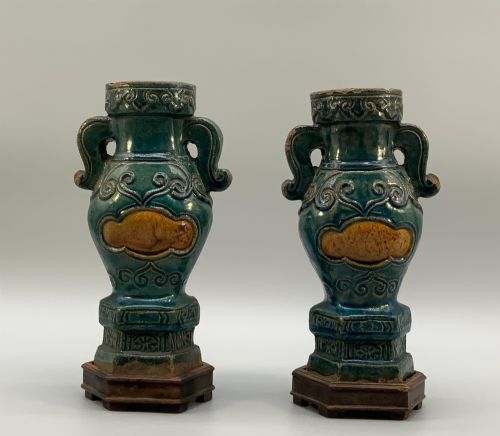
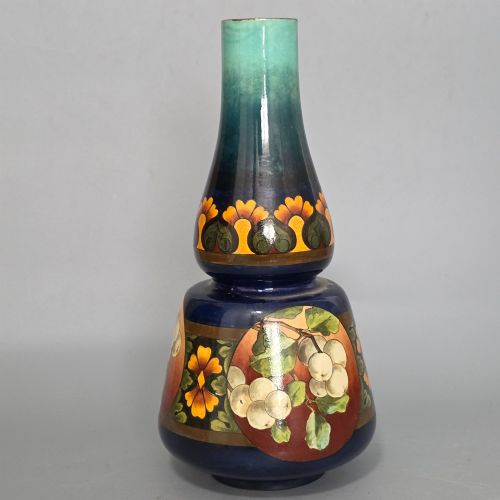
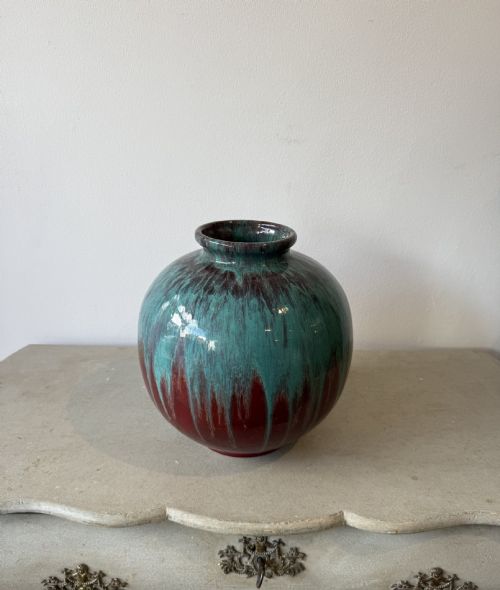
Turquoise glaze vases span domestic table vessels and monumental umbrella stands, drawing the eye with their striking blue-green surfaces. These pieces emerge from diverse traditions, ranging from early Chinese dynasties to British art pottery studios of the Victorian era.
The versions most commonly met here include Victorian art pottery and 20th-century Chinese monochrome examples, alongside grander Majolica and Faience productions. Makers across Europe and Asia applied this vivid vitreous coating to earthenware and ceramic bodies to achieve deep, glassy finishes.
Forms vary from modest cabinet pieces to substantial floor-standing jars, occasionally adapted for electric lighting as table lamps. Each object displays the distinct aesthetic of its period, whether the geometric restraint of French studio pottery or the ornate relief modelling of the nineteenth century.
How they were made
Makers shaped these vessels from ceramic and earthenware bodies, throwing them on the wheel or forming them in moulds before applying metallic oxide glazes. Copper is typically responsible for the rich turquoise hue, reacting under heat during the firing process to produce varied tones across the ceramic surface.
Potters often incised decorative patterns into the clay body beneath the glaze, allowing the pooling liquid to accentuate motifs like stylised peonies. Advanced workshops employed lead glaze techniques to enhance the brilliance and depth of the finished colour.
Turquoise Glaze Vases Retail Price Guide 2026
Typical asking prices for turquoise glaze vases among the pieces listed under this phrase on Sellingantiques today, from the lower quarter to the upper quarter. They describe what is for sale here now, not the wider market.
At least two historic vessels underwent second lives as interior lighting, proving that a grand nineteenth-century vase makes an excellent lampshade mount.
What varies in quality
Quality rests in the depth and evenness of the glaze application, where skilled potters achieved a harmonious balance without excessive pooling or dry patches. The crispness of incised or moulded details beneath the surface finish distinguishes superior studio and factory pieces from routine commercial output.
The integrity of the underlying ceramic body and the ambition of the original form separate standard vessels from monumental or highly expressive works. Provenance and the clarity of period attribution further elevate the standing of individual examples within this group.
Doulton Lambeth·Alice Euphemia Thatcher·Minton·Burmantofts Faience
The Turquoise Glaze Vases Glossary
- Faience
- Tin-glazed earthenware decorated with opaque colours, popular in European art pottery traditions. This technique allowed makers to achieve smooth, painterly surfaces beneath clear or coloured glazes.
- Majolica
- Victorian earthenware characterised by colourful lead glazes applied over moulded relief decoration. The style produced vibrant, glossy finishes with deep tonal variations.
- Monochrome
- A decorative scheme employing a single colour throughout, seen here in Chinese vases with uniform turquoise surfaces. This restraint highlights the subtlety of incised clay details.
- Lead glaze
- A traditional glassy coating containing lead oxide that produces a high-gloss finish and brilliant colour depth. Potters utilised this method across centuries to seal ceramic bodies.
- Intarsio
- A distinctive ceramic decorating technique developed by Doulton Lambeth that mimics inlaid wood marquetry using coloured clays. Pieces utilising this method show complex multi-coloured patterns beneath a clear glaze.
Turquoise Glaze Vases: Frequently Asked Questions
Can I use these vases for fresh flowers?
Many of these ceramic and earthenware vessels are fully waterproof and hold water safely for floral arrangements. However, converted umbrella stands or pieces with historic glaze hairline fractures require a glass insert to protect the interior.
Careful inspection of the base and interior glaze will confirm whether a vessel is suited for daily domestic utility or better kept dry.
How should I clean a antique glazed vase?
Dust the surface gently with a soft, dry cloth to remove everyday particles without disturbing the glaze. Avoid abrasive cleaners or harsh chemical solutions that could damage historic ceramic surfaces.
For thorough cleaning, lukewarm water and a mild soap applied with a soft sponge suffice, followed immediately by gentle drying with a lint-free towel.
Why are some vases converted to lamps?
Vessels of significant size or striking colour were frequently chosen by owners in the twentieth century to serve as decorative table lamp bases. This conversion process often involved drilling a small hole for wiring or mounting the piece with metal fittings.
While purists prefer unaltered vases, these converted lamps represent a recognised period of domestic adaptation and interior design history.