


Turquoise Blue Cloisonne
Turquoise blue cloisonne brings together vibrant enamel and metalwork across centuries, offering distinctive vessels and plates for the home.
Turquoise Blue Cloisonne
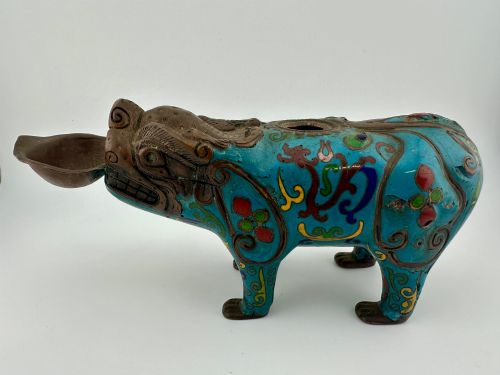
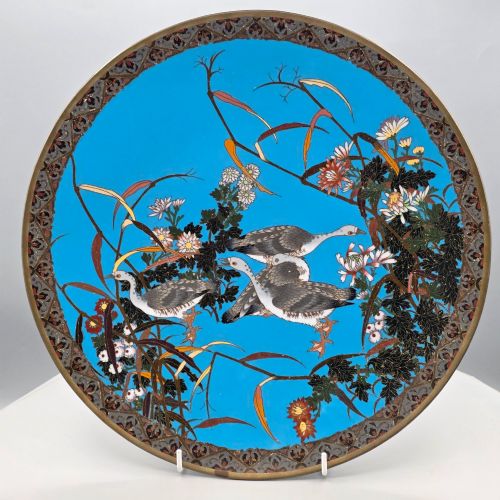
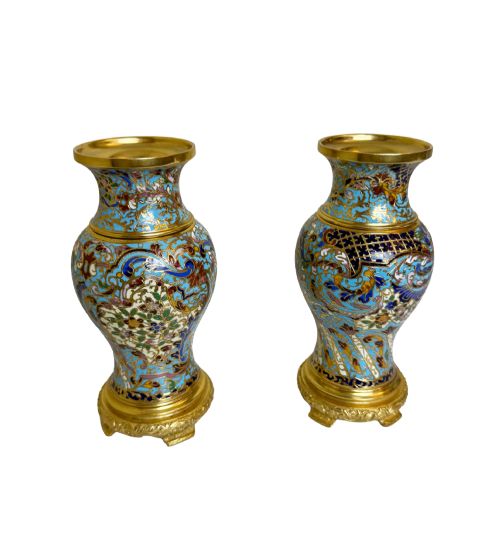
When searching for turquoise blue cloisonne, buyers encounter an array of decorative objects including chargers, vases, bowls, and incense burners spanning the nineteenth and early twentieth centuries. The selection encompasses pieces originating from Japanese Meiji workshops, Chinese Qing dynasties, and European makers producing Chinoiserie or Grand Tour items.
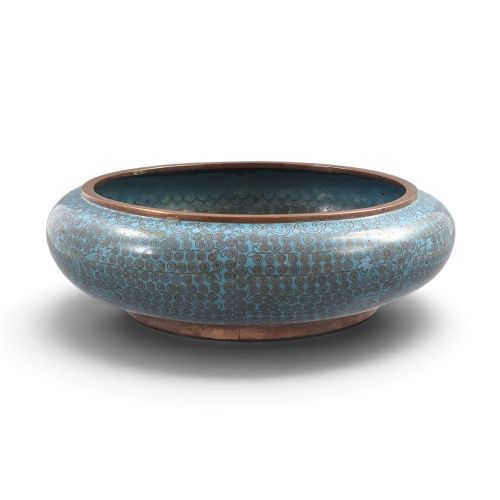
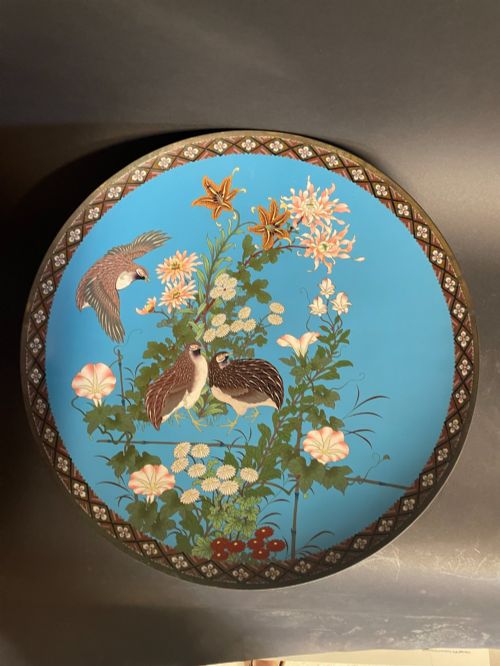
Vessels and dishes dominate the current range, often displaying vivid turquoise grounds filled with intricate wirework depicting birds, flowers, dragons, and figurative scenes. These items function equally as standalone display pieces or converted table lamps.
Origins stretch from Beijing and Japanese regional centres to European makers utilising styles inspired by Asian art, providing diverse forms from miniature vases to large charger plates.
Materials and construction
The technique relies upon soldering thin flat metal wires, typically copper, brass, bronze, or silver, onto a metal base to form raised compartments known as cloisons. These individual cells are then filled with coloured enamel pastes and fired multiple times in a kiln to fuse the glass mixture.
Once cooled, the surface is ground down and polished until the metal wire rims and the hardened enamel rest on an even plane, creating the characteristic patterned texture of turquoise blue cloisonne.
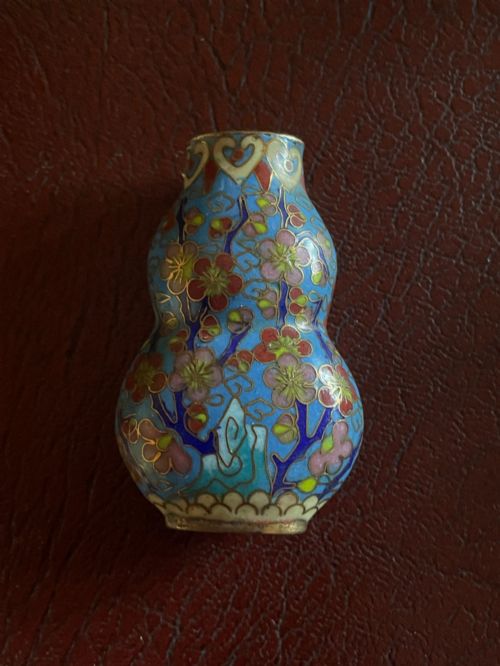
Form variations include miniature vessels alongside imposing fifty-centimetre chargers and lidded incense burners.
Assessing craftsmanship
Quality rests in the precision of the wirework and the density of the enamel, where finer gauge wires form complex, uniform cells without warping or uneven gaps. Superior pieces display smooth, highly polished surfaces with rich colour saturation and minimal pitting across the turquoise fields.
The complexity of the subject matter and the crispness of the secondary details, such as feathered birds or layered floral petals, distinguish standard decorative items from finer artistic achievements signed by master workshops.
Kinkozan
The Turquoise Blue Cloisonne Glossary
- Cloisonne
- Enamel decoration technique where metal wires are soldered to a metal body to create compartments for coloured pastes.
- Champleve
- Enamel technique where troughs or cells are carved or cast directly into a bronze or metal base rather than using soldered wire.
- Charger
- A large decorative plate intended for display on a wall or sideboard rather than dining use.
- Koro
- An oriental incense burner, typically featuring a lidded bowl supported on legs and cast in bronze or brass with enamel panels.
- Jue
- An ancient style of ritual wine vessel featuring tripod legs and protruding upright posts, replicated in later periods using cloisonne enamel.
Turquoise Blue Cloisonne: Frequently Asked Questions
How do I clean turquoise blue cloisonne?
Dust surfaces gently with a soft, dry cloth to prevent accumulation within the wire crevices. Avoid chemical cleaners or immersion in water, which can damage exposed metal bases and older enamel compounds.
For stubborn residue, use a slightly damp cloth with mild soap, followed immediately by thorough drying with a soft towel.
Can these lamps be rewired safely?
Many period pieces adapted into lighting utilise vintage wiring that requires modern safety updates. Qualified electricians can easily rewire these items while preserving the original mounts and enamel bodies.
Ensure that any conversion avoids drilling through the primary enamel panels to protect the structural integrity of the vessel.
How do I distinguish Japanese from Chinese pieces?
Japanese Meiji items frequently employ silver or thinner copper wires with naturalistic motifs such as birds and flora set against expansive, uncrowded turquoise grounds. Chinese pieces often utilise heavier brass or bronze foundations with more stylised geometric or archaic ornamentation.
Examining the base and interior finish provides further clues regarding regional manufacturing techniques and period conventions.
Where should I display large chargers?
Large chargers demand sturdy wall brackets or secure plate stands designed to support heavier bronze and enamel objects safely. Position them away from direct sunlight to preserve the vibrancy of the turquoise enamel over time.
Placing them on mantelpieces or within dedicated cabinets highlights their scale and intricate wirework details.