
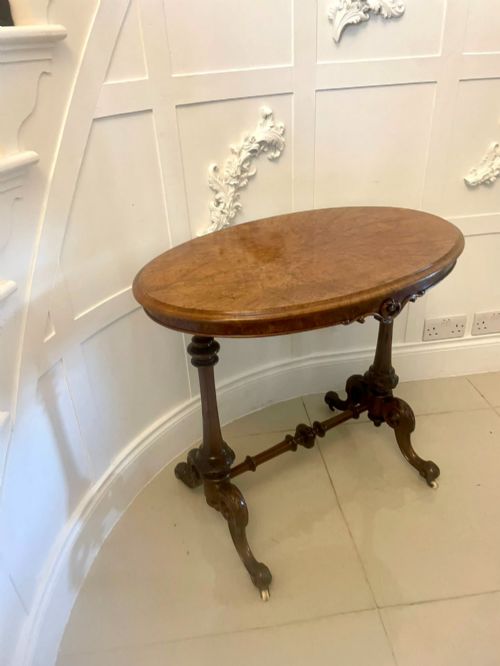
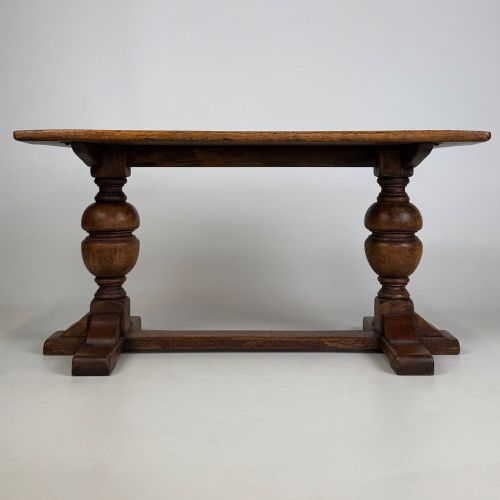
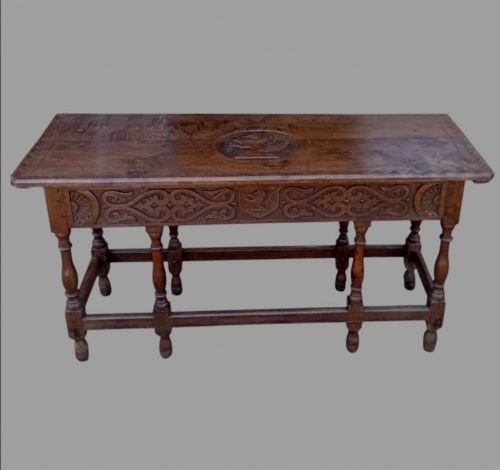
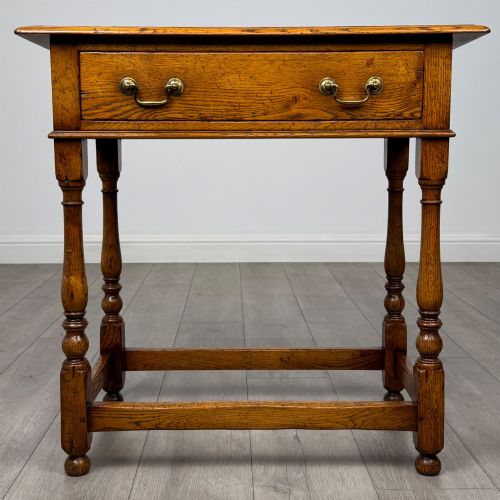
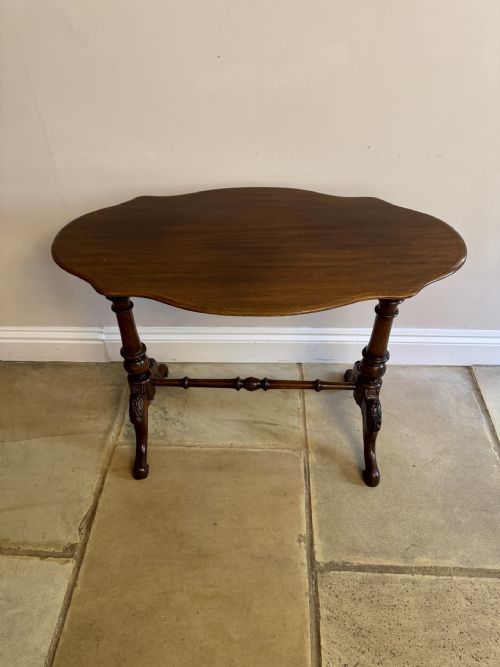
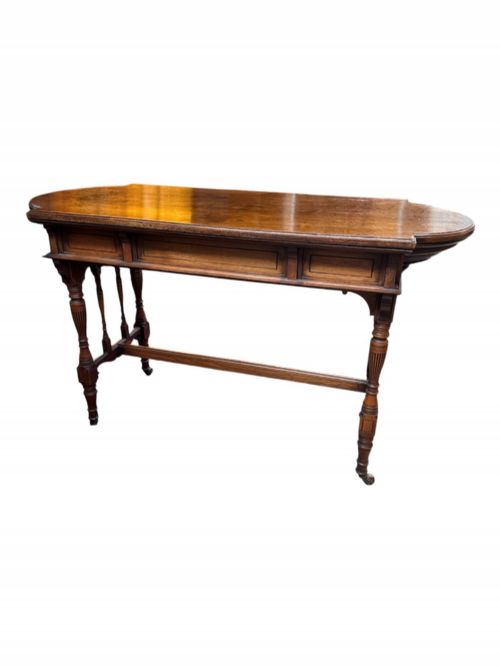


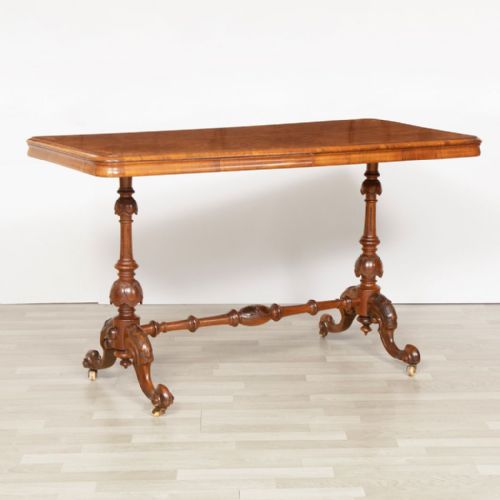


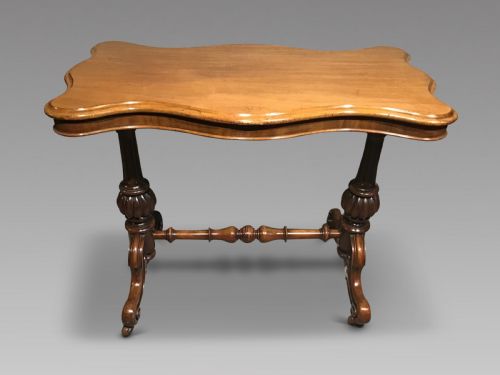


Turned Stretcher Sofa Table
A turned stretcher sofa table brings substantial timberwork and period character to a room, offering both practical surface area and traditional design.
Turned Stretcher Sofa Table
A turned stretcher sofa table represents a traditional form found across various historical periods, combining sturdy underframing with a functional top. These pieces appear in configurations ranging from standard side and centre designs to specific occasional formats.
The materials span mahogany, walnut, oak, and rosewood, reflecting the preferences of Victorian, Edwardian, and Georgian cabinet makers. Walnut and burr walnut examples frequently display inlay work, while oak variations lean towards heavier vernacular styles.
Most entries belong to the Victorian era or the nineteenth century, alongside Edwardian and Georgian specimens. Buyers will encounter these tables functioning as lamp tables, console tables, and library tables alongside the core sofa table format.
Materials and construction methods
Construction relies heavily on dense hardwoods such as mahogany, walnut, and oak, often enhanced with burr walnut veneers or boxwood stringing. Brass fittings frequently appear on drawers or castors.
Turning techniques shape the timber stretchers and legs to provide both structural rigidity and decorative detail. Cabinet makers joined these elements using traditional joinery methods suited to each period.
Current listings feature pieces spanning the Georgian, Victorian, and Edwardian periods, constructed in mahogany, walnut, oak, and rosewood.
Distinctions in craftsmanship
Quality diverges through the selection of timber veneers, such as figured mahogany or burr walnut, and the crispness of the turned stretcher details. Superior examples display careful timber matching and balanced proportions.
The execution of inlay work and the integration of secondary timbers also separate standard utility items from finer parlour furniture. Structural integrity in the stretcher joints remains a key indicator of original stability.
The Turned Stretcher Sofa Table Glossary
- Stretcher
- A horizontal timber connecting the legs of a table to provide structural stability and rigidity. These supports often feature turned decoration.
- Burr Walnut
- A specialised wood cut from walnut tree growths, yielding intricate swirling grain patterns used for decorative veneer panels.
- Centre Table
- A freestanding table designed to be viewed from all sides, placed centrally in a room rather than against a wall.
- Pembroke Table
- A small table with hinged drop flaps on either side, often fitted with a drawer and turned legs.
Turned Stretcher Sofa Table: Frequently Asked Questions
What is a turned stretcher sofa table used for?
These tables serve as versatile surfaces for lamps, books, or decorative objects within a living space or hallway.
Their substantial construction also allows them to function comfortably as central display pieces or writing surfaces.
How do I identify a Victorian table?
Victorian pieces frequently utilise dense hardwoods like walnut and mahogany, often featuring rich grain patterns and dark finishes.
Design motifs from this era span from elaborate burr walnut inlay to simpler turned stretcher frames.
Are these tables suitable for everyday use?
Solid hardwood construction provides the durability needed for daily placement of lamps and decorative items.
Care should be taken to protect polished wood surfaces from excessive moisture and direct heat sources.
What woods were commonly used?
Cabinet makers relied primarily on mahogany, walnut, and oak for the main body and structural framing of these tables.
More decorative examples incorporate rosewood, burr walnut veneers, and boxwood stringing for visual contrast.