

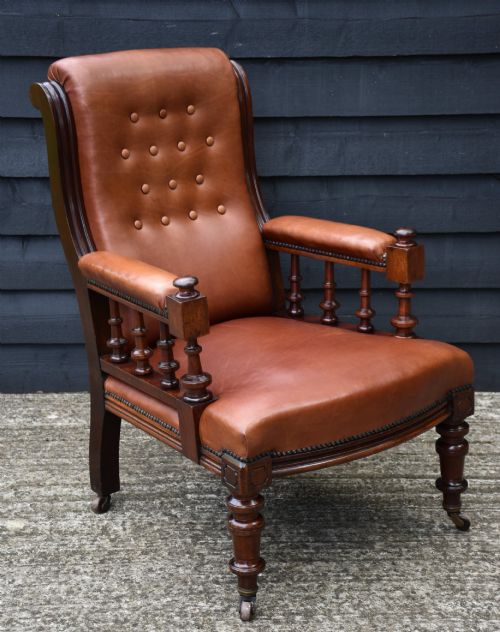
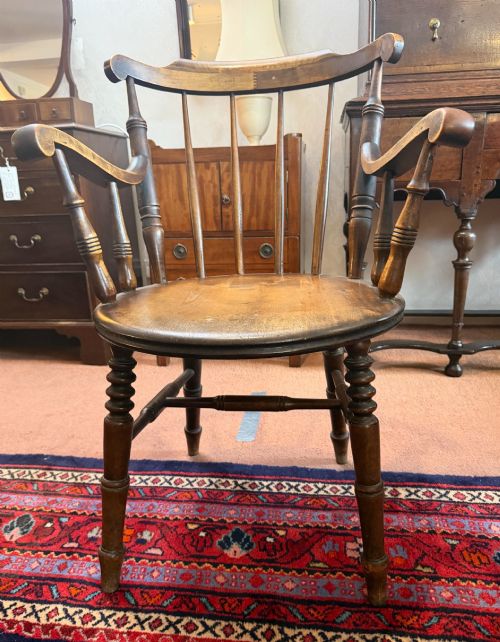
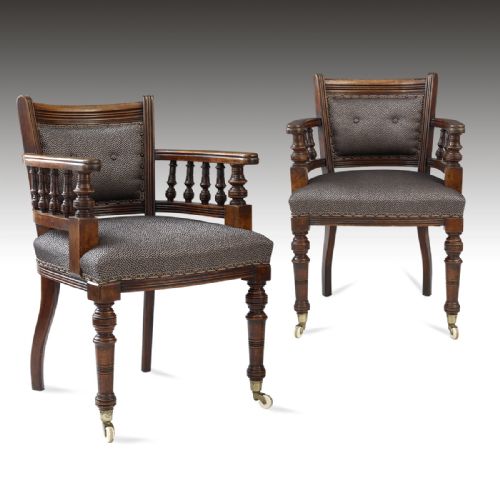
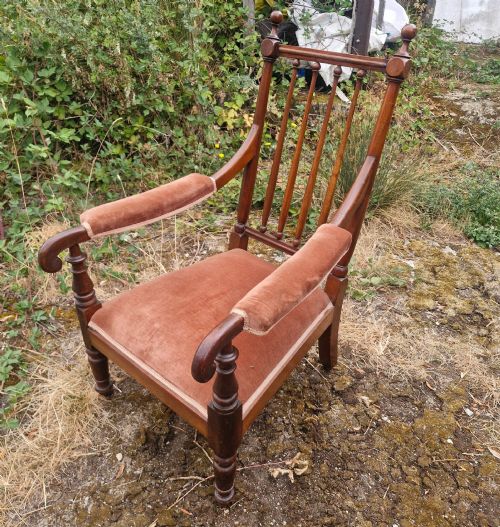


Turned Spindle Library Chair
A turned spindle library chair offers sturdy seating for reading and writing, built from solid timbers with distinctive turned uprights.
Turned Spindle Library Chair
A turned spindle library chair is a sturdy seat designed for reading, writing and desk work, combining traditional forms with practical comfort. The pieces found here span the Victorian and Edwardian periods, stretching from eighteen-fifty into the early twentieth century.
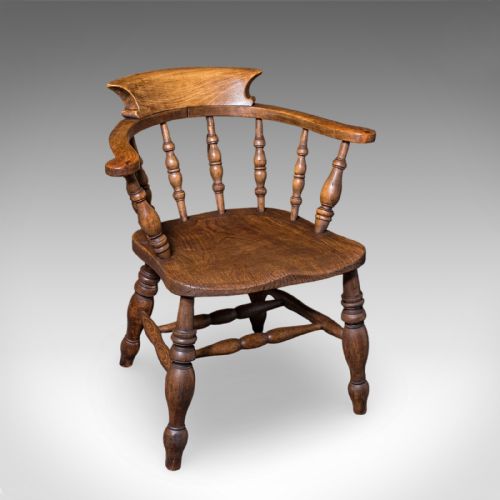
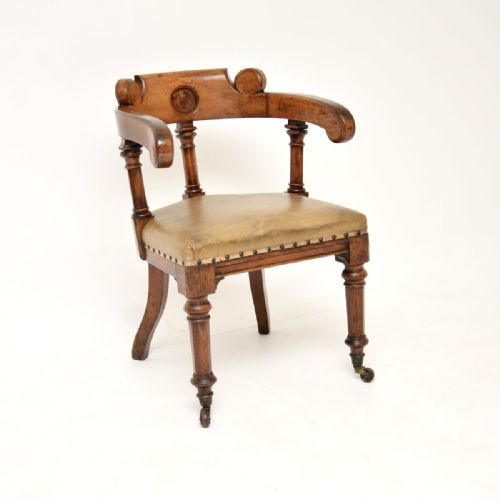
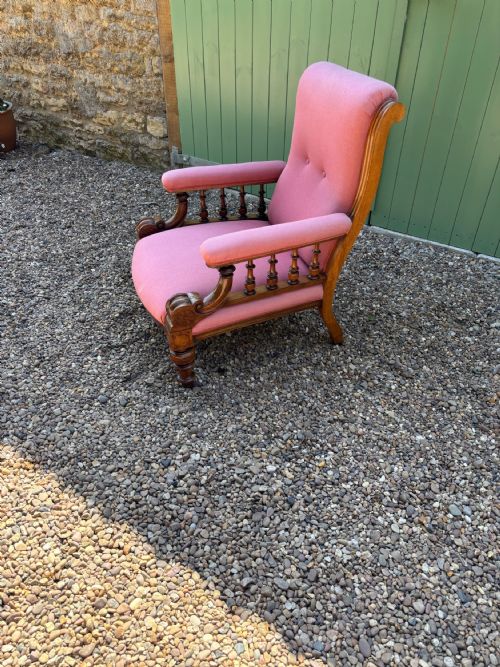
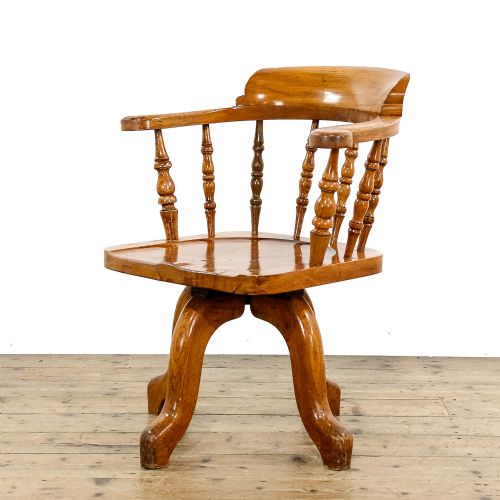
You will encounter various formats on this page, including captain's chairs, smoker's bows, desk chairs and open armchairs. These items appear in woods such as oak, mahogany, walnut, elm, beech and ash, often fitted with seats in leather, velvet, hide or textile.
The style ranges from plain country house versions to more formal Victorian Gothic Revival designs and Arts & Crafts interpretations. Many examples feature spindle backs that give the seat its defining structural and visual rhythm.
How they were made
Joiners and chairmakers constructed these frames using hard timbers like oak, mahogany, walnut and beech, turning spindles on a lathe to create uprights and supports. Timber selection dictated the weight and grain pattern, with dense woods chosen for durability in domestic and institutional settings.
Upholstered versions incorporate brass tacks and traditional stuffing beneath covers of leather, hide, velvet or textile. Spindle backs rely on tight joints where turned rods fit securely into drilled seats and rails to bear the weight of the sitter.
Turned Spindle Library Chair Retail Price Guide 2026
Typical asking prices for turned spindle library chair among the pieces listed under this phrase on Sellingantiques today, from the lower quarter to the upper quarter. They describe what is for sale here now, not the wider market.
A child's armchair of large proportions appears among the full-sized seating, built for a very small person with grand ideas.
What varies in quality
Quality rests upon the selection of timber and the precision of the turning work on the spindles. Dense, well-figured oak, walnut or mahogany provides greater structural integrity than softer secondary woods.
The depth of the carving, the comfort of the upholstered or leather pad, and the rigidity of the joined frame distinguish standard utility examples from finer library armchairs.
The Turned Spindle Library Chair Glossary
- Spindle back
- A chair back constructed from a series of turned vertical wooden rods. These rods provide back support while keeping the frame light and open.
- Smoker's bow
- A low-backed wooden armchair with a rounded continuous rail supported by turned spindles. This form is common in robust country and office seating.
- Gothic Revival
- An architectural and decorative style drawing on medieval forms. Pieces in this idiom display pointed arches, heavy tracery and carved details.
- Hide
- Untanned or tanned heavy cattle skin used for upholstery. It provides a durable, smooth covering for desk chair seats.
Turned Spindle Library Chair: Frequently Asked Questions
What is a turned spindle library chair?
A turned spindle library chair is a wooden seat featuring vertical turned wooden rods in the backrest, designed for use at a desk or in a library.
These chairs date primarily from the Victorian and Edwardian eras, combining timber frames with wood or upholstered seats.
How do I identify a Victorian library chair?
Victorian library chairs typically show darker hardwoods like mahogany, walnut or oak, alongside heavier construction methods.
Look for period characteristics such as turned spindle backs, leather or hide pads, and occasional Gothic Revival design elements.
Were these chairs used at desks?
Many of these chairs served working purposes at writing tables, partners' desks and office spaces.
Formats like captain's chairs and smoker's bows were built specifically to support prolonged sitting while reading or writing.
What woods were used for these chairs?
Chairmakers utilised a range of British and imported hardwoods including oak, mahogany, walnut, elm, beech and ash.
Hardwoods provided the necessary strength for daily use, while softer woods like beech were often turned for spindles and supports.
How do I care for a leather seat?
Leather and hide seats require gentle cleaning with a damp cloth and occasional treatment with appropriate leather dressings to prevent drying.
Keep the chair away from direct heat sources and strong sunlight to protect the surface material over time.