



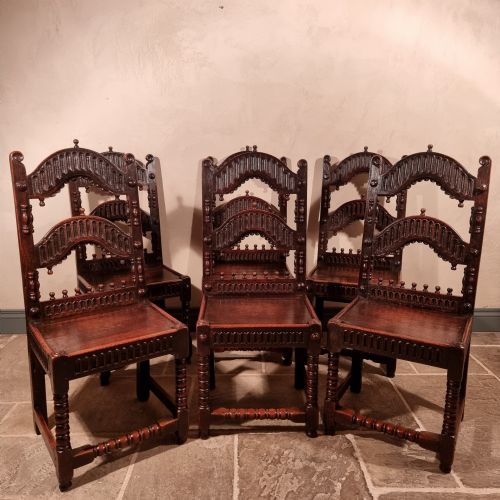


Turned Oak Hall Chairs
Turned oak hall chairs bring sturdy seventeenth-century character and practical seating to modern spaces through robust frames and simple geometric turnings.
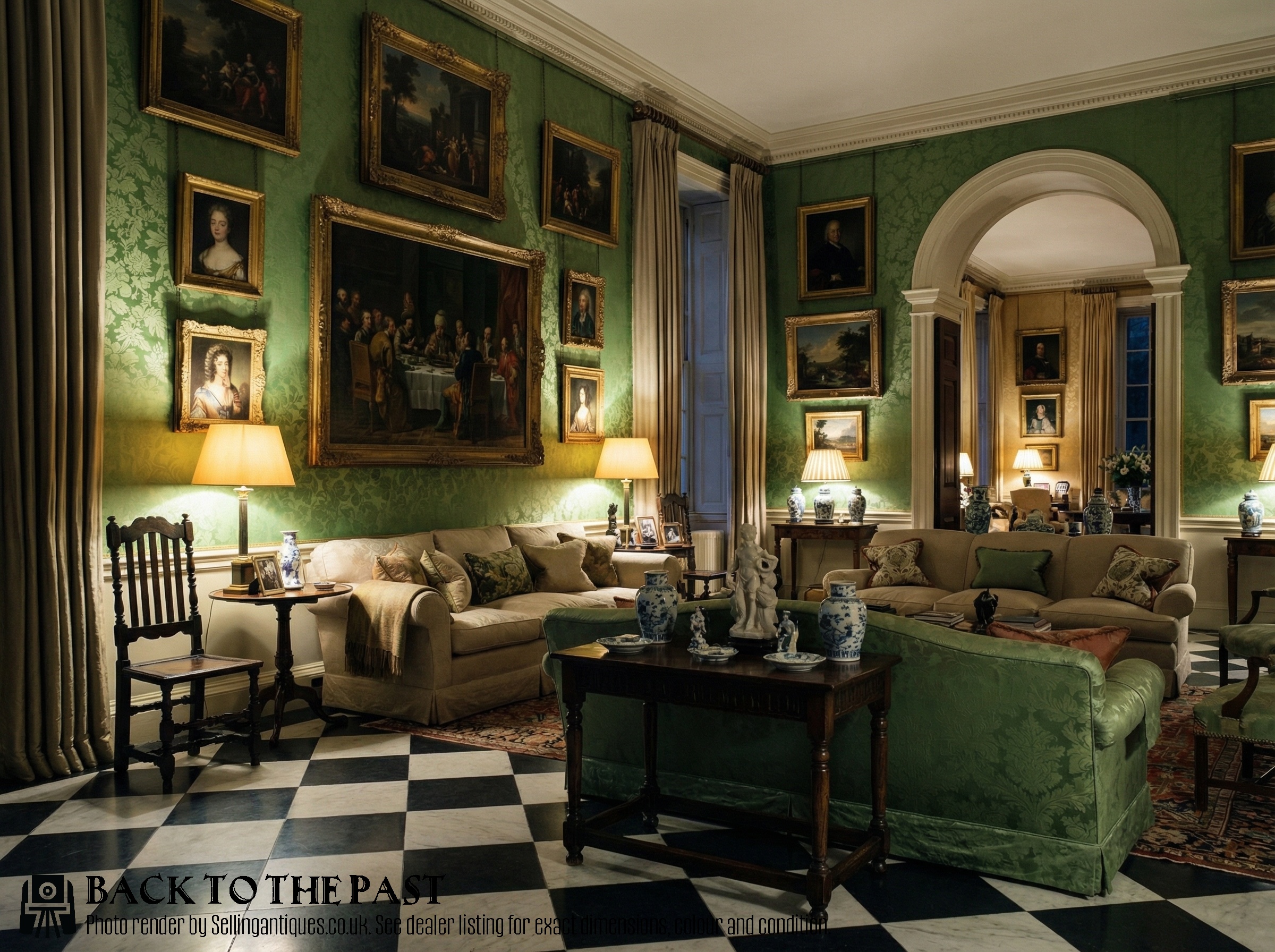
Turned Oak Hall Chairs
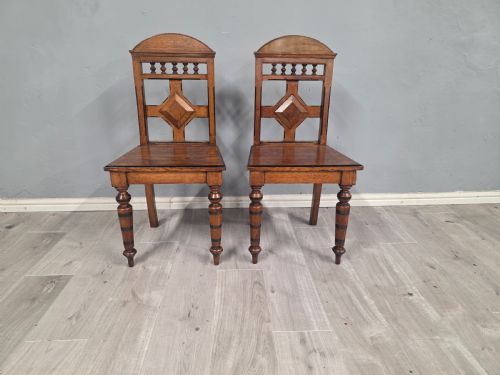
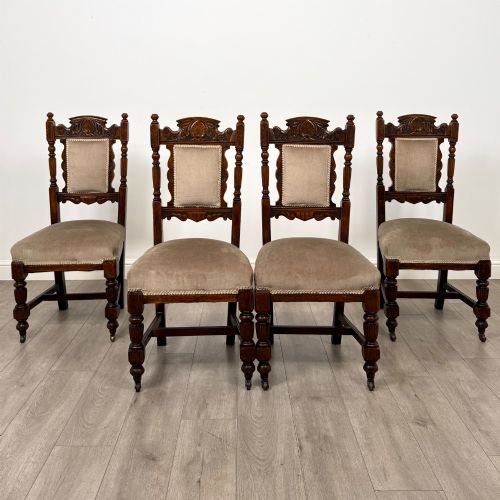
Turned oak hall chairs span several centuries of production, appearing in genuine seventeenth-century iterations as well as later Victorian and revival pieces. Buyers seeking turned oak hall chairs encounter side chairs, armchairs, and backstools constructed primarily from oak with occasional additions of fabric, cane, or brass detailing.
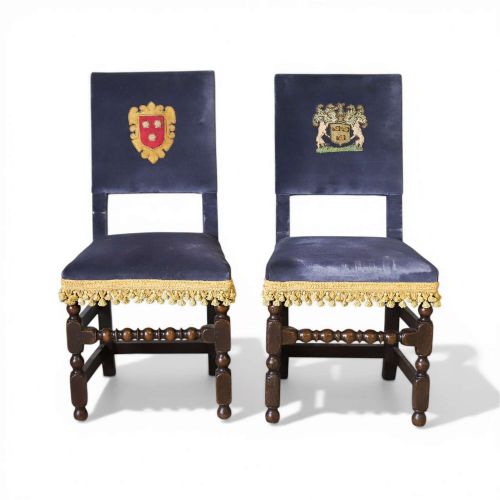
The material palette recorded in these pieces relies heavily on solid oak timbers, sometimes softened with velvet upholstery or accented by metallic fringe and enamel. Regional variations emerge across the listings, ranging from South Yorkshire and Lancashire patterns to Scottish armorial examples and Welsh folk art pieces.
Many items reflect later interpretations of early forms, including Jacobean revival, Gothic Revival, and Carolean style constructions dating into the nineteenth and early twentieth centuries. This mix gives buyers access to both authentic antique seating and period-revival craftsmanship sharing the same heavy timber vocabulary.
Materials and Construction
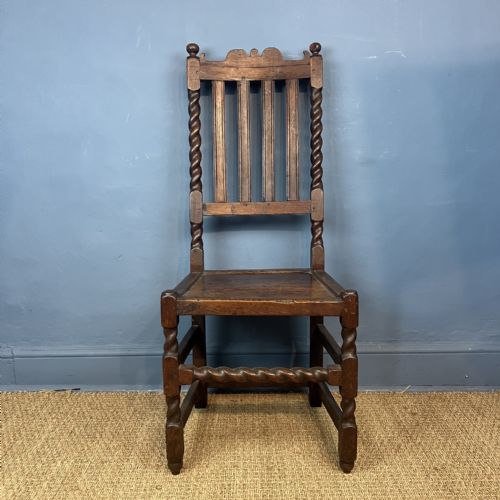
Joinery on these chairs depends on traditional pegged and mortise-and-tenon construction executed in dense domestic oak. Woodturners shaped the structural members on lathes to produce bobbin, spiral, and spindle turnings that form the legs, stretchers, and uprights.
Secondary elements incorporate cane seating, velvet squabs, or carved wooden panels displaying heraldic crests, gargoyles, or floral motifs. Metal components appear sparingly, usually as brass tacks securing upholstery or occasional metallic fringe trimming decorative cushions.
Turned Oak Hall Chairs Retail Price Guide 2026
Typical asking prices for turned oak hall chairs among the pieces listed under this phrase on Sellingantiques today, from the lower quarter to the upper quarter. They describe what is for sale here now, not the wider market.
Among the historical seating sit a shop advertising chair for matchless soap and a delightfully whimsical gargoyle chair.
Assessing Quality and Character
Quality in these seating pieces rests upon the crispness of the lathe turning and the structural integrity of the oak frame. Finer examples display well-proportioned turnings and deep, articulate carving on the back panels rather than shallow, mechanical stamping.
The integration of original elements, such as period canework or untouched timber surfaces with patination accumulated over centuries, elevates the standing of an individual chair. Later revival pieces vary according to the fidelity of their historical interpretation and the weight of the timber selected by the maker.
Liberty and Co
The Turned Oak Hall Chairs Glossary
- Bobbin turning
- A form of lathe-turned woodwork resembling a string of spools or bobbins placed end to end. This technique appears frequently on seventeenth-century legs and stretchers.
- Backstool
- An early form of chair featuring a vertical wooden backrest without arms, common in seventeenth-century English domestic settings. These pieces rely on joined oak construction.
- Cane
- Woven rattan material used for seat panels, offering a lighter flexible surface. It appears on seventeenth-century designs and later revival seating.
- Armorial
- Decorated with heraldic crests or coats of arms, often carved into the wooden back panels. These bespoke elements denote specific familial provenance.
- Gothic Revival
- An architectural and decorative style popular during the nineteenth century, utilising pointed arches and tracery. Chairs from this movement adapt medieval motifs for domestic use.
Turned Oak Hall Chairs: Frequently Asked Questions
Are these chairs comfortable for daily use?
Seventeenth-century and revival hall chairs were designed for upright posture in entryways rather than lounging. Most feature rigid wooden seats or firm cane panels that encourage an erect seating position.
Adding a removable velvet cushion can soften the timber seat for longer dining or desk use while preserving the visible framework of the chair.
How do I tell a seventeenth-century chair from a Victorian copy?
Authentic seventeenth-century pieces display deep patination, hand-carved tool marks, and construction methods utilising pegged joints suited to period timber movement. Revival pieces from the Victorian era often use machine-turned elements and tighter, more uniform timber grain.
Examining the underside of the seat and the wear patterns around the foot stretchers reveals the true age of the construction.
Where should I place a turned oak chair at home?
These pieces function traditionally as hall or side chairs, fitting neatly against entry walls, landings, or narrow corridors where deep seating would obstruct movement. Their striking turned legs and carved backs also make them effective accent pieces in studies and living rooms.
Pairing a single chair with a small side table creates a distinct focal point in an unused corner.
What maintenance do antique oak chairs require?
Solid oak furniture benefits from occasional application of traditional beeswax to nourish the timber and maintain a soft sheen. Avoiding direct sunlight and stable humidity levels prevents the oak from drying out and keeps joined sections secure.
Caned panels require gentle cleaning with a damp cloth to prevent the rattan from becoming brittle over time.