
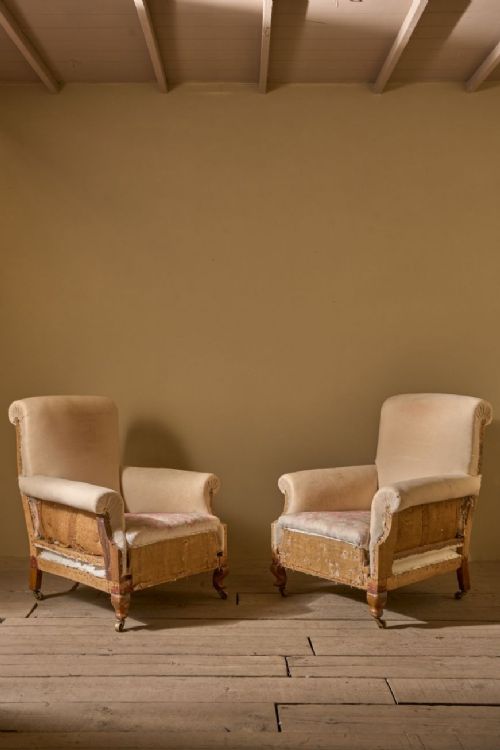
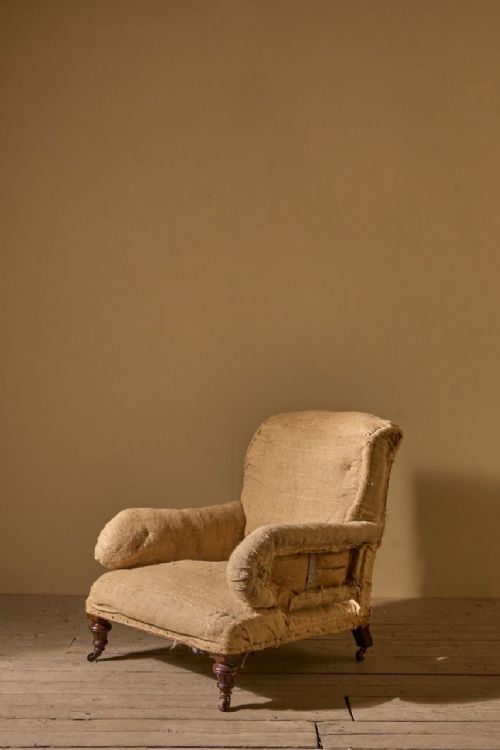
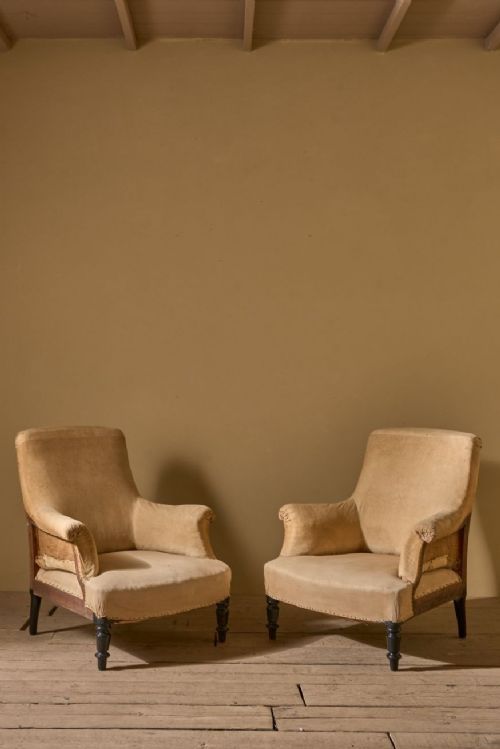
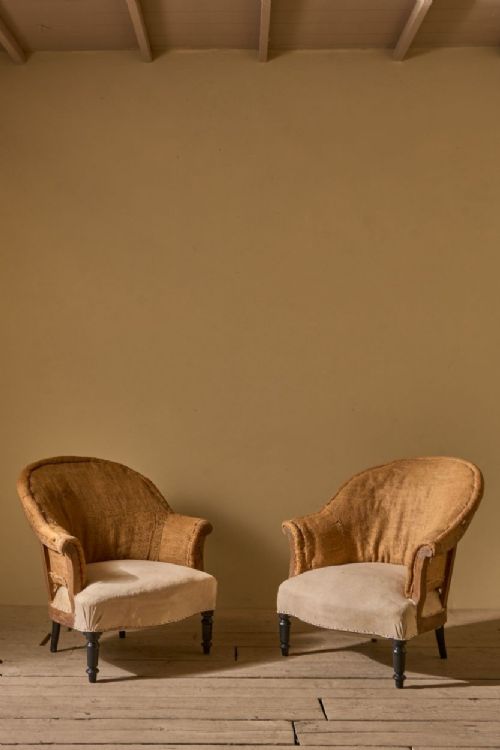

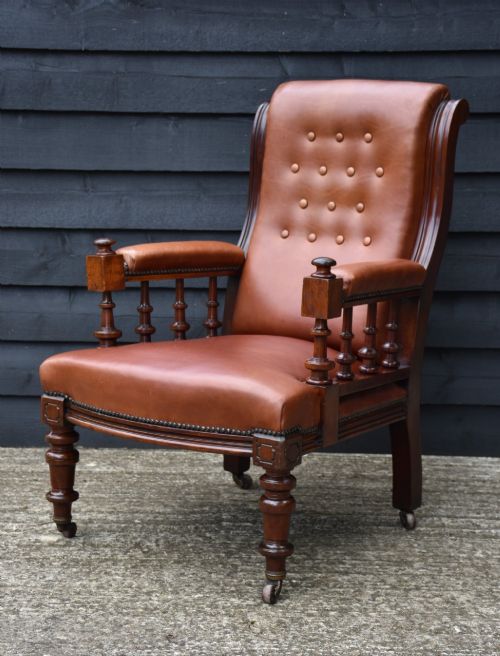
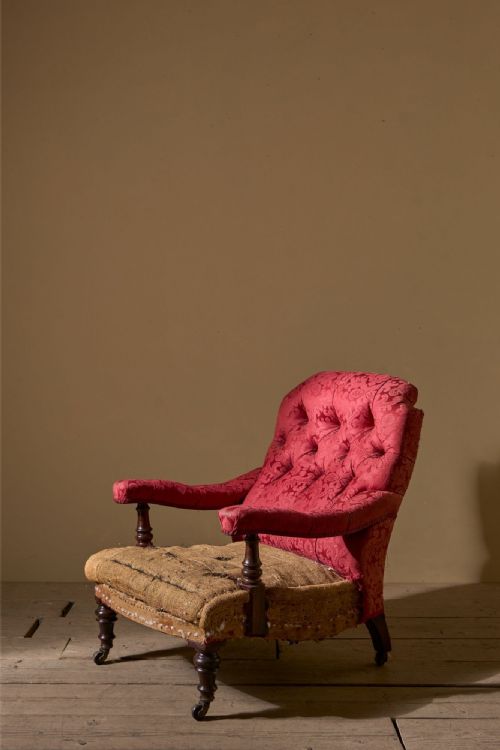
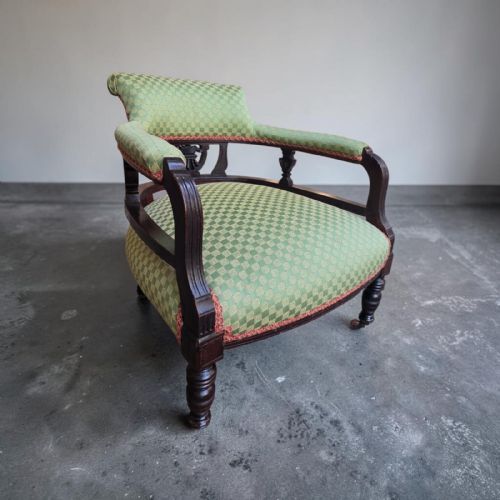
Turned Leg Upholstered Armchair
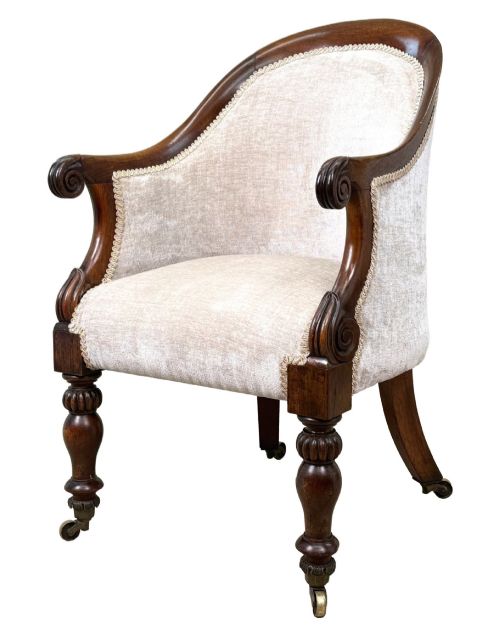
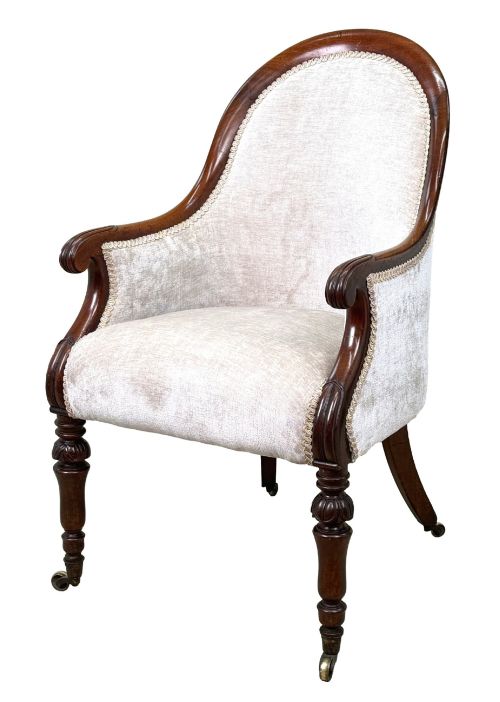
A turned leg upholstered armchair brings substantial nineteenth-century comfort and turned wooden supports to a room.
Turned Leg Upholstered Armchair
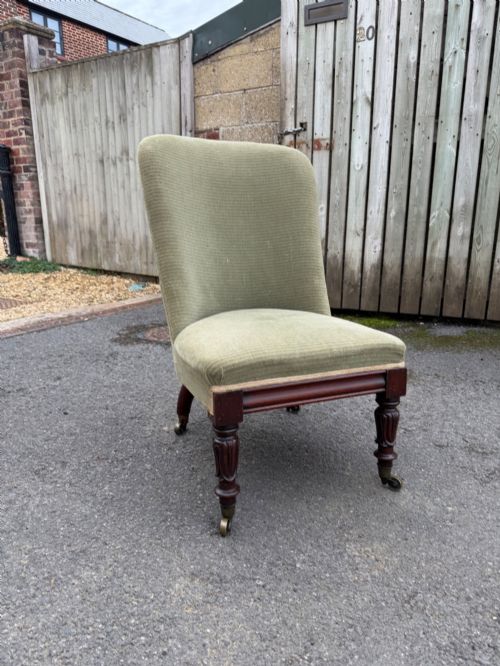
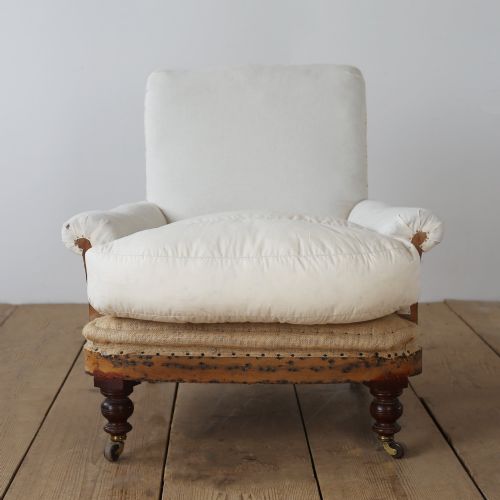
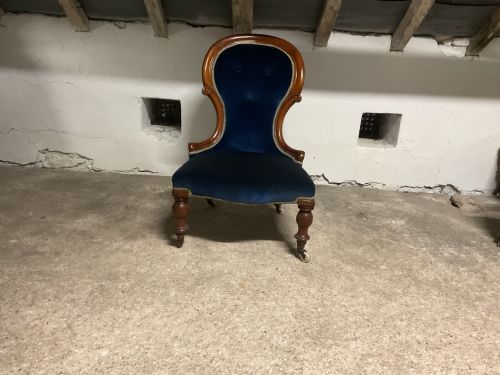
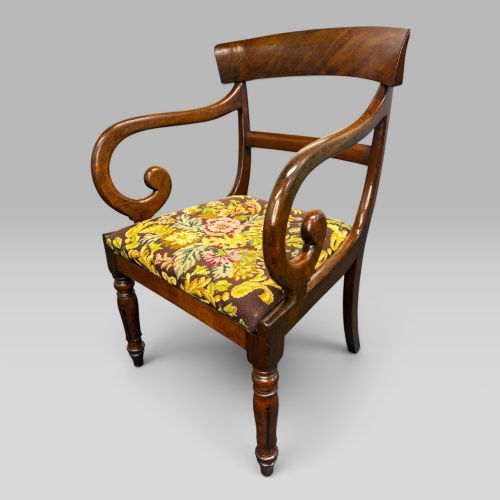
A turned leg upholstered armchair is a substantial seating form primarily found from the nineteenth century, including Victorian, Regency, and William IV periods. These pieces combine deep padding with visible turned wooden legs, often castored for movement.
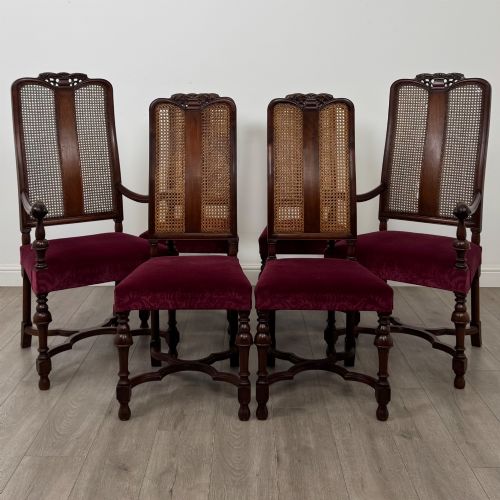
The selection ranges from library chairs and tub chairs to nursing chairs and country house armchairs. Most examples date from the Victorian era and the broader nineteenth century, utilising mahogany, oak, or rosewood frames.
Buyers seek these chairs for their solid proportions and historic character. They suit studies, bedrooms, and drawing rooms, offering practical seating paired with period craftsmanship.
How they were made
Frames are constructed from hardwoods such as mahogany, oak, and rosewood, shaped by hand or turned on a lathe for the characteristic legs. Wood was selected for structural strength to support the heavy internal framing.
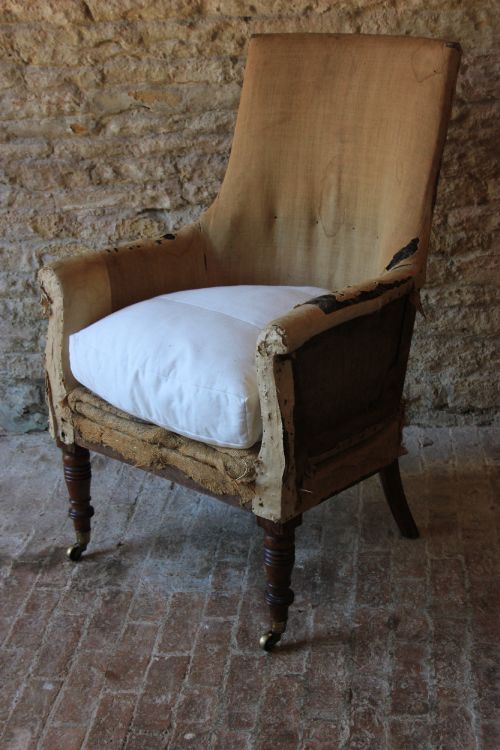
Upholstery techniques relied on traditional stuffing materials like horsehair held by hessian and webbing. Final covers utilised fabrics such as velvet, leather, calico, and various textiles, secured with brass tacks.
Listings feature nineteenth-century periods, incorporating mahogany, oak, and rosewood frames with leather, velvet, and textile upholstery.
What varies in quality
Quality rests in the integrity of the hardwood frame and the precision of the turned leg details. Superior examples exhibit crisply carved or turned woodwork without structural compromise.
The standard of upholstery and the authenticity of the internal stuffing materials distinguish finer pieces. Maker attribution also elevates certain examples, particularly those associated with noted nineteenth-century workshops.
Howard and Sons·Morris and Co·Gillows·Morison and Co·Mellier and Co
The Turned Leg Upholstered Armchair Glossary
- Tub chair
- A type of armchair with a rounded back that curves continuously into the arms. This enclosed form provides a supportive seat.
- Library chair
- A heavy, comfortable armchair designed for reading rooms, often upholstered in leather or rich textiles. These pieces date frequently to the Regency and Victorian periods.
- Hessian
- A coarse woven fabric typically made from jute fibres, used internally as a foundation for upholstery stuffing. It provides a durable base for horsehair and springs.
- Spindle back
- A chair back constructed with vertical turned wooden rods or spindles. This method lightens the visual weight of the timber frame.
- Castor
- A small wheel fitted to the base of a chair leg to allow easy movement across floor surfaces. They are frequently made of brass and ceramic.
Turned Leg Upholstered Armchair: Frequently Asked Questions
What periods do these armchairs come from?
Most pieces date from the nineteenth century, spanning Regency, William IV, and Victorian eras. Later examples extend into the Edwardian period and the early twentieth century.
Craftsmanship and materials shifted across these decades, moving from formal Regency lines to deep Victorian comfort and country house proportions.
How do I identify a library chair?
Library chairs are characterised by robust wooden frames, often in mahogany or rosewood, paired with deep padding for extended sitting. They frequently feature leather upholstery and sturdy turned legs.
These chairs were built for heavy use in studies and libraries, resulting in durable and substantial proportions.
What woods were used for the legs?
Makers utilised dense hardwoods such as mahogany, oak, and rosewood to form the turned legs and structural frames. These timbers provided the necessary strength to support upholstered bodies.
Turned details on the legs range from simple reeding to complex lathe-turned profiles, sometimes fitted with brass castors.
How do I live with an antique armchair?
These armchairs integrate well into traditional and modern interiors as reading seats or accent chairs. Their historic frames add character and texture to a room.
Placement away from direct heat sources protects the antique wood and traditional upholstery materials from drying out over time.