

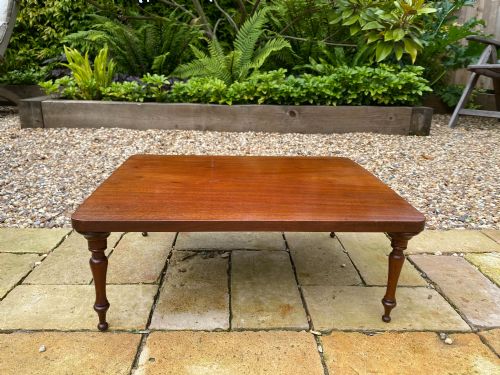


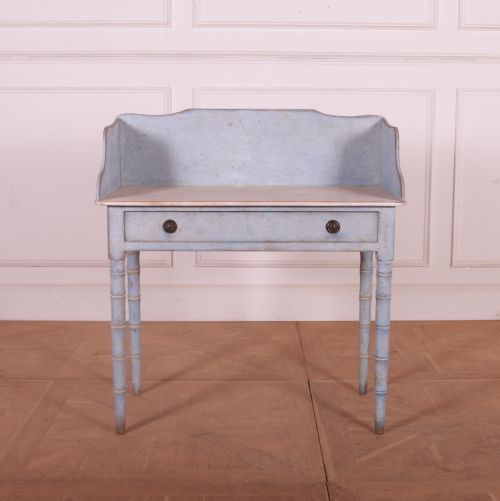

Turned Leg Tray
These turned leg tray pieces combine practical side surfaces with raised rims, offering steady utility for serving or display.
Turned Leg Tray
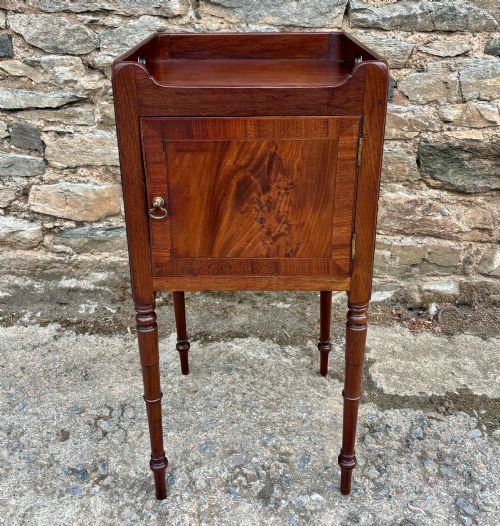
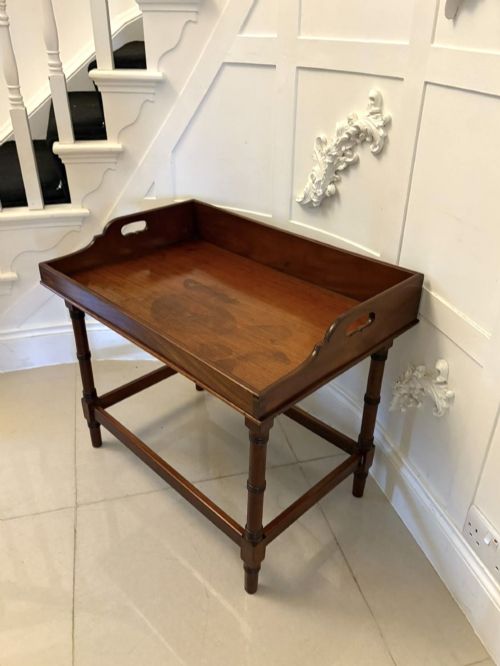
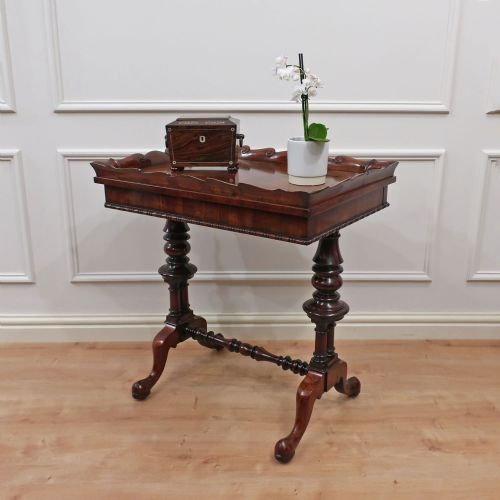
A turned leg tray typically takes the form of a side table, lamp table, bedside cabinet, or butlers tray on a stand, originating from periods such as the Georgian, Regency, Victorian, and Edwardian eras. These pieces function as movable surfaces with raised borders to keep items secure during daily use.
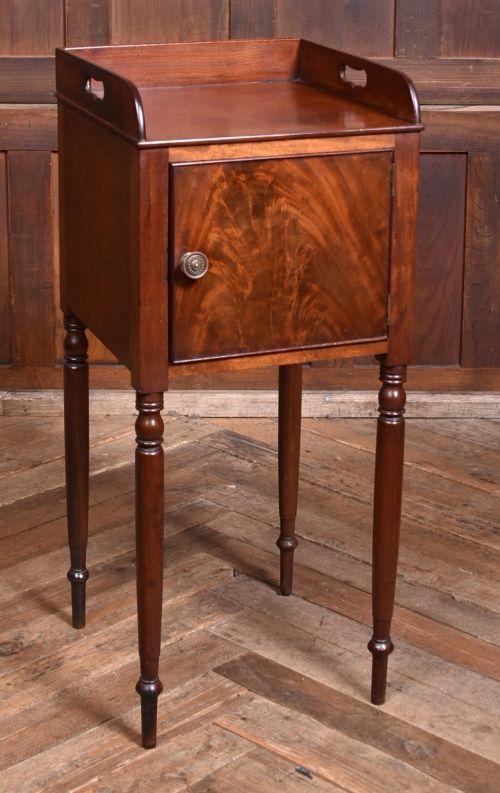
Buyers browsing this selection most frequently encounter mahogany and oak constructions, often arranged as tray top lamp tables or pot cupboards from the nineteenth century. These forms bridge the gap between portable serving trays and permanent occasional furniture.
The aesthetic ranges from plain English country oak to sophisticated Regency and William and Mary mahogany designs. Such variety allows these tables to serve as bedside furniture, dumb waiters, or compact hall tables.
How turned leg tray furniture was made
Cabinet makers utilised solid mahogany, oak, and boxwood to construct the frames and raised trays, frequently applying flame mahogany veneer and satinwood inlay for decorative contrast. Turned legs were shaped on a lathe to create symmetrical rings and baluster profiles.
Hardware such as brass handles and fixtures were fitted to drawers and cupboard doors on bedside cabinets and pot cupboards. Joints were joined using traditional woodworking methods appropriate to periods spanning the seventeenth through to the early twentieth century.
Some tables travelled from Bäckaskog Castle directly into modern rooms, carrying centuries of royal or landed estate history on their turned legs.
What varies in quality
The refinement of the turning on the legs and the choice of primary timber distinguish standard utilitarian examples from finer formal pieces. Well-figured flame mahogany veneer and delicate satinwood inlay elevate the visual weight of a side table or lamp table.
Structural integrity depends on how firmly the tray top fixes to the stand or how smoothly drawers operate within bedside cabinets. Pieces attributed to specific workshops often demonstrate greater attention to proportion and joinery detail.
Gillows
The Turned Leg Tray Glossary
- Tray top
- A furniture surface surrounded by a raised wooden gallery or edge designed to prevent items from sliding off. This feature appears on lamp tables and butlers trays alike.
- Pot cupboard
- A small bedside cabinet or enclosed stand originally designed to house a chamber pot. They frequently feature a single door above a small compartment.
- Flame mahogany
- A veneer cut from the fork of a mahogany tree where the branches join the trunk. This produces a distinctive, fiery wave pattern prized in cabinet making.
- Dumb waiter
- A tiered serving table fitted with revolving or fixed trays. These pieces were used in dining rooms to hold dishes without requiring constant servant attention.
Turned Leg Tray: Frequently Asked Questions
What is a turned leg tray table used for?
These pieces serve as movable occasional tables, lamp stands, or bedside cabinets in domestic settings. The raised edge keeps objects secure while the table sits beside a chair or bed.
Historically, larger versions functioned as butlers trays for carrying and presenting tableware before resting on folding wooden stands.
How do I identify a Georgian turned leg tray?
Georgian examples typically feature solid mahogany construction with hand-turned legs and understated proportions. The wood grain shows deep, natural warmth without excessive veneer embellishment.
Construction methods rely on period joinery techniques visible underneath the tray base and inside the drawer linings.
Are these trays attached to their stands?
Some versions feature a fixed tray top integrated permanently onto a side table or lamp table frame. Others consist of a removable tray resting loosely upon a folding or rigid wooden stand.
Removable tray designs allowed servants to carry items from room to room before placing the tray back onto its designated base.
Where should I place a pot cupboard?
Pot cupboards fit well beside a bed or as compact side tables in a hallway or living room. The enclosed cabinet space provides discreet storage for small household items.
Their modest footprint makes them useful in smaller spaces where a full-sized cabinet would overwhelm the room.