



Mahogany Bed Tray
These mahogany bed tray pieces are practical companions for morning routines and bedside storage, built to last through centuries of daily use.
Mahogany Bed Tray
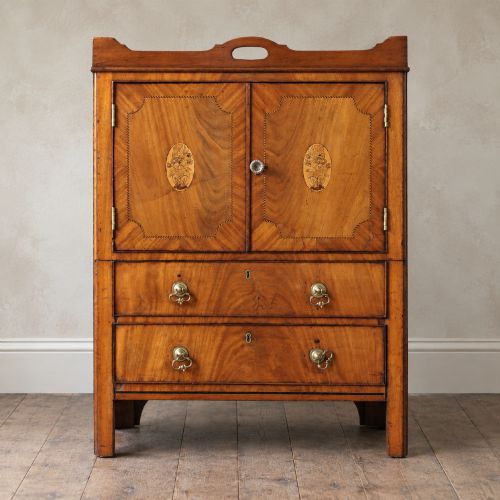
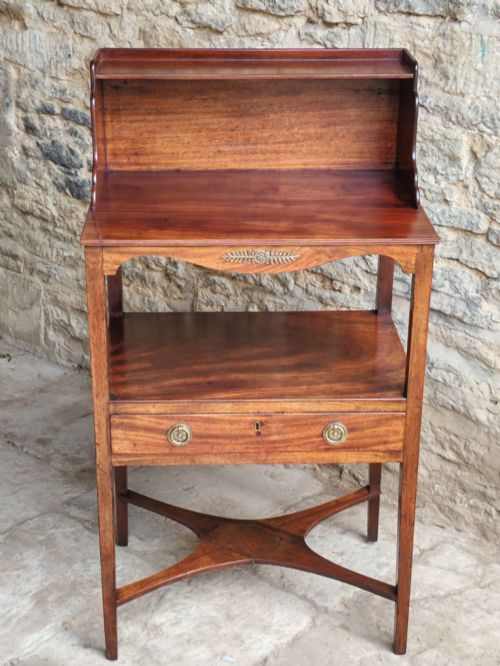
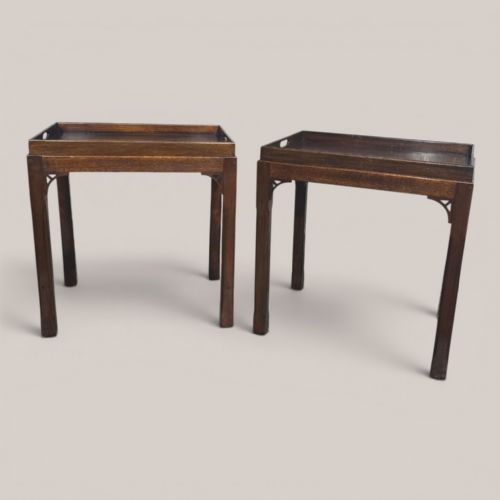
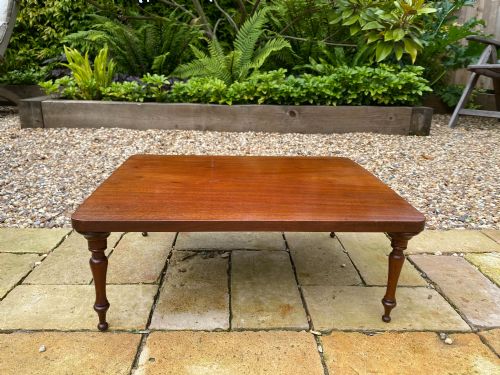
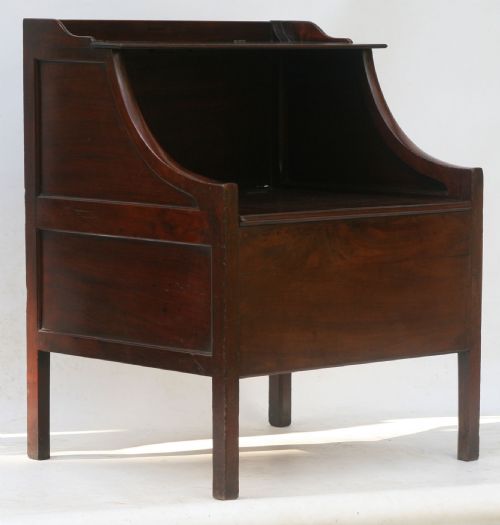
When you search for a mahogany bed tray, you encounter a variety of forms designed for bedside service and personal comfort. The selection includes everything from compact lap trays and breakfast stands to substantial cabinets and commodes.
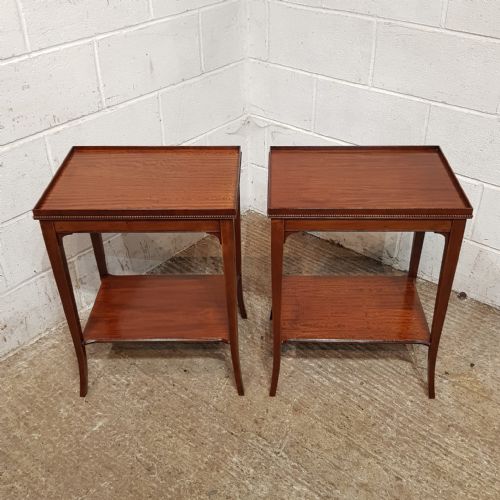
Georgian and George III examples dominate the early periods, featuring raised tray tops designed to keep items secure. Later Edwardian pieces and 1920s revivals continue this practical form, adapting the raised rim for bedside tables and lamp stands.
Assessing quality
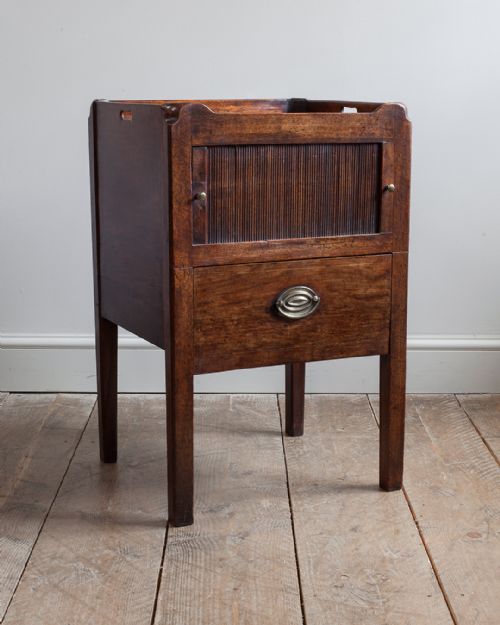
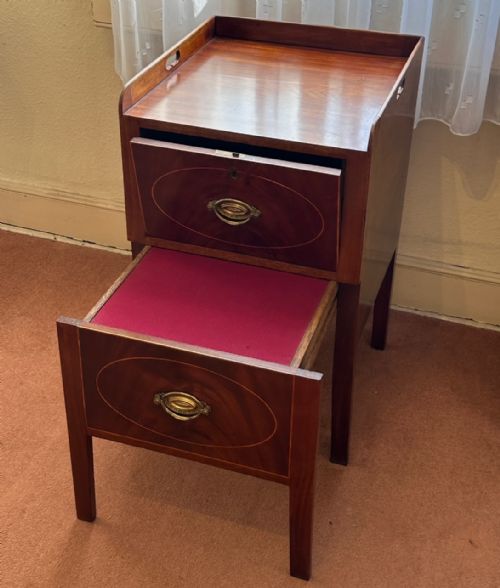
Quality rests in the crispness of the tray-top mouldings and the depth of figure in the mahogany timber. Pieces that retain their original brass hardware and well-fitted pull-out steps or tambour doors show superior original craftsmanship.
Proportion and stability separate standard utility pieces from finer examples attributed to prominent workshops. Subtle marquetry details and clean dovetail joints indicate a higher standard of workshop production.
Listings span the eighteenth, nineteenth, and twentieth centuries, incorporating Georgian, Regency, Victorian, and Edwardian periods alongside Georgian Revival styles.
Gillows
The Mahogany Bed Tray Glossary
- Tray top
- A raised gallery edge surrounding the upper surface to prevent items from rolling off. This feature defines the primary functional characteristic across these bedside tables and breakfast trays.
- Commode
- A piece of furniture enclosing a cupboard space, often fitted with a pull-out section or shelf. In this context, it refers to bedside cabinets designed for discreet storage.
- Tambour
- A sliding door constructed from narrow vertical strips of wood glued to a canvas backing. This allows the mechanism to curve smoothly around the corners of a cabinet.
- Nightstand
- A small low table placed beside a bed for holding personal items. The listings apply this term interchangeably with bedside cabinets and cupboards.
Mahogany Bed Tray: Frequently Asked Questions
What is a tray top bedside cabinet?
A tray top bedside cabinet is a small enclosed storage unit featuring a raised rim around the top surface. This edge prevents lamps, cups, and personal items from sliding off.
Most examples date from the Georgian period and offer a cupboard door below the main surface, sometimes concealing a pull-out step or commode pan.
How do I use a mahogany bed tray today?
These trays function well as portable breakfast surfaces or as stable lap rests for reading and writing in bed. The raised edges keep items contained during use.
When not serving meals, smaller lap trays store easily on a shelf or tabletop, while larger bedside variants remain fixed beside a bed.
How do I date an 18th century bedside table?
Dating relies on observing construction methods, timber selection, and hardware styles. Georgian pieces often feature solid mahogany framing, hand-cut dovetails, and subtle cockbeading around the drawers.
Later Edwardian revivals employ machine-sawn elements and lighter internal secondary woods, even when mimicking earlier George III proportions.
Did they make breakfast trays in the Georgian period?
The evidence shows both lap trays and bedside commodes from the Georgian era alongside later 19th and 20th century breakfast pieces. Earlier pieces frequently combined bedside storage with tray tops rather than serving solely as lap rests.
Victorian and later 1920s examples focus more directly on portable breakfast-in-bed formats alongside the continuing tradition of bedside tables.