


Turned Leg Quartetto Tables
Turned leg quartetto tables are interlocking sets of occasional tables designed to slide neatly beneath one another.
Turned Leg Quartetto Tables
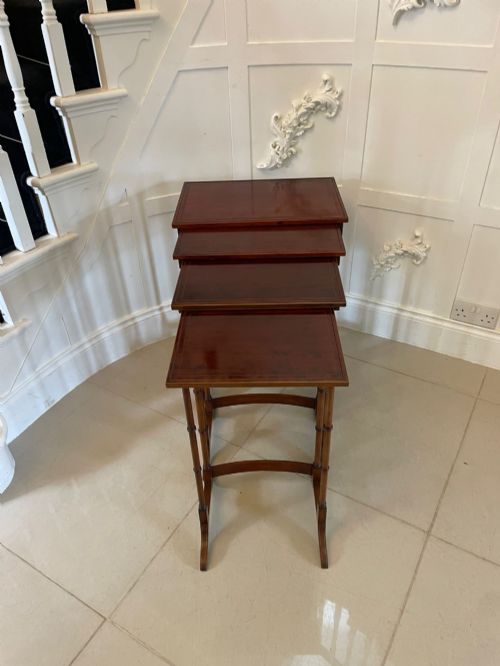
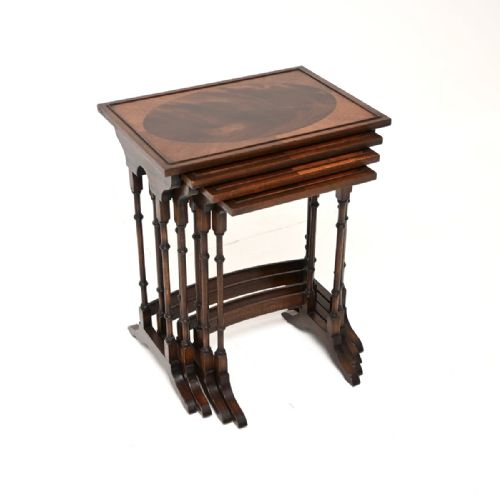
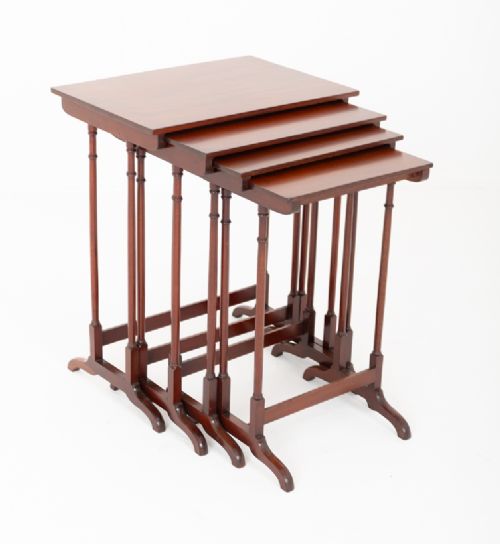
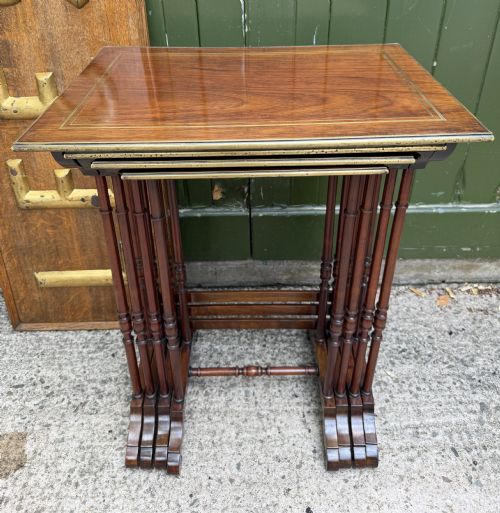
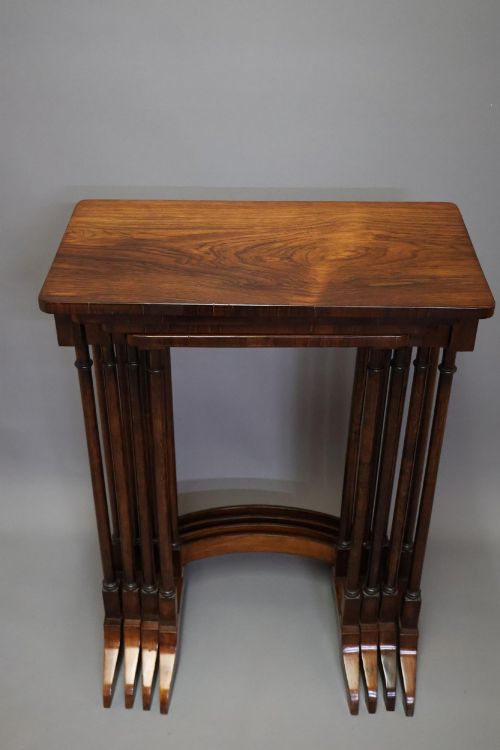
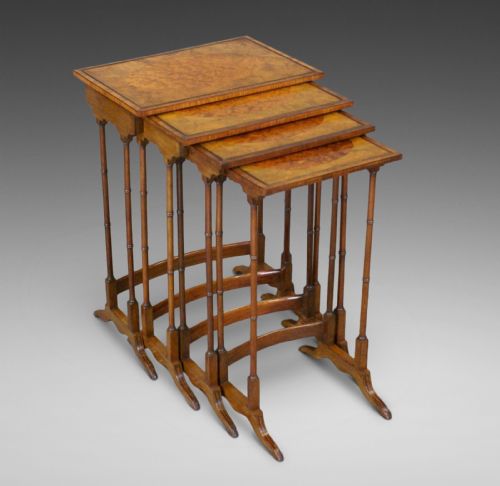
Turned leg quartetto tables appear primarily as Edwardian, Victorian, and Regency sets of nesting tables designed for versatility in entertaining and daily living. These pieces typically comprise four tables graduating in size, allowing the smaller tables to slide neatly beneath the largest one when not in use.
The forms span centuries, with Georgian style and Regency revival examples sitting alongside pieces from the nineteenth and early twentieth centuries. Mahogany and rosewood dominate the selection, often enriched with satinwood inlay, boxwood, and brass details.
How they were made
Cabinet makers utilised solid timbers alongside fine veneer work, shaping mahogany and rosewood into slender turned supports. Timber selection prioritised rich grain figures, particularly on the primary tabletop surfaces.
Inlay work required meticulous hand-cutting of boxwood, satinwood, and brass to embed delicate lines and decorative motifs directly into the wooden framework.
Listings feature mahogany and rosewood across Regency, Victorian, and Edwardian periods, frequently enhanced with satinwood inlay and brass.
What varies in quality
The distinction between ordinary and exceptional sets lies in the crispness of the timber turning and the precision of the inlay work. Finer examples maintain structural stability and smooth sliding action across all constituent tables without excessive looseness in the joints.
Gillows
The Turned Leg Quartetto Tables Glossary
- Quartetto
- A set of four tables designed to nest together. This traditional term originates from musical terminology denoting a group of four.
- Nesting tables
- A series of tables of graduated sizes that fit compactly within one another. This design maximises floor space in smaller rooms.
- Inlay
- A decorative technique where contrasting materials are set flush into the wood surface. Common materials include satinwood, boxwood, and brass.
- Veneer
- A thin layer of figured wood applied to a secondary timber base. This method displays decorative grain patterns while maintaining stability.
Turned Leg Quartetto Tables: Frequently Asked Questions
How were quartetto tables used historically?
These tables were deployed around the drawing room when guests visited for tea or writing. Servants could easily pull out individual tables as needed and slide them away afterward.
The nesting capability made them ideal for flexible entertaining without cluttering the main living spaces.
How do I identify a Regency quartetto table?
Regency examples often feature dark rosewood timbers, sometimes accented with brass inlay or slender turned uprights. The proportions tend to be crisp and restrained.
Later Victorian and Edwardian versions frequently utilise mahogany with lighter satinwood stringing and softer turned leg profiles.
Do all quartetto tables have four pieces?
Most traditional quartetto sets comprise four graduating tables, though surviving sets occasionally feature three tables due to past losses. Each table is scaled precisely to fit beneath the next largest one.
Checking the dimensions ensures the nesting sequence functions correctly from the smallest to the largest table.