
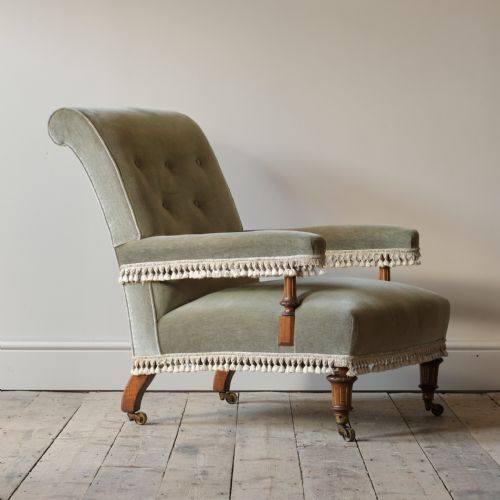
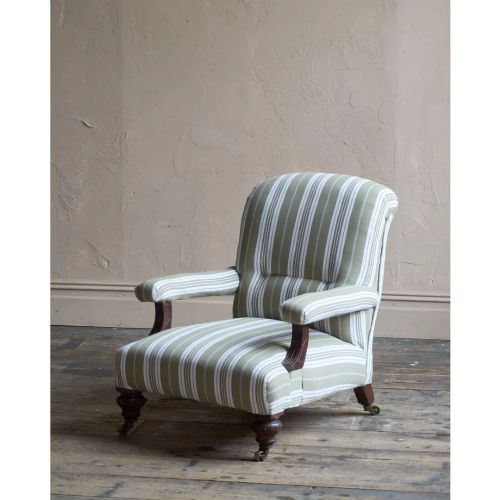
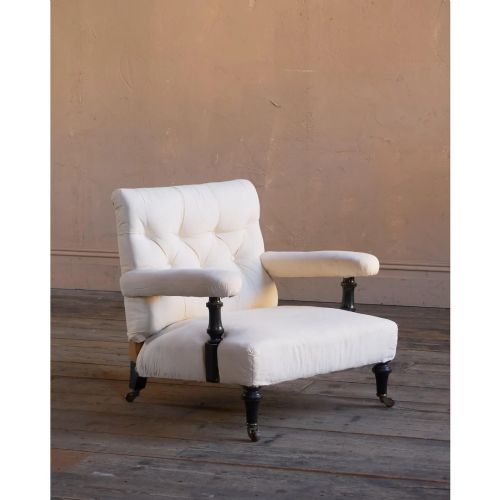
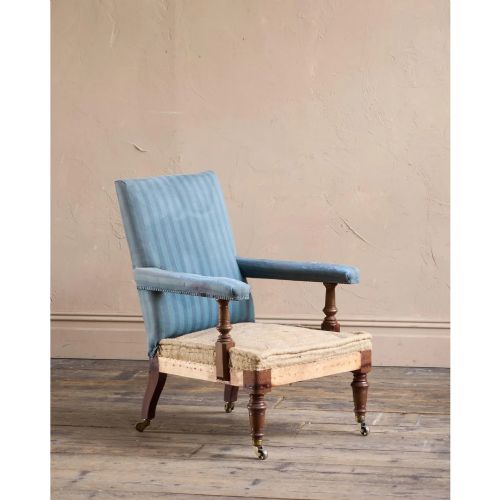
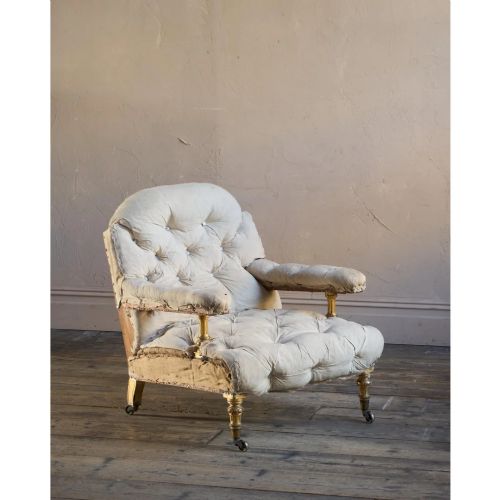

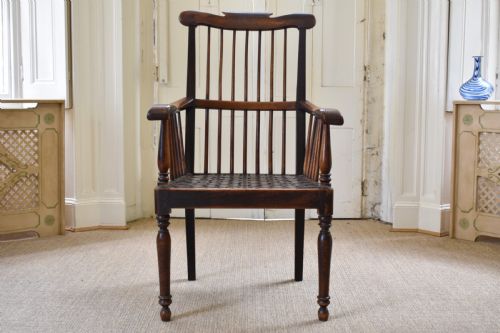
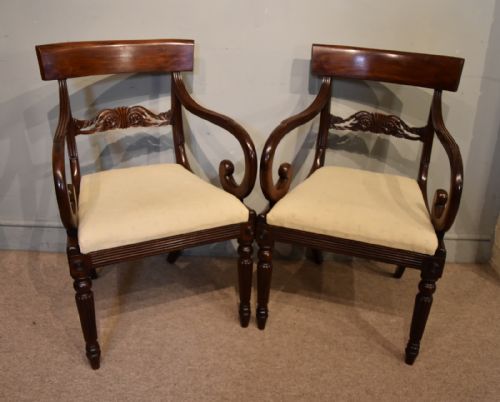
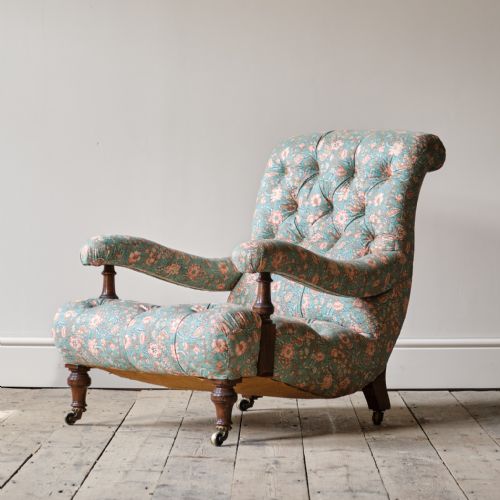
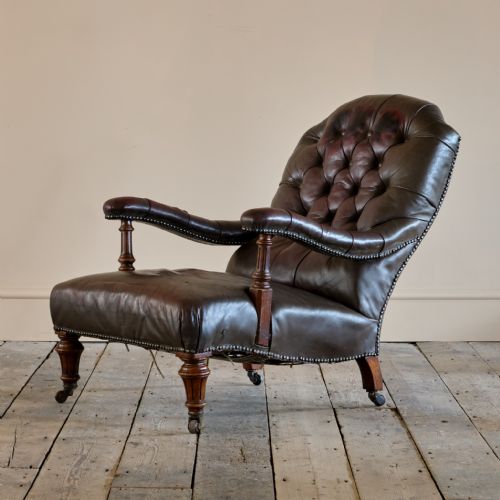

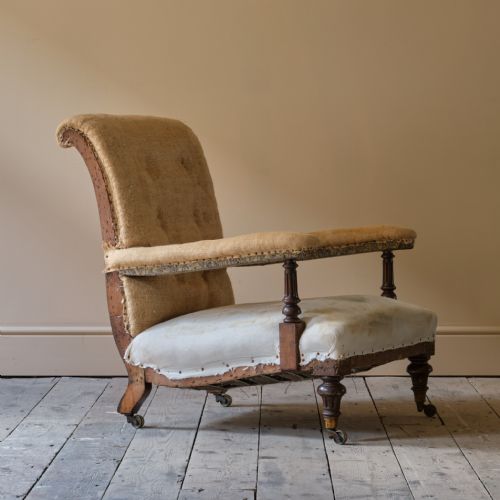
Turned Leg Open Armchair
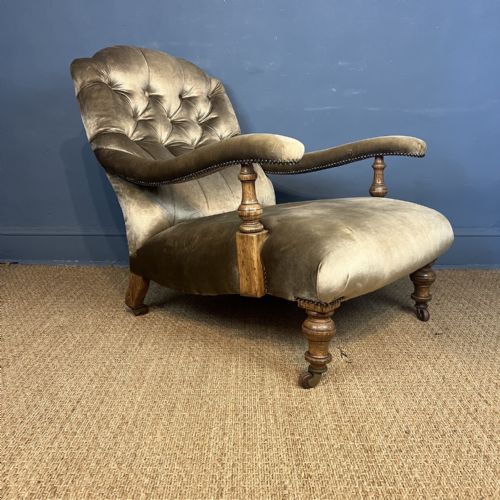
A turned leg open armchair brings substantial framing and exposed timber structure directly to a living space.
Turned Leg Open Armchair
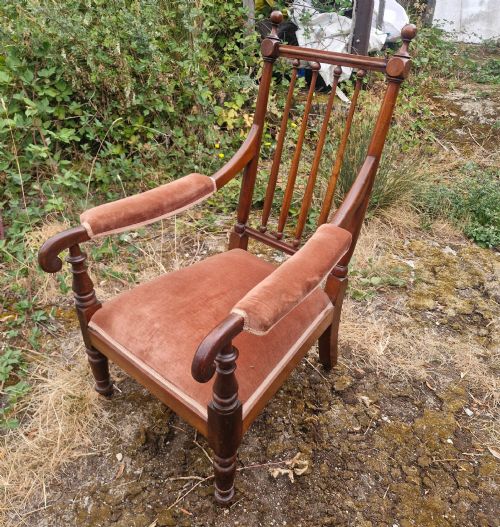
A turned leg open armchair provides sturdy seating built around a visible timber frame, often with padded upholstery or exposed wooden slats. These seats emerge across multiple historical periods, ranging from seventeenth-century oak examples to nineteenth-century mahogany, walnut, and rosewood iterations.
The most common versions met on this page belong to the nineteenth century, including Victorian library chairs, Edwardian upholstered models, and English country house seating. Makers employ styles referencing earlier tastes, producing chairs in the Carolean, William and Mary, and Regency manners alongside distinct Howard Style designs.
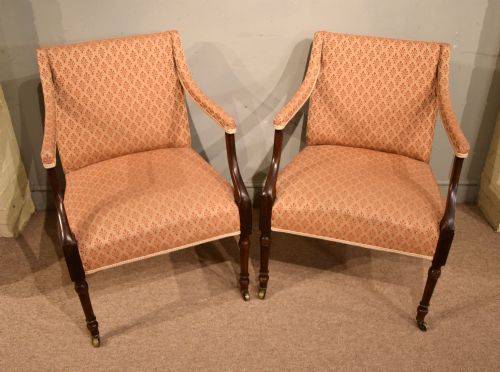
Forms vary from heavy oak and elm country chairs to refined mahogany library armchairs and rosewood elbow chairs. Buyers find both single statement pieces and matched pairs upholstered in velvet, calico, hessian, linen, or specific patterned fabrics.
Materials and construction methods
Carpenters and cabinet makers utilise dense hardwoods such as oak, mahogany, walnut, rosewood, elm, and laburnum to build the structural frames. Turning lathes shape the legs, spindles, and stretchers into bobbin or reeded profiles.
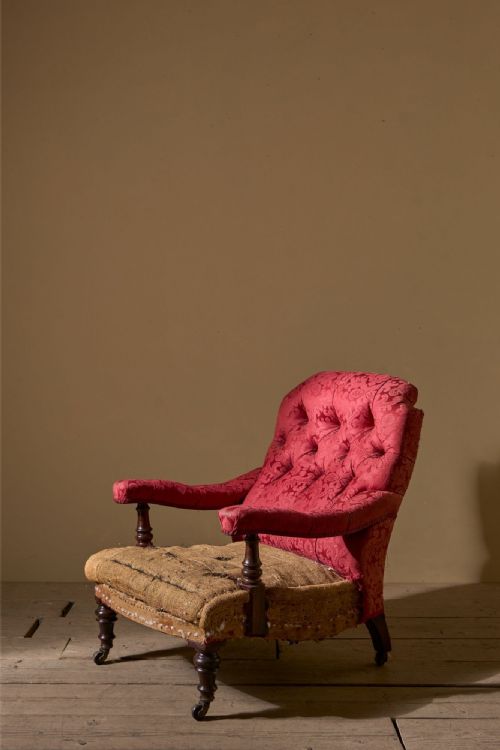
Upholstery relies on traditional stuffing materials contained within covers of velvet, leather, calico, hessian, and linen. Show frames expose polished timber mouldings while supporting padded seats and armrests.
One persistent armchair even crossed the Atlantic to try out a Carolean disguise before settling back into the nineteenth century.
Distinctions in construction and finish
Quality rests in the precision of the timber turning and the integrity of the joinery within the frame. Heavier hardwoods and well-figured veneers separate standard workshop output from superior cabinet work.
The refinement of the upholstery finish and the choice of covering fabric dictate the status of the piece. Maker attribution, through stamps or documented provenance, elevates particular chairs above unmarked examples.
Gillows·Mellier and Co·Morison and Co·Howard and Sons·Holland and Sons·Robert Strahan·J and T Scott
The Turned Leg Open Armchair Glossary
- Bobbin turned
- A style of woodwork featuring cylindrical turnings shaped to resemble a string of beads or bobbins. This decorative technique appears frequently on seventeenth and nineteenth-century frames.
- Show frame
- A wooden structural skeleton left visible around the upholstered elements of an armchair. Mahogany and walnut show frames often display carved or polished details.
- Spindle back
- A chair back constructed with vertical wooden rods or spindles. These components offer lightweight strength and visual rhythm.
- Wainscot
- A heavy wooden armchair type constructed predominantly from solid oak. These early forms feature panelled backs and substantial armrests.
- Fauteuil
- An open-framed armchair with upholstered armrests and seat, originating in French furniture design. Examples often reflect specific historic revival styles.
Turned Leg Open Armchair: Frequently Asked Questions
How do I identify a Victorian armchair?
Victorian armchairs typically display heavier proportions and utilise dense timbers like walnut, mahogany, and rosewood. Upholstery styles range from deep buttoning to tailored linen covers.
Makers from this era often adopted earlier aesthetic revivals, producing pieces referencing seventeenth-century turning or Regency elegance.
Where should I place an open armchair?
Open armchairs suit studies, libraries, and drawing rooms where their exposed wooden frames and upholstered seats remain visible from all angles. Pairs work effectively beside a fireplace or opposite a sofa.
Their open construction prevents them from dominating smaller floor plans.
How do I care for antique upholstery?
Protect antique fabrics by avoiding direct sunlight and maintaining stable indoor humidity. Vacuum delicate textiles gently with a low suction attachment.
Exposed wooden frames benefit from occasional dusting and application of appropriate furniture wax.