


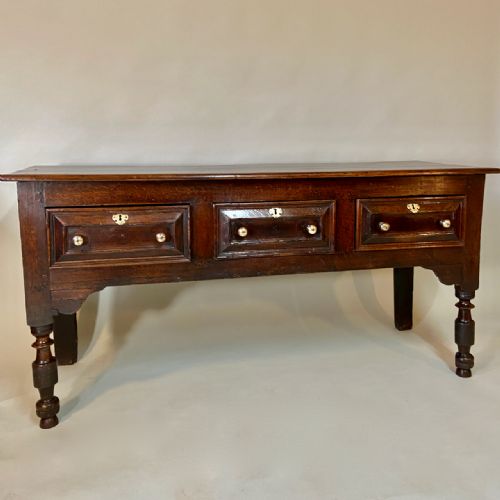

Turned Leg Oak Dresser
Turned leg oak dressers are robust utilitarian pieces providing surface and storage, prized for their rich timber patination and enduring vernacular craft.

Turned Leg Oak Dresser
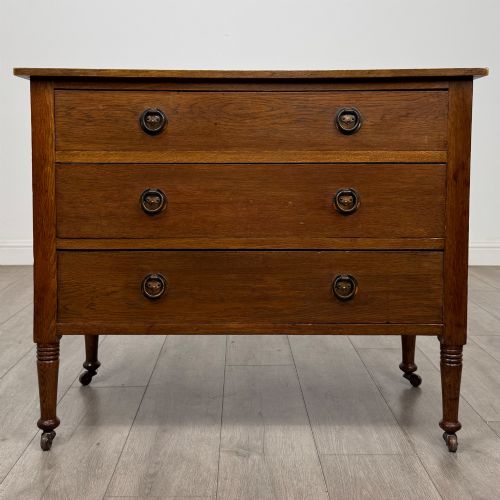
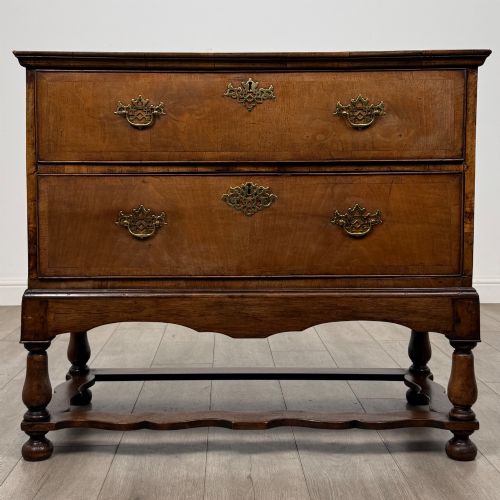
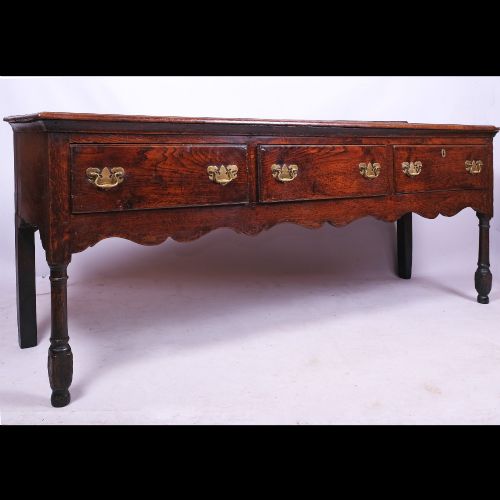
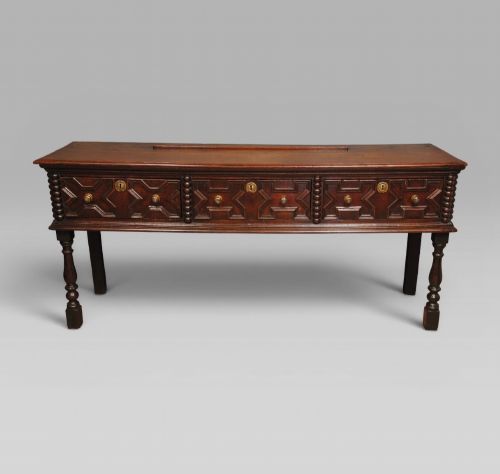
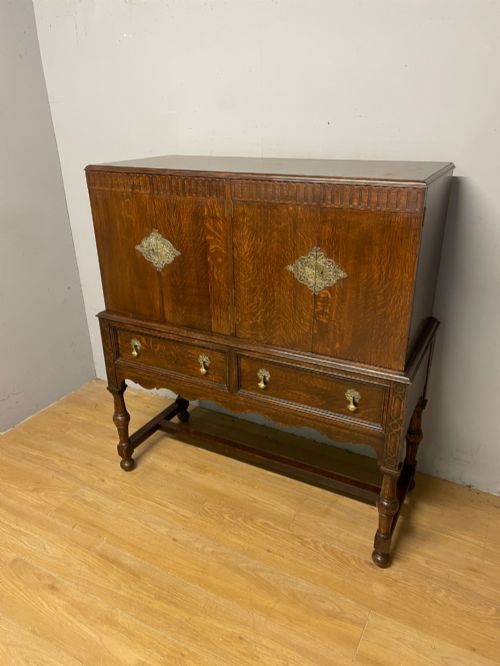
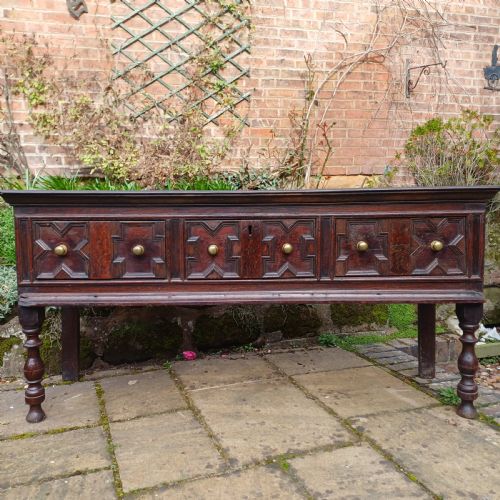
A turned leg oak dresser is a storage piece built primarily for domestic utility, appearing across centuries from the seventeenth century onward. You encounter forms ranging from low dresser bases and pot board dressers to side cabinets and chests on stands, reflecting diverse regional workshops.
The material palette centres firmly on oak, sometimes paired with elm or walnut, complemented by brass hardware. Stylistic influences span Jacobean, William and Mary, Queen Anne, and Georgian periods, alongside later twentieth-century revivals.
Examples on this page draw from 17th Century, 18th Century, and Georgian periods, as well as Edwardian, Victorian, and 1920 revivals. These pieces function as serving tables or display surfaces while anchoring a room with dense timber grain.
Materials and construction methods
Joiners built these items using solid timber planks, employing oak as the principal structural wood alongside secondary timbers like elm and walnut for panels or secondary surfaces. Brass hardware appears on drawer pulls and escutcheons, fastening to the dense grain with hand-forged pins or screws.
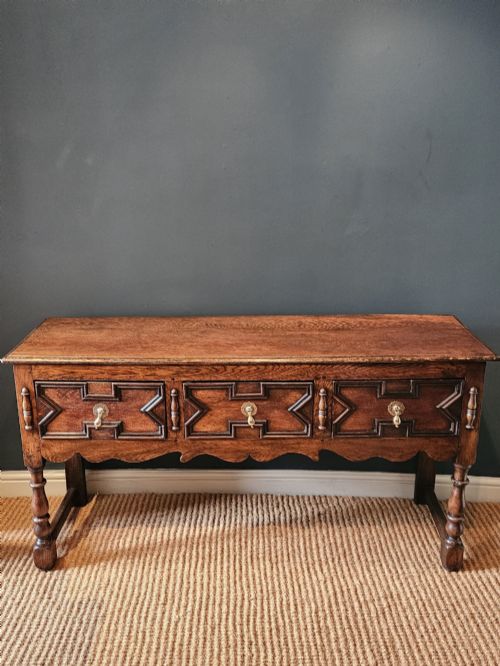
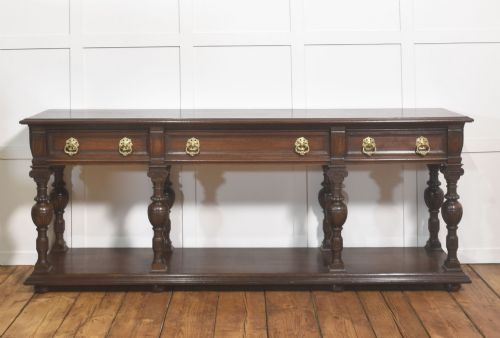
Makers shaped the defining structural supports on lathes, producing characteristic bolster or turned profiles that elevate the carcass. Geometric mouldings, block fronts, and geometric panel work define the surface enrichment of earlier seventeenth-century and revival iterations.
Turned Leg Oak Dresser Retail Price Guide 2026
Typical asking prices for turned leg oak dresser among the pieces listed under this phrase on Sellingantiques today, from the lower quarter to the upper quarter. They describe what is for sale here now, not the wider market.
Materials documented across the inventory comprise oak, walnut, elm, brass, and metal.
Evaluating craftsmanship and proportion
The distinction between standard examples and superior pieces rests upon timber selection and the crispness of the turning work on the legs. Substantial oak planks with deep, natural patination and minimal modern intervention demonstrate higher integrity.
Structural harmony dictates worth, where the scale of the turned supports balances the mass of the upper drawers and board base. Finer examples retain their original brasses, uncompromised structural joints, and coherent period detailing.
The Turned Leg Oak Dresser Glossary
- Pot board
- A low slatted or solid lower shelf incorporated between the legs of a dresser base, traditionally used for storing pots and domestic utensils.
- Dresser base
- The lower section of a kitchen or dining dresser, typically featuring drawers above cupboards or an open pot board.
- Geometric moulding
- Raised orthogonal wooden mouldings applied to drawer fronts or panels, creating decorative rectilinear patterns popular in seventeenth-century joinery.
- Bolster turned
- A rounded, swelling lathe-turned furniture leg profile reminiscent of a bolster cushion, characteristic of seventeenth and early eighteenth-century supports.
Turned Leg Oak Dresser: Frequently Asked Questions
What is a turned leg oak dresser?
A turned leg oak dresser is a sturdy domestic storage unit featuring a wooden carcass supported by lathe-turned legs. These pieces combine drawers or cupboards with a flat top surface.
Historically utilised for food preparation, serving, and storing kitchen utensils, they now serve as statement sideboards in dining rooms and living spaces.
How do I date an oak dresser?
Dating relies on examining construction techniques, timber choice, and decorative details like geometric mouldings or brass hardware. Seventeenth-century examples often display hand-split boards and heavier framing.
Later pieces from the Edwardian era or 1920 revival periods copy these earlier Jacobean and Georgian styles using more standardised workshop methods.
Where should I place a dresser base?
A dresser base fits well in dining rooms, hallways, or spacious kitchens where its surface and drawer storage can be utilised daily. Ensure the room has stable humidity to protect the solid oak timber.
Keep the piece away from direct heat sources and strong sunlight to preserve the natural patination of the wood.
What is a pot board base?
A pot board base includes an integrated lower shelf positioned just above the floor between the turned legs. This structural addition provided practical storage for heavy ceramic pots in early domestic kitchens.
Today, this lower shelf offers an ideal platform for displaying large ceramic platters, baskets, or books.