

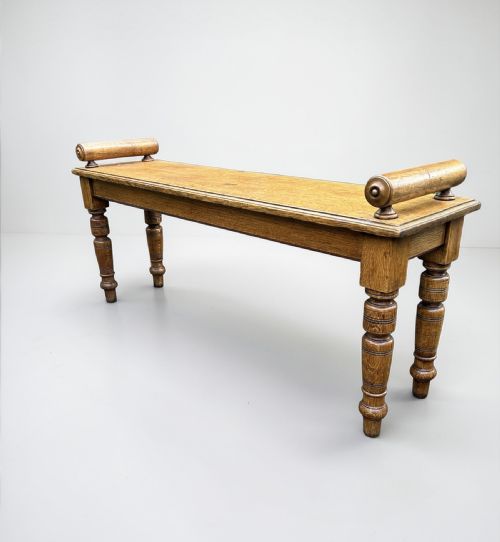


Turned Leg Hallway Bench
A turned leg hallway bench provides an elegant, practical seating solution for corridors and entrance spaces using timber frames and classic spindle details.
Turned Leg Hallway Bench
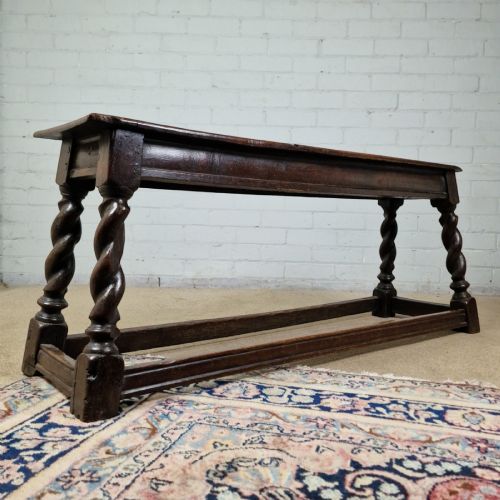
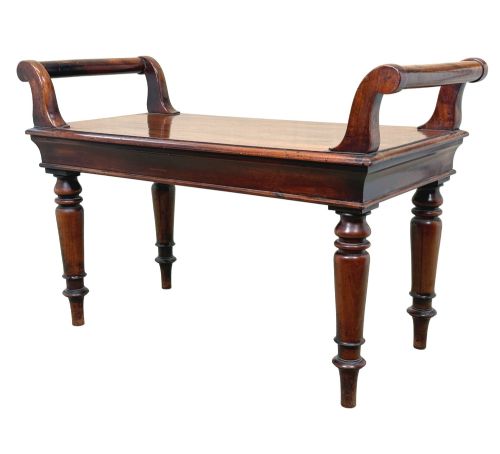
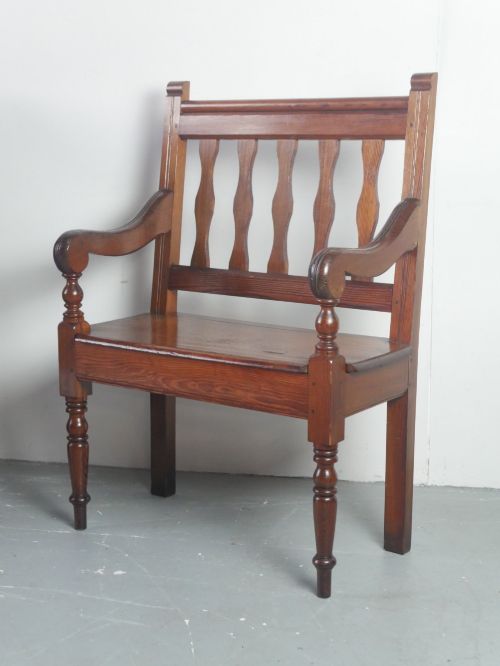
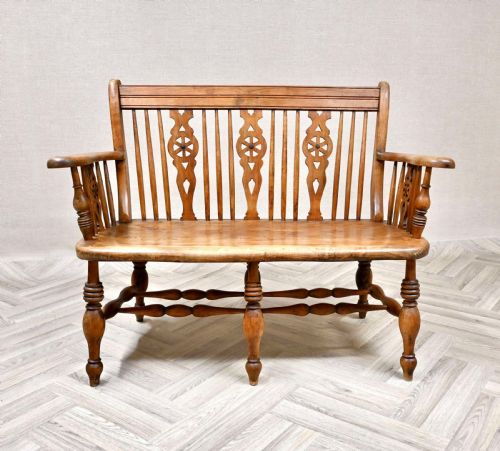
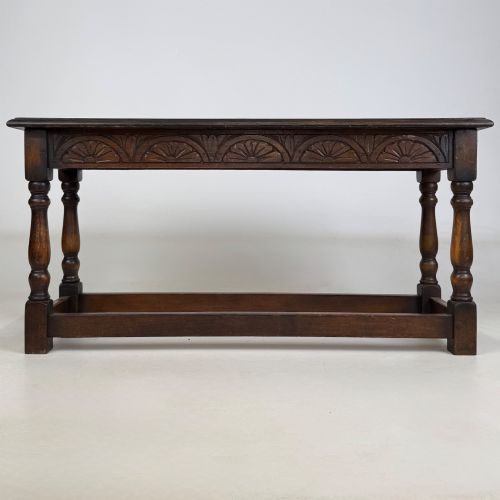
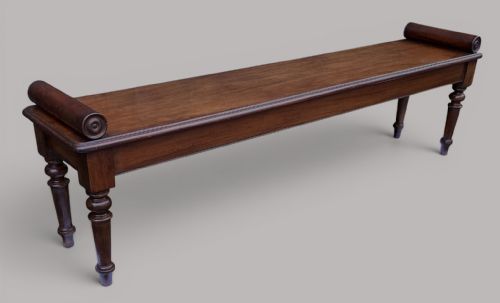
A turned leg hallway bench combines practical corridor seating with traditional spindle-turned supports, appearing across styles from the eighteenth century to the Edwardian period.
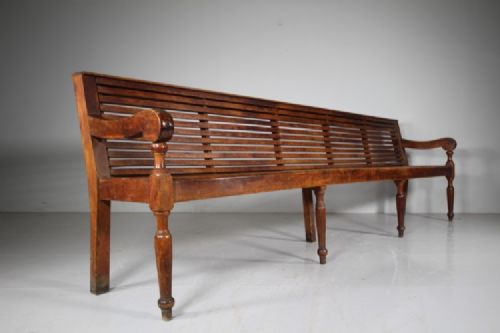
These pieces encompass various forms including window seats, long stools, and slatted waiting room benches constructed in oak, mahogany, walnut, and pine.
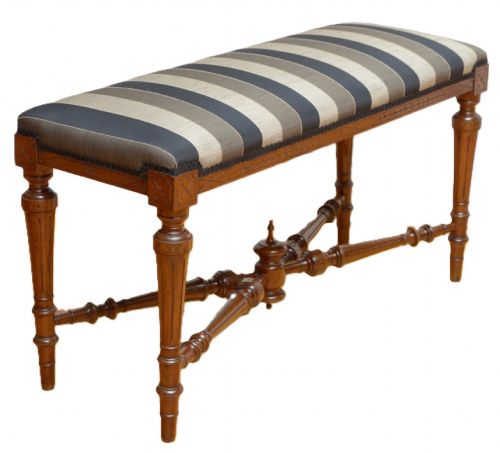
The selection ranges from early oak country examples to refined Regency and Victorian mahogany designs featuring upholstered tops or cane work.
How they were made
Cabinet makers utilised dense hardwoods like mahogany, oak, walnut, and cherrywood to build robust frames capable of enduring regular corridor traffic.
Supports were shaped on lathes to produce distinctive turned legs, paired with joined timber frames and occasionally augmented with cane inserts or textile upholstery.
Several examples have survived generations of hallway traffic only to be fitted with Robert Kime fabrics or modern linen.
What varies in quality
Quality rests in the selection of timber, where tightly grained hardwoods and well-figured mahogany or walnut elevate the piece above plain pine or secondary woods.
Construction precision dictates value, seen in clean lathe work on the turned legs and sturdy joinery that withstands daily use without loosening.
The Turned Leg Hallway Bench Glossary
- Turned leg
- A support shaped by rotating timber on a lathe to create cylindrical, spindle, or fluted profiles. This decorative woodworking technique defines the primary aesthetic of the legs.
- Window seat
- A long, narrow bench traditionally placed in front of a window recess. These pieces share forms with hallway benches and often feature upholstered tops.
- Cane
- Woven rattan material used to form seats or panels. It provides a lightweight, resilient surface supported by a sturdy timber frame.
- Slatted bench
- Seating constructed from parallel wooden laths rather than a solid board or upholstered pad. This design appears frequently in utilitarian or waiting room seating.
Turned Leg Hallway Bench: Frequently Asked Questions
Where should I place a hallway bench?
These benches fit neatly into narrow corridors, entrance halls, or beneath windows where space is restricted.
Their narrow profile offers convenient seating without obstructing movement through doorways or passageways.
How do I identify a Victorian bench?
Victorian pieces often utilise dark hardwoods like walnut and mahogany with robust, heavily carved or turned frames.
Many examples from this era incorporate buttoned upholstery or fabric coverings reflecting nineteenth-century interior tastes.
Are these benches comfortable for daily use?
Upholstered and padded versions provide soft seating suitable for putting on shoes in an entryway.
Unupholstered timber or slatted variants serve well as firm perches or display surfaces for decorative items.
What woods were commonly used?
Cabinet makers predominantly selected oak, mahogany, and walnut for finer formal pieces spanning the eighteenth and nineteenth centuries.
Pine, pitch pine, and cherrywood appear frequently in country house and regional variants.