

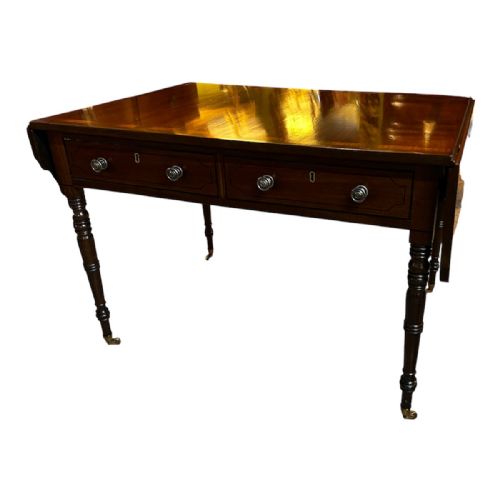


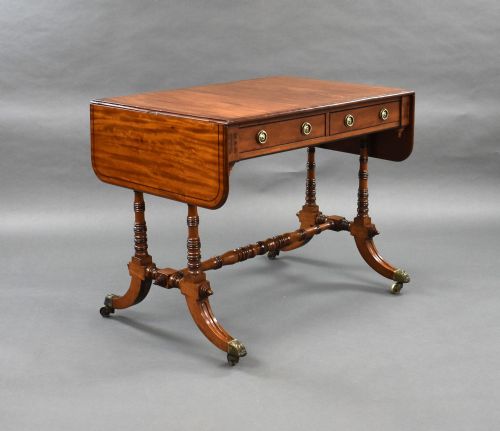
Turned Leg Drop Leaf Desk
A turned leg drop leaf desk brings versatile folding leaves and sturdy timber support into working spaces.
Turned Leg Drop Leaf Desk
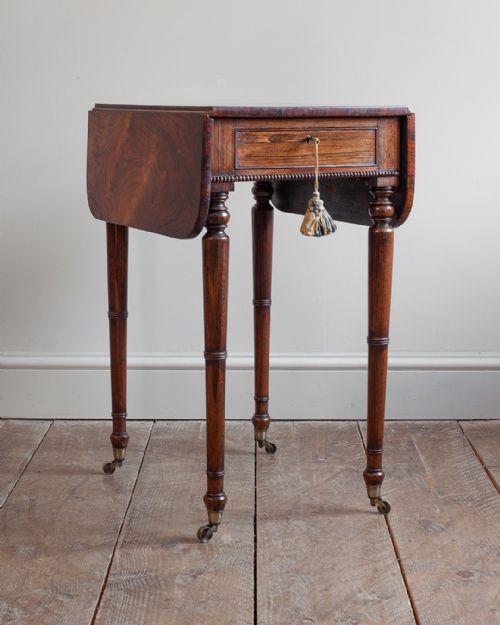
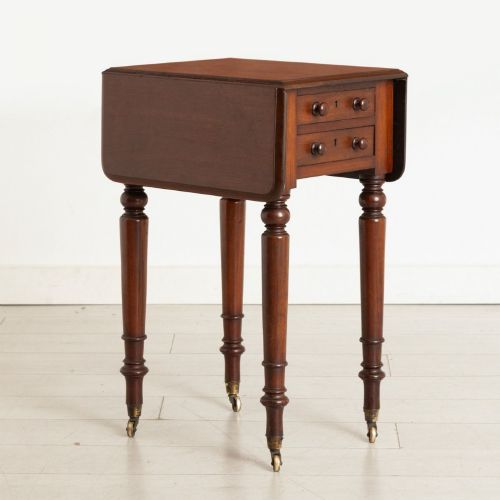
A turned leg drop leaf desk encompasses flexible timber tables designed for writing and occasional study, appearing primarily across nineteenth-century and earlier periods. These tables utilise hinged leaves that drop down when space is required or lift up to extend the usable surface.
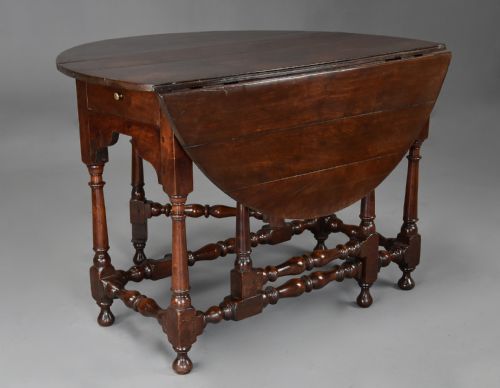
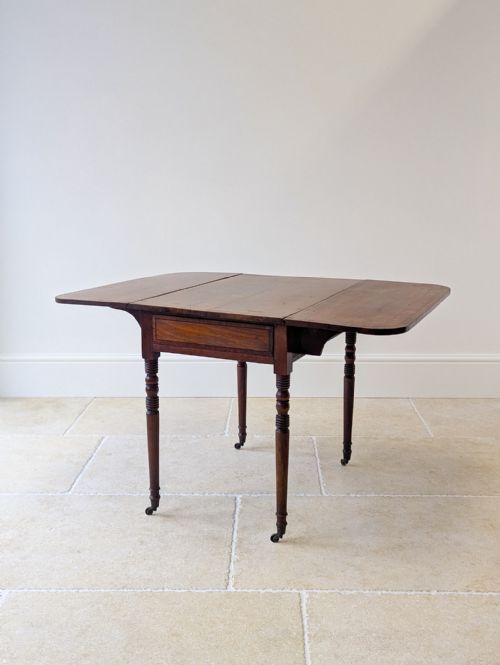
The selection on this page draws together diverse forms including Pembroke tables, sofa tables, and gateleg tables built from rich hardwoods. Buyers encounter pieces spanning the seventeenth century through to the twentieth century, reflecting varied regional craftsmanship across British and English origins.
Makers produced these functional items to adapt to shifting domestic interiors, offering drawers and compartment spaces alongside the primary writing surface. The turned legs provide robust architectural support while maintaining a lighter appearance than heavy pedestal desks.
How they were made
Cabinetmakers constructed these pieces using solid timbers such as mahogany, oak, walnut, rosewood, and fruitwood, often selecting finely figured veneers for the top surfaces. Brass fittings appear on drawer pulls and castor mounts, providing durable functional accents against the dark wood grains.
The turned leg supports were shaped on a lathe to create decorative profiles, joined securely to the framing to bear the weight of the dropping leaves. Carpenters utilised traditional joinery methods including mortise and tenon connections to ensure stability across folding mechanisms.
Some nineteenth century work tables secretly doubled as sewing stations, keeping stray bobbins safe while the writing leaves stayed tidy.
What varies in quality
The selection of timber grain heavily dictates the visual appeal, with richly figured mahogany or burr walnut marking out superior examples. Finishes that retain a deep patina demonstrate careful handling and proper maturation over centuries of domestic use.
Structural integrity relies on the precision of the hinge mechanisms and the alignment of the drop leaves when raised. Finer workshops ensured smooth drawer operation and robust turning work on the legs, maintaining balance whether the leaves are extended or folded.
The Turned Leg Drop Leaf Desk Glossary
- Pembroke table
- A small form of table featuring two hinged leaves on opposite sides and usually one or more drawers. It gained popularity during the eighteenth century for breakfast or light writing tasks.
- Gateleg table
- A table with one or two hinged leaves supported by legs that swing outward like a gate. This design provides sturdy support for extended surfaces.
- Sofa table
- A type of Pembroke table traditionally placed in front of a sofa, featuring a long rectangular top and drop leaves. They often include drawers fitted into the frieze.
- Patina
- The surface sheen and coloration developed by wood over years of ageing, handling, and polishing. It serves as an indicator of a piece's age and history.
- Drop leaf
- A hinged flap of timber attached to the side of a table that can be raised to increase surface area or lowered for compact storage.
Turned Leg Drop Leaf Desk: Frequently Asked Questions
How do I use a drop leaf desk in a small room?
Keep the leaves dropped against the sides when floor space is limited, raising them only when working.
Position the table against a wall or behind seating to function as an occasional surface until needed.
What is the difference between a Pembroke and a gateleg table?
Pembroke tables typically feature two smaller side leaves supported by hinged brackets and incorporate small drawers.
Gateleg tables rely on swinging leg assemblies to hold up much larger folding leaves, originating in earlier centuries.
How do I care for antique mahogany surfaces?
Dust regularly with a soft, dry cloth to prevent particulate buildup on the polished timber.
Apply quality beeswax periodically to nourish the wood and maintain the natural lustre of the finish.
Can I use these tables for daily writing work?
Many examples were specifically designed for correspondence and light study, equipped with suitable drawer storage for writing materials.
Ensure the leaf supports are stable and level before placing heavy equipment or extensive paperwork upon them.