
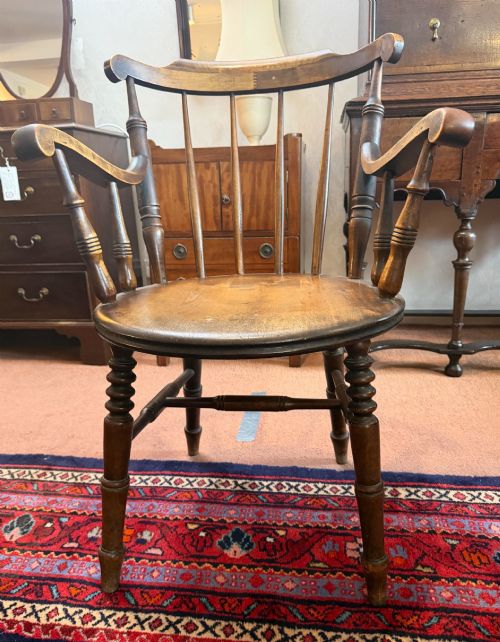
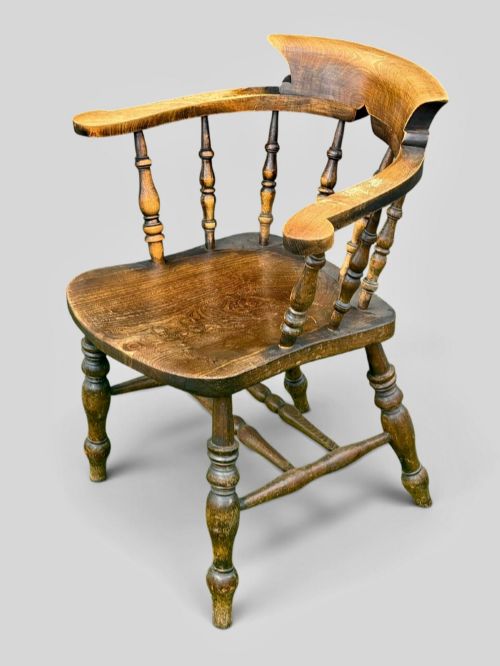
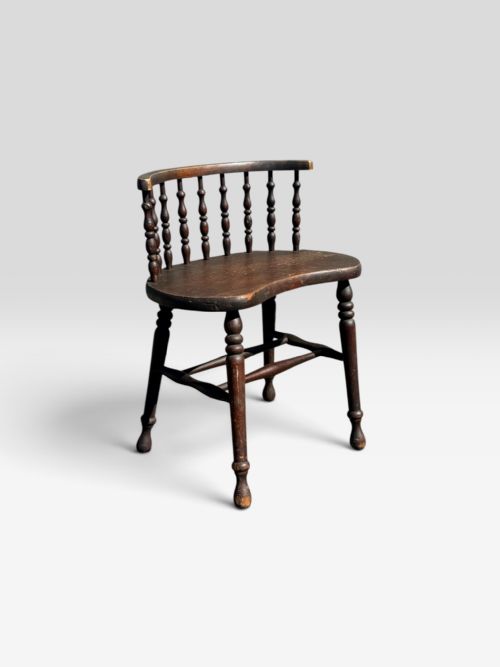
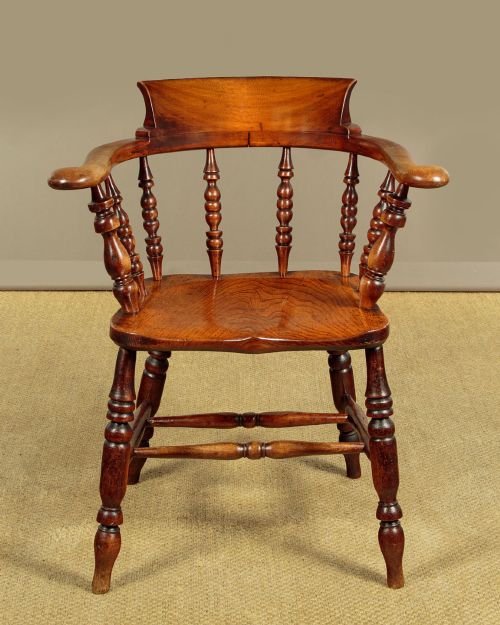

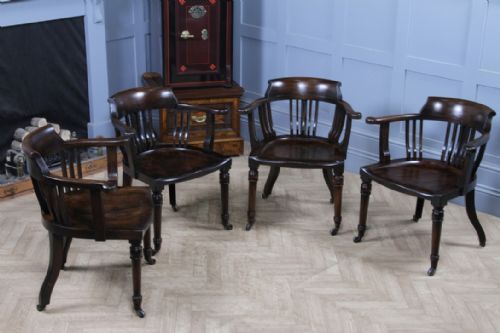


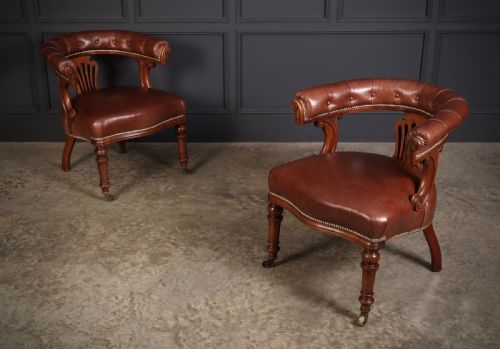
Turned Leg Captain Chair
A turned leg captain chair brings sturdy domestic seating and writing timber into focus through nineteenth century forms.
Turned Leg Captain Chair
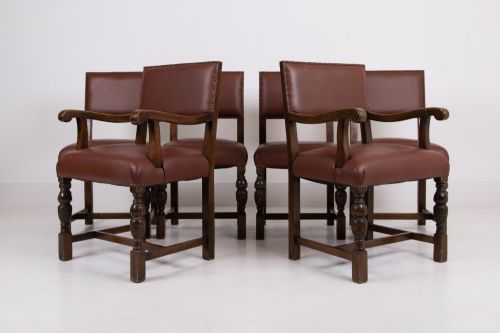
A turned leg captain chair is a sturdy timber seating piece designed for desks, libraries and smoking rooms during the nineteenth century and the Edwardian period. Buyers searching for a turned leg captain chair will encounter various vernacular designations including smoker bows, desk armchairs and library carvers.
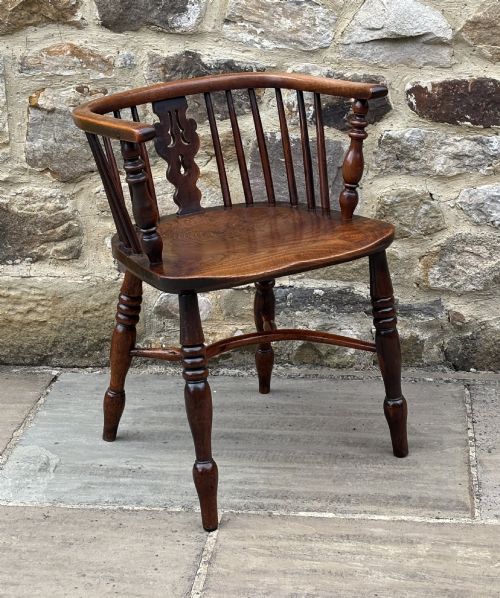
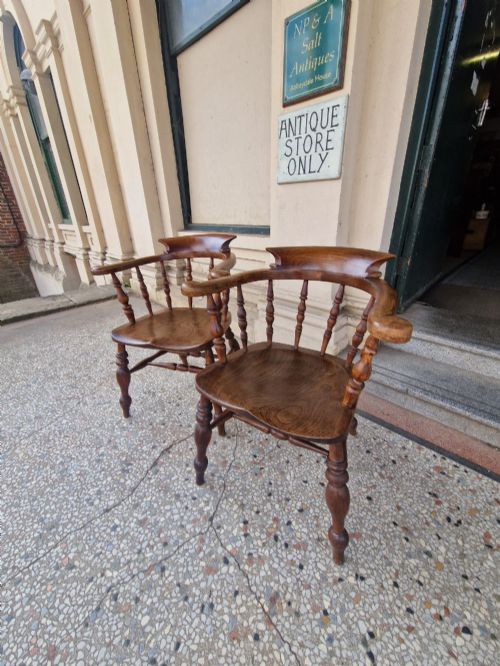
The most common versions on this page combine local British hardwoods such as elm, ash and beech with turned wooden spindles and legs. These seating options emerge from Victorian country workshops and provincial English makers who prioritised everyday utility and robust joinery.
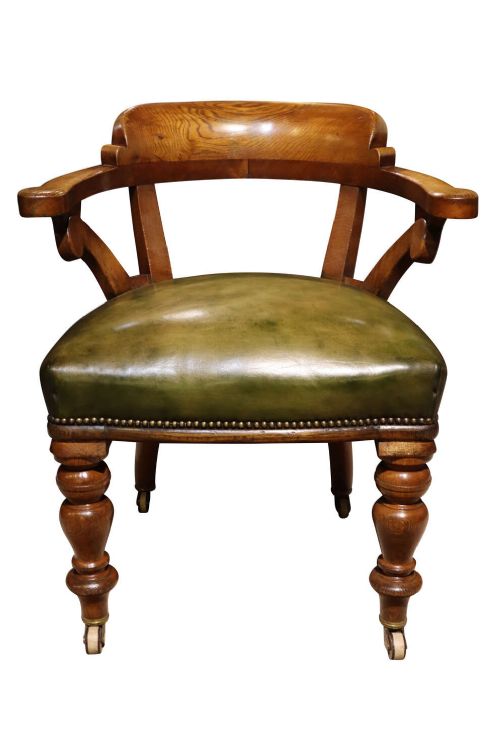
Other variations span polished mahogany, walnut and oak, sometimes fitted with leather or oil cloth swabs for extended seating. Such pieces bridge the gap between simple domestic Windsor chairs and formal office or library armchairs.
Materials and Construction
Construction relies heavily on traditional bodging and cabinetry techniques, utilising steam-bent wooden rails for curved backrests and solid elm for saddle seats. Timber combinations such as ash frames with elm seats or beech and alder components provide resilience against daily wear.
Libraries and formal studies demand finer hardwoods like mahogany and walnut, paired with turned supports, brass castors and upholstered leather pads. Joinery typically incorporates pegged mortise and tenon joints alongside heavy spindle turnings.
Object forms span desk chairs, dining chairs, library armchairs and Windsor variations originating from English country and provincial traditions.
Quality Variations
Quality separates by the choice of timber and the crispness of the wood turning on the legs and spindles. Simple vernacular pieces show honest regional handiwork, whilst library armchairs demonstrate refined cabinetmaker proportions and superior leather upholstery.
The integrity of the timber grain and the depth of the patination dictate the visual hierarchy. Examples retaining original surface finishes and sound structural joins stand apart from heavily restored or mismatched chairs.
Fred Walker
The Turned Leg Captain Chair Glossary
- Smoker's bow
- A low-backed wooden armchair with a continuous curved armrail, closely related to the captain chair. These frequently appear in ash and elm.
- Windsor chair
- A chair built with a solid wooden seat into which the legs and back spindles are directly inserted. Regional variants include Yorkshire broad arm styles.
- Carver chair
- An armchair matching a set of dining chairs, often utilised at the head of a table or beside a desk. They display scroll arms or open timber work.
- Patina
- The surface sheen and colour acquired by timber through age, handling and wax polishing. This quality reveals the natural history of the wood.
Turned Leg Captain Chair: Frequently Asked Questions
What defines a turned leg captain chair?
A turned leg captain chair is a sturdy timber seating piece featuring characteristic turned wooden legs supporting a low curved backrest or scrolled arms. These chairs originate primarily from nineteenth century vernacular and Victorian domestic contexts.
They serve as practical desk chairs or library armchairs, combining solid wood seats with spindle construction for everyday utility.
How do I care for antique wood and leather?
Maintain the timber by applying occasional quality beeswax to nourish the grain and preserve the natural patination built up over decades. Avoid placing the chair near direct heat sources that might dry out the wood.
Leather pads and upholstery require gentle cleaning with appropriate conditioners to prevent cracking while retaining their original colour.
How do I tell Victorian examples apart from Edwardian ones?
Victorian examples span from the mid nineteenth century onwards, often showcasing rich timbers like mahogany, walnut and sturdy elm with heavier turnings. They reflect the solid domestic and library fashions of the era.
Edwardian pieces generally present lighter oak frames and simpler structural lines while maintaining traditional Windsor and captain chair forms.